




Are trekking poles good for balance problems in older adults?
Yes – absolutely. For older adults experiencing balance problems – whether due to aging, neurological conditions (e.g., Parkinson’s, stroke), orthopedic issues (hip or knee arthritis), or general muscle weakness – trekking poles can be a transformative tool. Unlike a single cane or walker, trekking poles offer dynamic, bilateral support that improves stability, reduces fall risk, and encourages an active, upright lifestyle. This article explains the science, practical benefits, and how to choose and use poles effectively for balance problems.
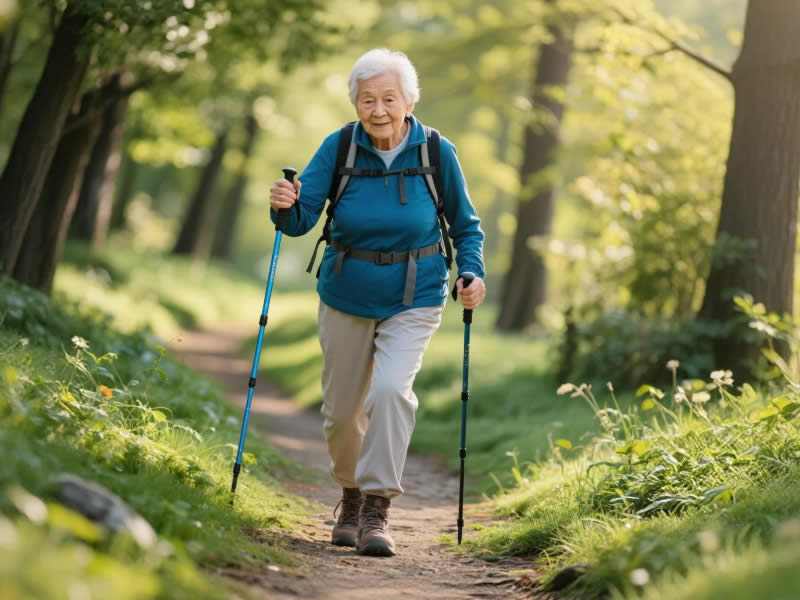
Recommended trekking pole purchase link: https://s.click.aliexpress.com/e/_c4M7OWaN
Why balance deteriorates with age
Age‑related balance decline is multifactorial: loss of muscle mass (sarcopenia), reduced proprioception (joint position sense), slower reaction times, and changes in the vestibular system. Falls are the leading cause of injury in older adults. Traditional walking aids (canes, walkers) can help, but they often promote a stooped posture, single‑sided weight bearing, or a shuffling gait. Trekking poles offer a different approach.
How trekking poles improve balance
1. Expanded base of support
A single cane creates a triangle of support (feet + cane). Two trekking poles create a quadrilateral base (two feet + two pole tips). This wider, symmetrical footprint dramatically increases stability, especially on uneven ground, slopes, or slippery surfaces.
2. Proprioceptive feedback
The poles transmit tactile information from the ground to the hands and arms, helping the brain better understand body position. This extra sensory input compensates for age‑related proprioceptive decline, allowing older adults to “feel” the terrain before committing weight.
3. Load redistribution
By transferring up to 20–25% of body weight from the legs to the arms and core, trekking poles reduce the demand on weak or painful hips, knees, and ankles. This allows a more normal, balanced gait pattern rather than a cautious, limping shuffle.
4. Fall mitigation
If a slip does occur, poles can be used to arrest the fall. A quick plant can prevent a complete collapse. Many older users report that poles have saved them from falling on icy driveways or uneven trails.
Scientific evidence
Several studies support the use of walking poles for balance in older adults:
- A 2018 systematic review in Geriatric Orthopaedic Surgery & Rehabilitation found that Nordic walking (using two poles) improved dynamic balance, gait speed, and functional mobility in community‑dwelling older adults compared to conventional walking.
- A randomized controlled trial (2017) involving adults aged 65+ with balance impairments showed that a 12‑week pole‑walking program significantly reduced fall frequency and improved scores on the Berg Balance Scale.
- Research on Parkinson’s disease patients demonstrates that trekking poles reduce freezing episodes and improve stride length.
While not a replacement for physical therapy, poles are an excellent adjunct.
Trekking poles vs. canes vs. walkers
| Device | Support type | Stability | Posture | Terrain versatility |
|---|---|---|---|---|
| Single cane | Point contact (unilateral) | Low to moderate | Often sideways lean | Limited |
| Walker (rolling) | Four‑point base | High, but rigid | Forward stoop | Flat surfaces only |
| Trekking poles (pair) | Two‑point dynamic | High, adaptive | Upright | All terrains (trail, pavement, grass) |
The key advantage of poles is that they promote an upright, natural walking motion while providing active, adjustable support.
Choosing the right trekking poles for balance problems
For older adults with balance issues, not any pole will do. Look for:
- Flick‑locks (external levers) – Twist‑locks require hand strength and can slip flick‑locks are easier to see and operate, even with arthritic hands.
- Foam grips – Cork becomes cold and hard; foam provides cushioning, warmth, and non‑slip texture. Extended foam sections allow grip variation.
- Lightweight aluminium – Carbon is more expensive and brittle for daily use; aluminium (7075 series) offers durability at moderate weight (240‑260g per pole).
- Adjustable length – Essential for adapting to slopes and ensuring proper ergonomics (elbow at 90° on flat ground).
- Rubber tip covers – For indoor or pavement walking, rubber paws protect floors and provide traction.
- Simple wrist straps – Padded, adjustable straps help transfer load and prevent dropping poles.
Recommended models: Leki Khumbu Lite (affordable, foam grip, easy SpeedLock), Black Diamond Trail Pro (very stable, extended foam grip), Komperdell Contour Powerlock (good value).
How older adults should use trekking poles for balance
- Start with professional guidance – A physical therapist or experienced instructor can teach proper technique. Many community centres offer “Nordic walking for seniors” classes.
- Use both poles, always – Using a single pole for balance can create an asymmetrical gait and increase fall risk. Two poles are essential.
- Adjust height correctly – With the tip on the ground and your arm hanging naturally, your elbow should be bent about 90°. For uphill, shorten poles by 5‑10 cm; for downhill, lengthen by 5‑10 cm.
- Adopt a reciprocal rhythm – Swing the right pole forward with the left foot, and left pole with the right foot. This mimics natural walking and engages the core.
- Let the strap do the work – Insert your hand from below, grip lightly, and let the strap support your weight. Death‑gripping tires the hands.
- Use rubber tips on hard surfaces – Remove them on grass or gravel to expose the carbide tip for grip.
- Practice indoors first – Walk back and forth on a carpeted floor to get comfortable with the rhythm before venturing outside.
Safety precautions
- Do not use poles as a walker substitute for significant weight‑bearing needs – If you cannot stand unassisted, a walker is safer.
- Inspect poles regularly – Check that flick‑locks are tight and tips are not worn. Replace worn parts.
- Avoid icy conditions unless equipped with ice grippers – Special spiked attachments (ice grippers) can be added for traction on ice.
- Consult a doctor if you have severe osteoporosis – The impact of planting poles might be contraindicated; ask your physician.
Real‑world testimonials
Many older adults report life‑changing benefits. One 78‑year‑old with peripheral neuropathy shared: “Before poles, I shuffled and feared falling on my daily walk. Now I walk upright and confidently, even on gravel.” A Parkinson’s patient said: “The poles help me start walking when I freeze. They are my rhythm keepers.”
Final verdict
Trekking poles are excellent for balance problems in older adults – they are affordable, low‑tech, and highly effective. By widening the base of support, providing sensory feedback, and redistributing load, poles significantly reduce fall risk while encouraging an active, upright walking pattern. They are not a cure for underlying balance disorders, but for many seniors, they are the key to maintaining independence and staying mobile. Choose lightweight flick‑lock poles with foam grips, learn correct technique, and enjoy safer, more confident walking.




