




How to choose trekking poles for arthritis sufferers?
Arthritis – whether osteoarthritis or rheumatoid – can make walking and hiking painful. Swollen, stiff finger joints, reduced grip strength, and wrist discomfort turn a simple trekking pole into a source of frustration. However, the right poles can actually reduce pain by transferring load from your legs to your arms and improving balance. This guide explains how to select arthritis‑friendly trekking poles and what features to prioritise.
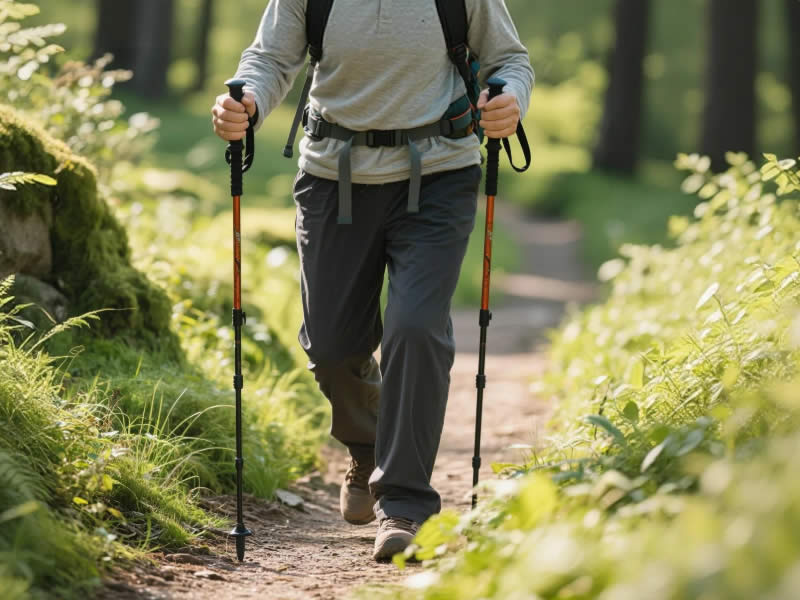
Recommended trekking pole purchase link: https://s.click.aliexpress.com/e/_c4M7OWaN
Key challenges for arthritis sufferers
- Reduced grip strength – Holding a narrow or slippery handle causes hand fatigue.
- Joint pain in fingers and wrists – Twisting, squeezing, or gripping hard triggers pain.
- Difficulty operating locking mechanisms – Small twist‑locks or stiff buttons can be impossible.
- Shoulder and neck tension – Heavy poles strain already painful upper body.
1. Choose the right locking mechanism – avoid twist‑locks
External flick‑locks (cam levers) are vastly superior for arthritic hands.
- Why: A flick‑lock requires only a light pinch and a push. No twisting or squeezing force needed. The lever is large and easy to see.
- Avoid: Twist‑locks demand a firm, sustained grip and rotation – painful for swollen finger joints.
Recommendations: Leki SpeedLock 2, Black Diamond FlickLock Pro, Komperdell Powerlock 3.0.
2. Prioritise grip comfort
The grip is your main interface. Look for:
- Foam grips – Soft, warm, cushioned, and slightly compressible. EVA foam absorbs shock and reduces vibration. Cork can be hard and cold.
- Large diameter – A thicker grip requires less finger closure force. Some brands offer “oversize” or “ergonomic” grips specifically for arthritic users.
- Contoured shape – Grips with a pronounced bulge for the palm and indentations for fingers distribute pressure evenly.
- Extended foam section – Allows you to choke down on the pole without adjusting length, giving your hands a rest by changing grip position.
Example models: Leki Khumbu Lite (foam grip), Black Diamond Trail Pro (dual‑density foam with extended blade), Komperdell Contour Foam.
3. Wrist straps – use them correctly
A well‑designed strap transfers load from your hand to your forearm, reducing the need to grip tightly.
- Padded, wide straps – Spread pressure and don’t cut into the wrist.
- Easily adjustable – One‑handed adjustment (e.g., sliding buckle) is helpful.
- Quick‑release (optional) – Leki’s Trigger Shark allows instant detachment without pulling your hand out – useful if you need to flex your fingers.
Technique: Insert your hand from below the strap, so the strap crosses the back of your wrist. Cinch snugly. Then you can relax your grip – the strap holds the pole.
4. Light weight is critical
Heavy poles exacerbate fatigue. Aim for:
- Aluminium: 240–260g per pole (e.g., Leki Khumbu Lite)
- Carbon: 150–200g per pole (lighter but more expensive and slightly brittle)
For arthritis, the slight extra cost of lightweight carbon may be worthwhile if hand strength is very limited. However, aluminium is strong and more affordable.
5. Shock absorption – a mixed blessing
Some poles have internal springs to reduce impact. For arthritis sufferers:
- Pros: Reduces jarring to hands and wrists on hard surfaces.
- Cons: Adds weight, complexity, and a “mushy” feel. Not strictly necessary.
If you walk mainly on soft trails, skip anti‑shock. If you walk on pavement or hard‑pack, consider it.
6. Replaceable tips and rubber covers
- Carbide tips provide grip on dirt and rock. Ensure they are replaceable.
- Rubber “paws” MUST be used on pavement. They provide traction and protect the tip. Without them, the carbide will be slippery and wear quickly.
7. Adjustability and length
Arthritis often affects walking posture. Being able to fine‑tune pole length for different terrain (uphill, downhill, flats) reduces strain on hips and knees. External flick‑locks make adjustments tool‑free and easy.
Height rule: With tip on ground, elbow at 90° for flat terrain.
Recommended models for arthritis sufferers
| Model | Weight | Lock | Grip | Strap | Price (pair) |
|---|---|---|---|---|---|
| Leki Khumbu Lite | 240g | SpeedLock 2 | EVA foam, extended | Padded | €70‑90 |
| Black Diamond Trail Pro | 275g | FlickLock Pro | Dual‑density foam, long blade | Padded | €110‑130 |
| Komperdell Contour Foam | 260g | Powerlock 3.0 | EVA foam | Padded | €60‑80 |
| Cascade Mountain Tech Quick Lock | ~240g | Flip lock | Foam or cork | Basic | €40‑60 (budget) |
The Leki Khumbu Lite offers the best combination of light weight, foam grip, easy lock, and reasonable price. The Black Diamond Trail Pro has the most comfortable extended grip but is heavier.
Tips for using poles with arthritis
- Warm up your hands – Stretch fingers and rotate wrists before strapping in.
- Use lightweight gloves – Thin fleece or cycling gloves add padding and warmth without bulk.
- Take breaks – Unstrap and shake out your hands every 20–30 minutes.
- Adjust length before each walk – Correct length reduces the need to grip tightly.
- Practice indoors first – Get comfortable with the flick‑lock and strap technique.
What to absolutely avoid
- Twist‑lock poles – Impossible to lock securely with weak hands.
- Narrow, hard rubber grips – Cause pain and blisters.
- Heavy steel or cheap aluminium poles – Over 300g per pole will exhaust you.
- Non‑adjustable (fixed‑length) poles – Cannot optimise posture.
Final verdict
Choosing trekking poles for arthritis sufferers comes down to three key features: external flick‑locks, lightweight foam grips, and padded wrist straps. Avoid twist‑locks at all costs. Test the grip in a store if possible – your hand should wrap around it without straining. With the right poles, walking becomes a joy again, reducing joint pain and restoring confidence. Start with the Leki Khumbu Lite or, if you need extra cushioning, the Black Diamond Trail Pro. Your hands will thank you.




