




What is the best trekking pole handle for seniors with grip weakness?
For seniors with reduced grip strength – whether from arthritis, nerve damage, or general age‑related weakness – the trekking pole handle is arguably the most critical component. A poorly chosen grip can cause pain, fatigue, and even lead to dropping the pole. The best handle for grip weakness is a large‑diameter, contoured foam grip with an extended lower section and a well‑designed wrist strap. This article explains why foam outperforms other materials, what shape and size to look for, and how the wrist strap and locking mechanism complement the grip.
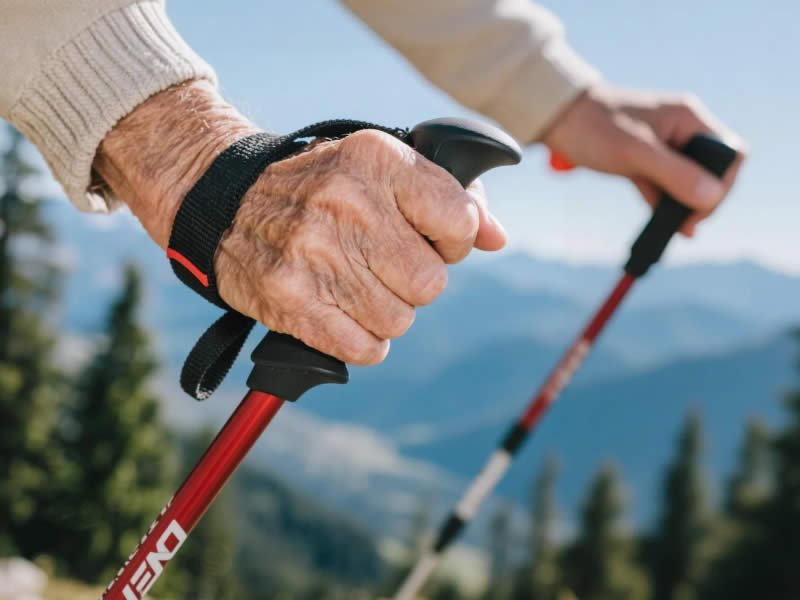
Recommended trekking pole purchase link: https://s.click.aliexpress.com/e/_c4M7OWaN
Why grip matters for weak hands
When grip strength is low, every millinewton of force required to hold the pole matters. A narrow, hard, or slippery handle forces you to squeeze tighter, accelerating fatigue and pain. Conversely, a properly designed grip distributes pressure, provides friction, and allows the wrist strap to bear most of the load – allowing your hand to relax.
Best grip material: foam (EVA)
Foam (ethylene‑vinyl acetate) is the clear winner for seniors with grip weakness. Here’s why:
- Soft and compressible – Foam conforms to your hand, reducing pressure points and requiring less active squeezing to maintain hold.
- Warm to the touch – Unlike cork or hard rubber, foam does not become ice‑cold in winter, which is important for arthritic hands.
- Excellent friction – Foam provides a non‑slip surface even when wet or sweaty, reducing the need for a death grip.
- Lightweight – Foam adds negligible weight to the pole.
Avoid: Cork (hard, cold, slippery when wet), hard rubber (too rigid, poor insulation), and cheap plastic (slippery, uncomfortable).
Grip shape and size: large diameter, ergonomic contour
- Large diameter (≥30 mm) – A thicker grip allows you to close your fingers with less force (mechanical advantage). Many standard grips are 25‑28 mm; look for “oversize” or “large” grips.
- Ergonomic contour – Grips with a pronounced bulge for the palm and indentations for the fingers (e.g., Leki’s Aergon Air, Black Diamond’s Trail Pro grip) distribute pressure evenly and reduce localised fatigue.
- Extended lower section – A foam extension below the main grip allows you to choke down on the pole without adjusting length. This gives your hand a different position, relieving repetitive strain.
Wrist strap: the unsung hero
A properly used wrist strap does the heavy lifting, not your grip. For seniors with weak hands:
- Padded, wide strap – Distributes pressure across the back of the wrist, avoiding cutting into skin.
- Easy to adjust – One‑handed sliding buckles are best.
- Quick‑release (optional) – Leki’s Trigger Shark system allows instant detachment without pulling your hand out – very helpful if you need to shake out your hand or use it for another task.
Technique: Insert your hand from below the strap, so the strap crosses the back of your wrist. Cinch snugly. Then you can relax your grip entirely – the strap holds the pole against your hand. This is the most important skill for weak‑handed users.
Locking mechanism affects grip effort
Even the best grip is worthless if you struggle to lock the pole. External flick‑locks (cam levers) require only a light pinch and push. Twist‑locks demand a firm, sustained twist – impossible for many with arthritis. Always choose flick‑locks.
Handle features to absolutely avoid
- Twist‑locks integrated into the grip – These are the worst; they force you to twist the grip itself.
- Narrow, round grips without contour – Your fingers will slip and fatigue quickly.
- Cork grips – Cold, hard, and become slippery when wet.
- No wrist strap or a non‑adjustable strap – You lose the load‑bearing benefit.
Top handle/pole recommendations for weak grip
| Model | Grip type | Diameter | Extended foam | Strap | Lock |
|---|---|---|---|---|---|
| Leki Khumbu Lite | EVA foam | Standard (~27 mm) | Yes | Padded, adjustable | SpeedLock 2 (flick) |
| Black Diamond Trail Pro | Dual‑density foam | Slightly large, contoured | Long blade | Padded, adjustable | FlickLock Pro (metal) |
| Komperdell Contour Foam | EVA foam | Medium | Yes | Padded | Powerlock 3.0 |
| Cascade Mountain Tech Quick Lock (foam grip) | EVA foam | Standard | No | Basic | Flip lock |
The Black Diamond Trail Pro has the most comfortable, large‑diameter foam grip with an extended blade – ideal for very weak hands. The Leki Khumbu Lite is lighter and more affordable, with a very good foam grip and excellent lock.
How to test a grip before buying
If possible, visit a store and:
- Hold the pole with your hand relaxed – can you wrap your fingers around without stretching?
- Squeeze gently – does the foam compress and feel soft?
- Simulate planting – let the strap take the weight; your hand should barely need to grip.
- Operate the flick‑lock – can you pinch it open and closed without pain?
Final verdict
For seniors with grip weakness, the best trekking pole handle is a large‑diameter, contoured EVA foam grip with an extended lower section, paired with a padded adjustable wrist strap and external flick‑locks. Among specific models, the Black Diamond Trail Pro offers the most comfortable, supportive grip on the market, while the Leki Khumbu Lite provides an excellent balance of comfort, weight, and price. Avoid cork, twist‑locks, and narrow handles. Learn to use the wrist strap correctly, and you will find that even very weak hands can control poles effectively and safely.




