




Are trekking poles allowed on airplanes?
If you are planning a hiking trip that requires flying, one of the most common questions is whether you can bring your trekking poles in your carry‑on luggage. The short answer is no, trekking poles are not allowed in carry‑on baggage by most aviation security authorities, including the TSA (USA) and EASA (Europe). However, they are generally permitted in checked luggage. This article explains the rules, why they exist, and how to pack your poles for air travel to avoid problems.
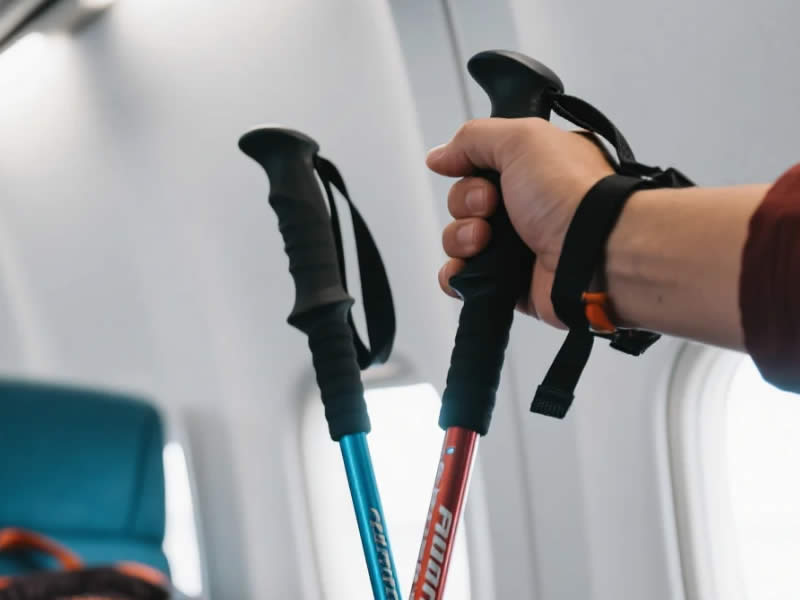
Recommended trekking pole purchase link: https://s.click.aliexpress.com/e/_c4M7OWaN
Why are trekking poles prohibited in carry‑on?
Aviation security agencies classify trekking poles as blunt objects – similar to baseball bats, ski poles, or walking sticks. They can be used as weapons or to cause injury. The TSA explicitly lists “hiking poles” and “walking sticks” on their “Prohibited Items” list for carry‑on baggage. Even if the poles are collapsible, foldable, or made of lightweight materials, they are still banned. Security screeners will confiscate them at the checkpoint, and you will not be able to retrieve them (they are typically disposed of or, in some airports, sent to a storage facility with high fees). There is no appeal.
What about international flights?
Rules are consistent across most countries:
- EU (EASA) : Trekking poles are prohibited in cabin baggage.
- Canada (CATSA) : Same rule – no walking sticks or hiking poles in carry‑on.
- Australia/New Zealand : Prohibited.
- Asia (Japan, China, etc.) : Generally prohibited, though enforcement may vary; never risk it.
The only exception might be for medical walking sticks (canes) used by passengers who genuinely need them for mobility. However, even then, the final decision rests with the security officer. For standard trekking poles, always assume they cannot go in the cabin.
Can I put trekking poles in checked luggage?
Yes. Checked baggage is the correct place for trekking poles. Most airlines allow them as part of your standard checked luggage, provided they are properly packed. There is usually no additional fee unless your bag exceeds weight or size limits. However, some budget airlines (e.g., Ryanair, EasyJet) may classify poles as “sports equipment” and charge a fee – check your airline’s policy.
How to pack trekking poles for checked luggage
To prevent damage to your poles and other gear:
- Collapse or fold them completely – Fully shorten telescoping poles or fold Z‑poles.
- Remove baskets if possible (they can snap off) and pack them in a small bag.
- Protect the tips – Use rubber tip covers or wrap them with tape.
- Secure sections – Use the pole’s own velcro strap or a rubber band to keep them from extending.
- Place inside a padded bag or wrap in clothing – A dedicated pole sleeve, a homemade cardboard tube, or wrapping them in a jacket prevents bending.
- Put them in the middle of your suitcase – Surround with soft items (clothes, sleeping bag) to cushion impacts.
- Use a hard‑shell suitcase for extra protection.
If you have a duffel bag or soft‑sided luggage, consider placing the poles in a PVC pipe or a sturdy cardboard tube to prevent them from puncturing the bag or bending.
What if I only have a carry‑on and no checked bag?
If you are traveling light and cannot check luggage, you have a few options:
- Ship your poles ahead – Use postal services to send them to your destination (e.g., a hotel, hostel, or post office). Costs vary but can be cheaper than checking a bag.
- Rent poles at your destination – Many outdoor shops near trailheads offer daily or weekly rentals.
- Buy cheap poles locally – After your trip, you can donate them or take them back as checked luggage.
- Mail them home from the destination – Not cost‑effective for short trips.
Do not attempt to sneak poles through security. Confiscation is almost certain, and you will lose them.
What about folding poles that fit in a small bag?
Even if a folding pole collapses to 40 cm (15 inches) and fits inside a carry‑on spinner, the rule is based on the item’s nature, not its size. Security officers will see the shape on X‑ray and pull your bag. You will be asked to remove the poles, and they will be confiscated. Size does not matter.
Can I take trekking poles if I have a disability?
If you rely on trekking poles as a mobility aid due to a documented disability (e.g., a doctor’s note), some airlines may allow them in the cabin. You must contact the airline in advance, provide medical certification, and expect extra screening. Standard trekking poles used interchangeably for hiking are unlikely to qualify. For most hikers, the rule remains: check them.
Summary of regulations
| Region | Carry‑on | Checked luggage | Notes |
|---|---|---|---|
| USA (TSA) | No | Yes | Must be packed; no size exemption |
| EU (EASA) | No | Yes | Same as above |
| Canada | No | Yes | |
| Australia | No | Yes | |
| Most other countries | No | Yes | Confirm local rules |
Final advice
The safest and most stress‑free approach is to always pack trekking poles in checked luggage. Invest in a protective sleeve or hard tube. If you cannot check a bag, ship or rent poles at your destination. Never attempt to carry them through security – you will lose them and potentially miss your flight. By following these guidelines, you can ensure your poles arrive safely at the trailhead, ready for your adventure.




