




Can trekking poles damage hiking trails?
The short answer is yes, trekking poles can damage hiking trails – but the extent and type of damage depend on the terrain, the pole tips, and how they are used. While trekking poles offer great benefits to hikers, they are not without environmental impact. This article examines the evidence, the most vulnerable surfaces, and what responsible hikers can do to minimise harm.
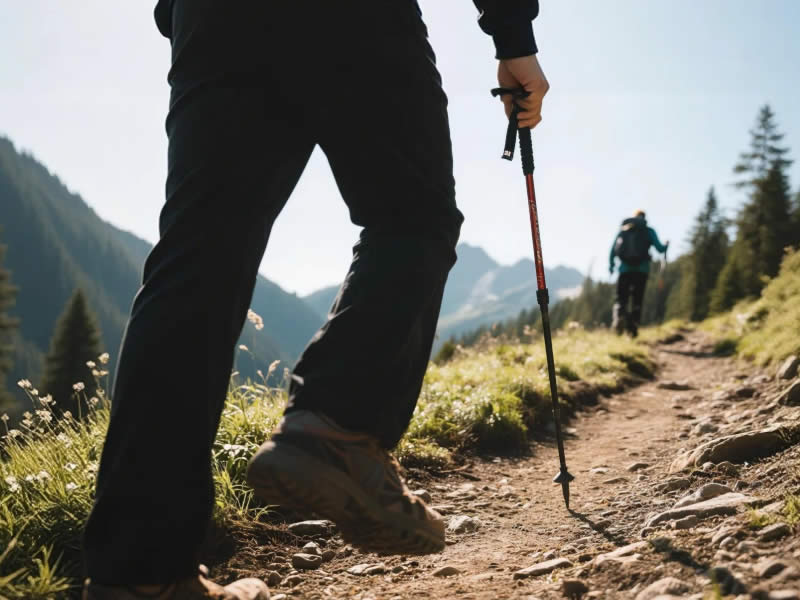
Recommended trekking pole purchase link: https://s.click.aliexpress.com/e/_c4M7OWaN
How trekking poles affect different trail surfaces
1. Rock surfaces (scrambles, slabs, and alpine rock)
Carbide tips are extremely hard – much harder than most natural rock. On popular scrambling routes or polished rock slabs (e.g., in the Alps or on granite domes), repeated carbide tip strikes can create small pits, scratches, and “dimples”. Over thousands of hikers, this accelerates weathering and mars the natural appearance. In sensitive archaeological areas (e.g., ancient rock art or fossil beds), even minor scratches can destroy irreplaceable features.
Verdict: Moderate to significant damage on soft rock (sandstone, limestone) and polished surfaces.
2. Soil and vegetation
On soft, muddy trails, planting a pole leaves a small hole. While a single hole is negligible, on popular trails with thousands of hikers, these holes can accumulate, leading to erosion, soil compaction, and damage to plant roots. In alpine meadows or peat bogs, piercing the fragile turf with pole tips can introduce rot, displace plants, and increase trail widening as hikers try to avoid already‑perforated areas.
Verdict: Minor but cumulative damage; becomes significant on heavily used, sensitive trails.
3. Mud and erosion
Paradoxically, poles can help reduce erosion by providing stability so hikers don’t slide off the trail and create widening braids. However, when hikers plant poles on the edge of a trail, they can undercut the side, accelerating slumping. Also, dragging pole tips along a trail can create small ruts that channel water, increasing erosive flow.
Verdict: Mixed – potential to both help and harm, depending on technique.
What trail organisations say
Many national parks and land management agencies have issued guidance on trekking poles. The US National Park Service and Leave No Trace Center for Outdoor Ethics note that while the impact of a single pole tip is small, the cumulative effect on popular routes can be significant. They recommend:
- Using rubber tip covers on rock slabs or in sensitive archaeological zones.
- Never planting poles on cryptobiotic soil crusts (desert ecosystems).
- Avoiding the use of poles on wet, muddy trails where holes can accelerate erosion.
- Staying on the trail centre, not the edges.
Some trails – notably in fragile high‑alpine environments – have explicitly banned metal‑tipped poles, requiring rubber tips or even prohibiting poles altogether. For example, certain sections of the Tour du Mont Blanc and some Corsican GR20 sensitive zones have such restrictions.
Comparison: pole damage vs. boot damage
It’s important to keep perspective. Hiking boots cause far more trail damage than trekking poles – through erosion, soil compaction, and vegetation trampling. Pole damage is a secondary issue. However, because poles are not essential for every hiker (unlike boots), the “easy” mitigation is to use rubber tips or go poleless in fragile areas.
How to minimise your impact
- Use rubber tip covers on pavement, rock slabs, and sensitive terrain. They protect the tip and the trail. Remove them when you need carbide bite on dirt or ice.
- Avoid planting poles on cryptobiotic crusts, moss, or rare plants – step around them.
- Don’t drag pole tips – lift them cleanly. Dragging creates ruts.
- Stay on the trail centre – planting on the edge undercuts it.
- In muddy sections, consider using poles lightly – or put rubber covers on to reduce hole size.
- Follow local regulations – some areas require rubber tips or prohibit poles.
- Retire worn carbide tips – a rounded, dull tip has a larger surface area and may cause more scraping than a sharp one? Actually, sharp tips concentrate force; dull tips might spread impact. The evidence is mixed. Best to use rubber covers.
Are rubber tip covers effective?
Yes. Rubber “paws” (e.g., Leki’s “Trekking Paws” or Black Diamond’s “Rubber Tech Tips”) slip over the carbide tip. They provide good traction on rock and pavement, protect the trail surface, and are cheap. The downside: they wear out quickly (50‑100 km on abrasive surfaces) and can pop off in snow or mud. Carry spares.
The bottom line
Trekking poles are a valuable tool for balance and joint protection, but they are not impact‑free. On popular, fragile, or rocky trails, their carbide tips can leave permanent marks. Responsible hikers should equip their poles with rubber covers when hiking on sensitive terrain, avoid unnecessary planting on fragile surfaces, and follow Leave No Trace principles. The small effort of adding rubber tips is a fair trade‑off for preserving the trails we all love.
Final verdict: Yes, trekking poles can damage trails – but the damage is localised, cumulative, and largely preventable with rubber tips and mindful technique. Use them wisely.




