




Can I use one trekking pole instead of two for casual walking?
Yes, you can absolutely use a single trekking pole for casual walking – and many people do. However, it is important to understand the trade‑offs. Using one pole is very different from using two, both biomechanically and in terms of stability. This article explains when a single pole is sufficient, when two poles are better, and how to use one pole correctly for everyday walks and light hiking.
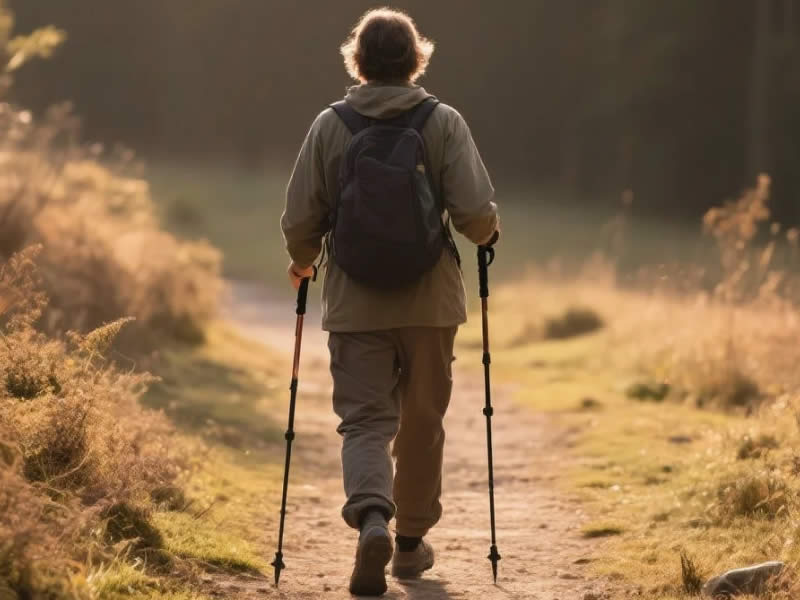
Recommended trekking pole purchase link: https://s.click.aliexpress.com/e/_c4M7OWaN
The short answer
For short, flat, casual walks on pavement or smooth gravel paths, one trekking pole can provide useful support, especially if you have a minor imbalance (e.g., a slightly weak knee or ankle). However, for uneven terrain, descents, or carrying any significant weight, two poles are far superior. Using only one pole on steep or rough ground can actually increase your risk of falling by creating an asymmetrical gait.
Benefits of using a single pole
- Reduces load on one leg – If you have pain in one knee or hip, holding the pole on the opposite side (left pole for right leg pain) offloads that joint by about 10‑15%. This can make walking more comfortable.
- Improves basic balance – A single extra point of ground contact helps on gentle slopes or uneven pavement.
- Keeps one hand free – You can carry a water bottle, use a phone, or hold a dog leash with the other hand.
- Simpler and lighter – Carrying one pole is less hassle, and you save the weight of the second pole.
- Less expensive – You only need to buy one pole (or already have a spare).
Drawbacks of a single pole
- Asymmetrical gait – Using a pole on one side alters your natural walking rhythm. Over time, this can lead to muscle imbalances or strain on the opposite hip and lower back.
- Less stability – A single pole provides a triangular base of support (two feet + one pole). Two poles create a wider, quadrilateral base, which is much more stable on uneven ground.
- No fall arrest on the other side – If you slip to the side without the pole, you have no support.
- Less load sharing – Two poles can offload up to 20‑25% of your body weight; one pole offloads only 10‑15% and only on the opposite leg.
- Not suitable for descents – Going downhill, you need both poles to brake effectively. A single pole can actually pull you off balance.
When is one pole acceptable?
| Situation | Acceptable? | Notes |
|---|---|---|
| Flat, paved walking path | ✅ Yes | Good for seniors with mild imbalance. |
| Gentle gravel or hard‑packed dirt | ✅ Yes | As long as terrain is even. |
| Slight uphill (not steep) | ✅ Yes | Use the pole on the side of your weaker leg (opposite). |
| Short walk (< 3 km) | ✅ Yes | Fine for casual use. |
| Steep downhill | ❌ No | Use two poles or none. |
| Rocky or rooty trail | ❌ No | Two poles are much safer. |
| Carrying a heavy backpack | ❌ No | Two poles distribute load. |
| Any risk of falling (ice, mud) | ❌ No | Two poles are essential. |
How to use a single trekking pole correctly
- Hold the pole on the side opposite your painful or weaker leg – If your right knee hurts, hold the pole in your left hand. This transfers load away from the painful joint.
- Move the pole simultaneously with the opposite foot – When your right foot steps forward, plant the pole (held in left hand) at the same time. This mimics a natural walking rhythm.
- Adjust height correctly – Elbow at 90° on flat ground. For gentle uphill, shorten slightly; for gentle downhill, lengthen slightly.
- Use the wrist strap – Insert your hand from below, cinch snugly. Let the strap take the weight, not your grip.
- Keep the pole close to your body – Do not swing it far out to the side; plant it near your foot.
When to definitely use two poles
- Any descent – Downhill is where poles provide the greatest benefit to your knees and balance. Two poles acting as brakes are essential.
- Uneven or slippery terrain – Roots, rocks, mud, or ice demand a wide base of support.
- Carrying a backpack over 5 kg – The extra weight increases fall risk and joint load.
- Hiking longer than 5 km – Fatigue sets in; two poles distribute work.
- Any balance disorder or history of falls – Two poles offer a safety margin.
What about using a walking cane instead?
A traditional medical cane is shorter and often has a curved handle. It is designed for people who need to offload one leg significantly (e.g., after surgery). For casual walking, a trekking pole is a reasonable substitute if you already own one. However, a cane provides a slightly wider base (due to its shape) and is easier to use indoors. For paved paths, either works.
Real‑world perspective from physiotherapists
Many physiotherapists recommend a single walking stick for patients with mild knee arthritis or after a minor ankle sprain, once they progress beyond crutches. They often suggest a standard cane rather than a trekking pole because of its ergonomic handle. However, if you already have a trekking pole and cannot afford a cane, using one is acceptable for short, flat walks. For any inclined or uneven terrain, they strongly advise two poles.
Final verdict
Yes, for casual walking on flat, even ground, one trekking pole is fine. It can provide helpful support for a weak leg, reduce minor knee pain, and improve confidence. However, it is not a substitute for two poles on anything other than gentle terrain. If you plan to walk on slopes, rough trails, or for longer distances, invest in a second pole or use a proper walking cane. Using one pole incorrectly (e.g., on descents) can actually increase your fall risk. As a rule of thumb: if you need a pole for balance, you likely need two. If you just need a little help for a painful leg on pavement, one is enough.




