




Are expensive trekking poles really better for weekend hillwalking?
If you enjoy weekend hillwalking – a few hours on moderate slopes, maybe a steep section or two, with a light daypack – you may wonder whether splashing out on premium trekking poles is worth it. The short answer is no. For typical weekend hillwalking, a reliable mid‑range pole (around £40‑60 / €50‑70) will serve you just as well as a £150 carbon model. Here’s why.
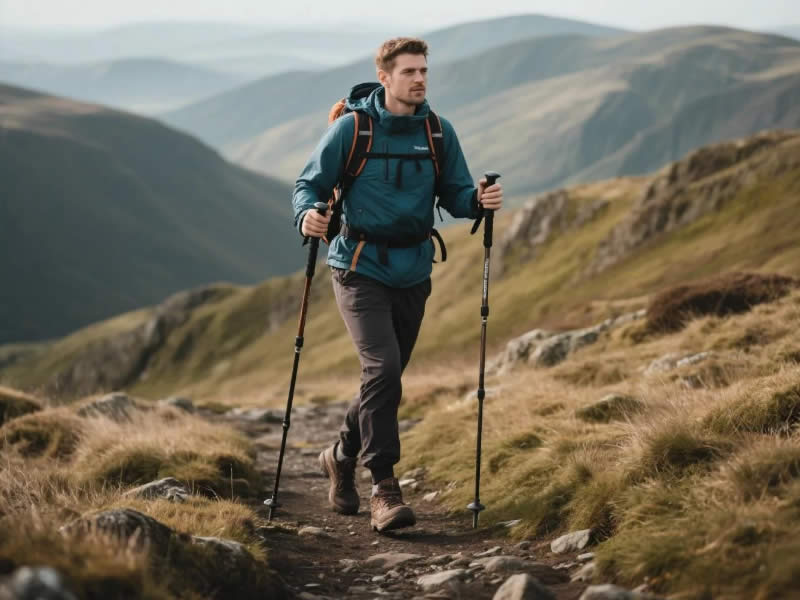
Recommended trekking pole purchase link: https://s.click.aliexpress.com/e/_c4M7OWaN
What counts as “expensive” and “better”?
- Expensive poles (£100‑150+): carbon fibre shafts, folding (Z‑pole) designs, advanced quick‑release straps (e.g., Leki Trigger Shark), or ultra‑lightweight aluminium with premium grips.
- Mid‑range poles (£40‑70): 7075 aluminium shafts, external flick‑locks, comfortable cork or foam grips, replaceable carbide tips – e.g., Leki Khumbu Lite, Decathlon Forclaz MT500, Komperdell Contour Powerlock.
“Better” might mean lighter, more comfortable, or more durable. For weekend hillwalking, the marginal gains of expensive poles rarely translate into real‑world benefits.
What weekend hillwalking actually demands
Weekend hillwalks typically involve:
- 2‑6 hours of walking.
- Moderate ascents and descents (e.g., 300‑600m elevation gain).
- Mixed terrain: grass, rocky sections, mud, maybe a little scree.
- A daypack weighing 5‑8 kg (water, lunch, jacket, map).
In these conditions, the most important features are:
- Reliable lock – must not slip when you lean on it.
- Decent grip – comfortable for a few hours, works in light rain.
- Durable shaft – can handle an occasional knock on rock.
- Replaceable tip – because rocky hills wear down carbide.
All of these are provided by a good mid‑range aluminium pole.
Where expensive poles do not add value for weekends
- Weight saving – A pair of carbon poles might be 150g lighter than aluminium. Over a 4‑hour walk, the cumulative energy saving is negligible for most people. Unless you have weak arms or arthritis, you won’t notice the difference.
- Folding (Z‑pole) design – Folding poles are great for stowing in a running vest or small pack. On a weekend hillwalk, you carry your poles in your hands 95% of the time. The inconvenience of strapping a telescoping pole to the outside of your pack is trivial.
- Quick‑release straps – Leki’s Trigger Shark allows instant detachment. Useful if you are constantly taking photos or checking a phone. Most weekend hikers can simply stop for a moment and slide their hand out of a standard strap.
- Carbon’s stiffness – Carbon transmits less vibration, which is nice on hard, frozen ground. On a typical British grassy or muddy hill, you won’t feel the difference.
Where expensive poles might help (rarely)
- Very long or steep descents – If your weekend hill includes a 500m vertical drop over a mile of loose scree, the extra durability of a thicker‑walled aluminium pole (like Black Diamond Trail Pro) could be reassuring. But that’s still a mid‑range pole (£70‑90), not an ultra‑expensive carbon model.
- Extreme cold or winter use – If you go hillwalking in deep snow or ice, you might want a metal flick‑lock (e.g., Black Diamond’s FlickLock Pro). Still not “expensive” by carbon standards.
- Injury or weakness – If you have wrist or elbow pain, the vibration damping of carbon could be beneficial. But try a mid‑range pole with a foam grip first – often that’s enough.
The risk of expensive poles for weekend use
Expensive carbon poles are brittle. On a rocky hill path, a misplaced plant or a drop onto a sharp rock can snap a carbon shaft. Mid‑range aluminium poles bend but rarely break. For weekend walkers who may not have perfect pole technique, aluminium is more forgiving.
What you gain by spending less
By choosing a £50 pair of aluminium flick‑lock poles, you save £50‑100. That money could buy:
- A better pair of waterproof trousers.
- A lightweight insulated jacket.
- A high‑quality headtorch.
- Several pub meals after your walks.
The bottom line
For weekend hillwalking – typical British or European moderate hills – expensive trekking poles are not really better. A good mid‑range aluminium pole with flick‑locks and a replaceable carbide tip offers all the safety, comfort, and durability you need. Spend the extra money on other gear or on enjoying the hills. Only consider carbon or premium models if you have a specific physical need, you walk every weekend on very rocky terrain, or you simply enjoy owning high‑end gear (which is fine, but be honest that it’s a luxury).
Final verdict: No, save your money. Buy Leki Khumbu Lite, Decathlon MT500, or Komperdell Contour. Your knees will thank you, and your wallet will too.




