




Can I use walking poles instead of trekking poles for rambling?
If you enjoy rambling – leisurely walks on well‑marked paths, gentle hills, and countryside trails – you might wonder whether you can use walking poles (often called hiking staffs or fixed‑length walking sticks) instead of dedicated trekking poles. The short answer is yes, for gentle rambling. However, there are important differences that affect safety, comfort, and efficiency on more demanding terrain. This article explains when walking poles are sufficient, when you need trekking poles, and how to choose the right tool for your rambling adventures.
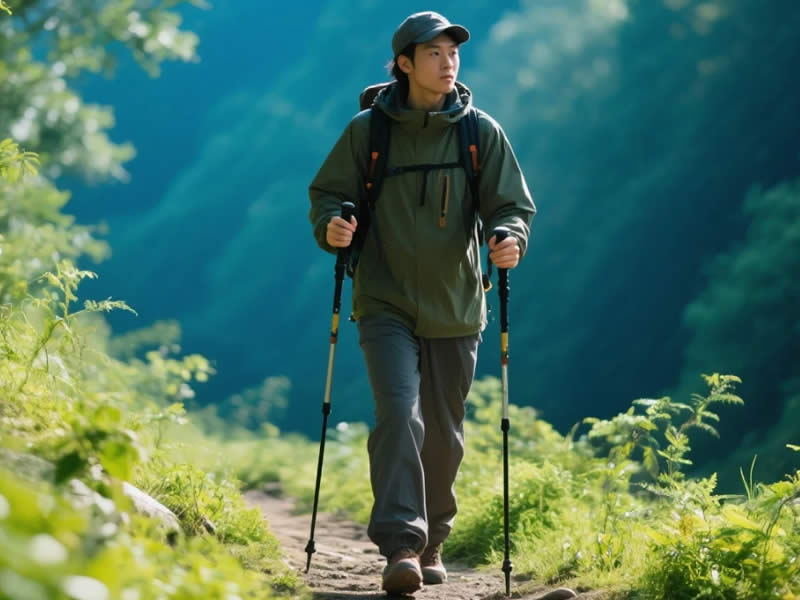
Recommended trekking pole purchase link: https://s.click.aliexpress.com/e/_c4M7OWaN
What are walking poles?
Walking poles (or walking sticks) are typically:
- Fixed length – not adjustable (though some have a simple push‑button adjustment).
- Single‑piece or two‑piece construction – heavier and less packable.
- Rubber tip – often with a simple metal spike hidden under the rubber.
- Straight or curved handle – usually wood, plastic, or basic foam.
- Designed for light support – on flat, even surfaces like pavement, gravel paths, or gentle fields.
They are inexpensive and widely available in outdoor shops or even supermarkets.
What are trekking poles?
Trekking poles are designed for more challenging terrain:
- Adjustable length – telescoping or folding, with flick‑locks or twist‑locks.
- Carbide tip – sharp tip that bites into dirt, rock, and ice, with removable rubber covers for pavement.
- Ergonomic grip – cork or foam, often with an extended section for choking down.
- Wrist strap – padded strap that transfers load from your hand to your forearm.
- Lightweight – aluminium or carbon, typically 200‑280g per pole.
When walking poles are perfectly fine for rambling
If your rambles are:
- On flat, paved, or gravel paths (e.g., canal towpaths, forest roads, park trails).
- Short distances (under 10 km) with little elevation gain.
- In dry, mild weather (no mud or slippery surfaces).
- With a light daypack (just a bottle of water and a snack).
Then a pair of walking poles (or even a single stick) can provide mild balance support and reduce some pressure on your knees. They are simple, cheap, and do the job.
When walking poles become inadequate (or risky)
- Muddy, slippery trails – Rubber tips have poor grip on wet mud or grass. Trekking poles with carbide tips dig in.
- Steep ascents or descents – Fixed length walking poles are the wrong length for hills. On a climb, you need shorter poles to keep your torso upright; on a descent, you need longer poles to brake. Without adjustability, you’ll be forced into poor posture, increasing fall risk.
- Rocky or uneven ground – Walking poles often have weaker shafts that can bend if jammed between rocks. Trekking poles are built to take lateral forces.
- Heavy backpack – If you carry a loaded rucksack (for a full day out), the load transfer from trekking poles (via wrist straps) is essential. Walking poles lack proper straps.
- Wet weather – Basic foam or wooden handles become slippery when wet. Cork or quality foam grips on trekking poles remain grippy.
In these conditions, using walking poles instead of trekking poles can be uncomfortable and potentially dangerous.
Can you adapt walking poles?
You can sometimes replace the rubber tip of a walking pole with a carbide tip (if it has a screw‑on ferrule). However, you cannot adjust length or add a proper wrist strap. For serious rambling on varied terrain, these limitations remain significant.
What about using a single walking stick (hiking staff)?
A single wooden staff can be charming and traditional. It provides a point of support on one side, but it does not offer the bilateral stability of two trekking poles. For rambling on easy paths, one stick is fine. For anything more challenging, two poles are safer.
Recommendations for ramblers
- For pure leisure rambling on flat, hard paths – Walking poles are acceptable. Consider a pair with rubber tips and comfortable grips. Avoid twist‑lock versions; simple fixed length is fine.
- For hills, mud, or uneven terrain – Invest in entry‑level trekking poles with flick‑locks, aluminium shafts, and carbide tips. Models like the Decathlon Forclaz MT500 (£35) or Leki Khumbu Lite (£55) are affordable and far superior to walking poles.
- If you already own walking poles – Use them on easy walks, but upgrade if you plan to tackle steeper or wetter routes.
Final verdict
Yes, you can use walking poles instead of trekking poles for gentle, low‑risk rambling on flat, hard surfaces. They will provide light support and a bit of stability. However, for any terrain involving mud, hills, rocks, or longer distances, trekking poles are significantly safer and more effective. They offer adjustability, superior grip, load‑transferring straps, and durability. If you are serious about rambling on Britain’s varied countryside – which often includes unexpected mud and slopes – invest in a proper pair of trekking poles. Your knees and your balance will thank you.




