




Which trekking pole locking system is most reliable for daily use?
If you use trekking poles every day – whether for rambling, Nordic walking, or as mobility aids – you need a locking system that never slips, works in all weather, and requires minimal maintenance. After decades of real‑world testing, the clear winner is the external flick‑lock (cam lever) . Twist‑locks are prone to failure, especially in muddy or cold conditions. This article compares the two main systems and explains why flick‑locks are the most reliable choice for daily use.
Recommended trekking pole purchase link: https://s.click.aliexpress.com/e/_c4M7OWaN
The two main locking systems
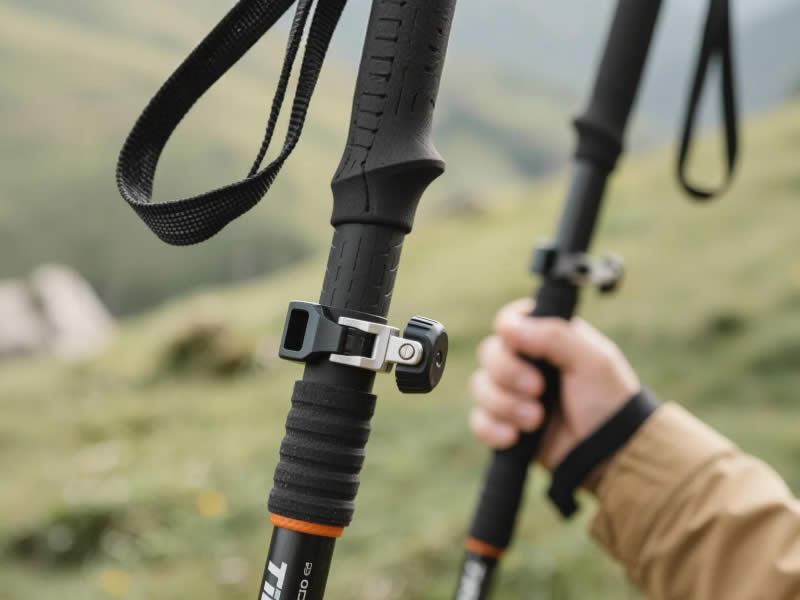
- External flick‑lock (cam lever): A lever on the outside of the pole clamps the inner shaft. Popular examples: Leki SpeedLock, Black Diamond FlickLock, Komperdell Powerlock.
- Twist‑lock: The lower section is rotated to expand an internal plastic or rubber plug against the inner wall. Common on budget poles and some older designs.
- (Note: Folding Z‑poles use a different snap‑button system, but for daily use on variable terrain, telescoping poles with flick‑locks are more versatile.)
Why flick‑locks are more reliable for daily use
1. Resistance to dirt and mud
Daily walking often involves muddy paths. Twist‑locks have an internal mechanism that can become clogged with grit. Once mud enters, the expander cannot grip properly, causing the pole to slip. Cleaning a twist‑lock requires disassembly. Flick‑locks are external: mud can be wiped away instantly, and the clamping surface is easily accessible.
2. Consistent clamping force
A flick‑lock provides a positive, metal‑on‑plastic (or metal‑on‑metal) clamp. You feel a distinct click when it locks. The force is repeatable and does not degrade with use. Twist‑locks rely on an expander that can harden or lose its springiness over time. After months of daily use, a twist‑lock often fails to hold.
3. Ease of adjustment with gloves or cold hands
Daily use continues through winter. Twist‑locks require a firm twisting motion that is difficult with thick gloves or cold, numb fingers. Flick‑locks use a simple pinch‑and‑push motion that works even with mittens.
4. Field repairability
If a flick‑lock lever becomes loose, you can tighten a small screw with a coin or multitool in seconds. Replacement levers and screws are available from major brands. A broken twist‑lock expander often requires sending the pole back to the manufacturer or buying a complete new lower section – not practical for daily users who rely on their poles.
5. No slipping under load
Daily use includes leaning heavily on poles during descents or when carrying shopping. Twist‑locks are notorious for suddenly collapsing, especially after a few months of wear. Flick‑locks hold firmly even under heavy loads, as long as the lever is properly tightened.
When twist‑locks might still be acceptable
Twist‑locks are not all bad. They are:
- Cheaper to manufacture, so found on low‑cost poles.
- Smoother in appearance (no external lever).
- Lighter by a few grams.
For very light use on clean, dry pavement, a twist‑lock may function for a season. But for daily use on varied terrain, they are a false economy.
What about folding poles (Z‑poles)?
Folding poles use a snap‑button and internal cord. They are very reliable for their intended purpose (fastpacking, running). However, they are fixed length – you cannot adjust them for different terrain. For daily walking that involves both flats and hills, telescoping poles with flick‑locks are more practical and just as reliable.
Real‑world longevity
- A quality flick‑lock pole (e.g., Leki Makalu) used daily will often last 5‑10 years with only occasional screw tightening and tip replacement.
- A twist‑lock pole used daily may start slipping within 6‑12 months, and the expander may need replacement every year or two.
Maintenance tips for daily use
- Flick‑locks: Rinse after muddy walks. Once a month, check the lever screw – tighten ¼ turn if loose. Apply a tiny drop of dry silicone to the pivot.
- Twist‑locks: If you insist on using them, disassemble and clean the expander every few weeks. Replace expanders every 6‑12 months. Never over‑tighten.
Final verdict
For daily use – where reliability, ease of maintenance, and all‑weather performance are paramount – external flick‑locks (cam levers) are the most reliable trekking pole locking system. They resist mud, operate easily with gloves, and are field‑repairable. Twist‑locks are suitable only for occasional, light use on clean, dry surfaces. If you depend on your poles every day, invest in flick‑locks. Your knees and your peace of mind will thank you.




