




Are two trekking poles better than one for hill walking?
Yes – for hill walking, two trekking poles are significantly better than one. While a single pole can offer some support, using two poles provides superior balance, reduces joint strain, promotes symmetrical movement, and lowers the risk of falling on steep, uneven terrain. This article explains the biomechanical and practical reasons why two poles outperform one, especially on hills.
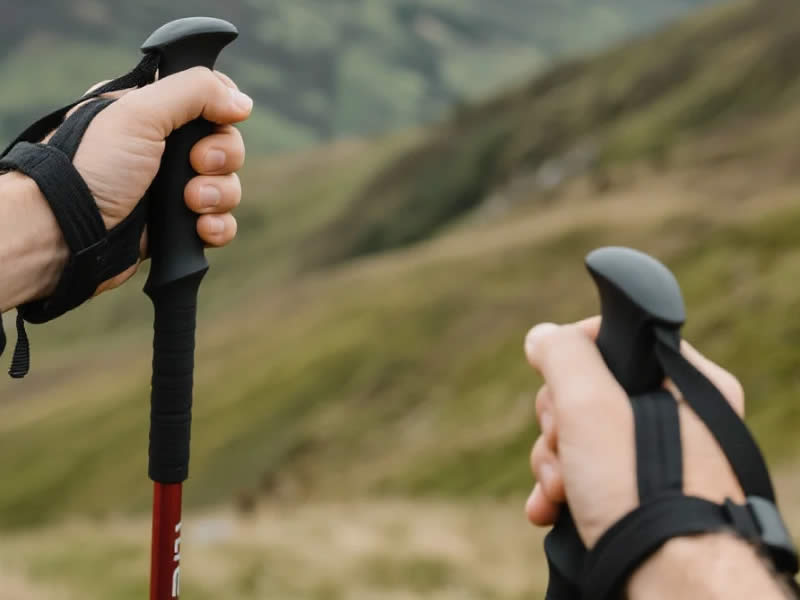
Recommended trekking pole purchase link: https://s.click.aliexpress.com/e/_c4M7OWaN
Why one pole is a compromise
A single trekking pole (or walking stick) creates a triangular base of support: two feet plus one pole. This can help offload a painful leg (if the pole is used on the opposite side) and provides mild balance assistance on flat ground. However, on hills, a single pole has major drawbacks:
- Asymmetrical gait – You naturally lean away from the pole, causing a sideways tilt. Over time, this can lead to muscle imbalances and back pain.
- Limited lateral stability – If you slip to the side without the pole, you have no support. Falls on hills often happen sideways.
- Uneven load distribution – The pole‑side leg receives less support than the other leg, potentially overworking the unassisted side.
- Poor performance on descents – A single pole cannot brake effectively on steep downhills; you will still put excessive strain on your downhill knee.
The advantages of two poles on hills
1. Quadrilateral stability
Two poles create a four‑point base of support (two feet + two poles). This wider, symmetric footprint dramatically improves balance on loose scree, wet grass, or rocky paths. On a side‑hill traverse, you can shorten the uphill pole and lengthen the downhill pole, keeping both poles in contact with the slope – impossible with one pole.
2. Reduced knee and hip impact
Descending a hill with a heavy daypack can subject your knees to forces of 3‑4 times your body weight. Two poles, used with proper wrist straps, can transfer 20‑25% of that load from your legs to your arms. One pole transfers only about 10‑15% and only on one side, leaving the other knee vulnerable.
3. Reciprocal gait pattern
Using two poles encourages a natural walking rhythm: right pole with left foot, left pole with right foot. This engages your core and maintains an upright posture. A single pole often leads to a limp or a shuffling gait, especially when tired.
4. Better braking on descents
On a steep descent, you can plant both poles well ahead of your feet, leaning back slightly to control your speed. This reduces the jarring impact on your quadriceps and knee joints. One pole cannot provide enough braking force, and you may find yourself leaning onto the pole, risking a face‑plant.
5. Enhanced uphill propulsion
When climbing, you can plant both poles behind you and push off, using your arm strength to help lift your body weight. This is particularly valuable on long, steep ascents where leg muscles fatigue quickly. One pole offers minimal push‑off benefit.
What the science says
Biomechanical studies have shown that using two trekking poles reduces the vertical ground reaction force on the lower limbs by up to 20‑25% on level ground and even more on slopes. A single pole reduces load by only 10‑15% and only on the contralateral leg. Additionally, two poles improve dynamic postural stability, as measured by centre‑of‑pressure displacement, compared to one pole or no poles.
Practical considerations for hill walkers
- Weight penalty – Two poles weigh about 500‑600g (a pair of aluminium poles). That’s a small price for the safety and joint benefits on hills.
- Learning curve – Using two poles takes a little practice, especially coordinating the reciprocal motion. After an hour, it becomes natural.
- When one pole might be acceptable – If you have a minor ankle sprain or walk on a flat, even path, a single pole can suffice. But for true hill walking (with gradients of 10% or more), two poles are strongly recommended.
- Terrain with dense vegetation – On very narrow, overgrown paths, two poles may get tangled. In such cases, you can collapse one pole and carry it, then redeploy when the terrain opens up.
Final verdict
For hill walking – whether on the rolling downs of the South Downs, the steep fells of the Lake District, or the rugged Scottish Highlands – two trekking poles are vastly better than one. They provide symmetrical support, reduce joint strain, improve balance, and help prevent falls. A single pole is a poor compromise that can lead to asymmetry, uneven loading, and increased risk of injury. Invest in a pair of flick‑lock aluminium poles, learn to use them correctly, and your knees and confidence will thank you on every descent.




