




Are Leki trigger strap trekking poles better than traditional straps?
Leki’s Trigger system (available in Trigger 3D, Trigger Shark, and other variants) replaces the classic padded wrist strap with a quick‑release mechanism that attaches to a dedicated glove or a loop worn on your hand. The question of whether it is “better” than traditional straps depends entirely on your hiking style, conditions, and personal preferences. This article provides an in‑depth comparison to help you decide.
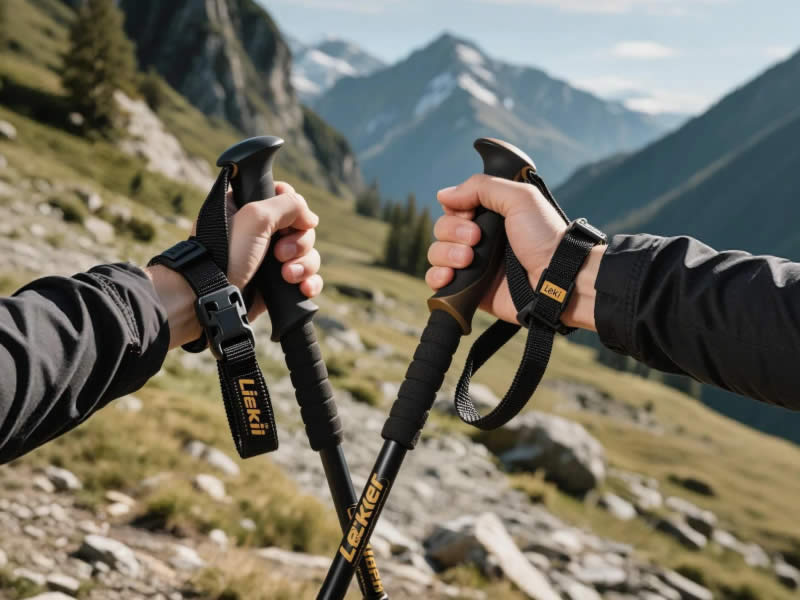
Recommended trekking pole purchase link: https://s.click.aliexpress.com/e/_c4M7OWaN
How the Leki Trigger system works
A small plastic or metal “trigger” is sewn onto a glove or a simple loop. The pole handle has a corresponding receiver. To connect, you push the trigger into the handle – it clicks securely. A gentle squeeze of the handle (or press of a button, depending on the generation) releases the pole instantly. The trigger stays on your hand, allowing you to use your hands freely without removing the strap.
Advantages of Trigger straps over traditional straps
1. Instant detachment without removing gloves
Traditional straps require you to pull your hand out of the loop – a motion that can be awkward with thick gloves or cold hands. With Trigger, you squeeze and the pole drops away while the trigger remains on your glove. This is invaluable when you need to scramble, take a photo, check a map, or adjust layers.
2. No dangling straps
When you release a traditional pole, the wrist strap flops around, potentially catching on branches or tripping you. With Trigger, the strap stays on your hand; the pole has no dangling parts. This is particularly beneficial on rocky scrambles or narrow trails.
3. Consistent hand placement
Traditional straps can twist or shift, requiring you to reposition your hand. The Trigger mechanism locks into a fixed orientation, ensuring your hand is always in the optimal position on the grip. This reduces blisters and improves efficiency.
4. Glove compatibility
Leki sells specific Trigger‑compatible gloves (e.g., Leki Trigger Shark Glove), but you can also sew the trigger loop onto your own gloves. This allows you to use the system with any glove of your choice.
5. Safer in falls
If you fall, your hand can naturally release the pole without being trapped by a traditional strap. This can reduce the risk of shoulder or wrist injury.
Disadvantages of Trigger straps
1. Requires compatible gloves or loops
You cannot use Trigger poles with bare hands or ordinary gloves (the mechanism will not stay attached). You must either buy Leki’s gloves or sew a trigger loop onto your existing gloves. This adds cost and complexity.
2. Learning curve
Connecting the trigger to the handle takes practice, especially when you are tired or have cold fingers. Some users report accidentally releasing the pole while planting.
3. Can freeze or clog with mud
In freezing rain or wet snow, the mechanism can ice up, making release difficult. Mud or grit can also jam the receiver. Traditional straps have no moving parts.
4. Additional cost
Trigger poles are more expensive (typically £10‑30 extra) and the compatible gloves add further expense. Traditional straps are included on all basic poles.
5. Not necessary for most hikers
For simple day hikes on well‑maintained trails where you rarely need to free your hands, the quick‑release offers little benefit. Traditional straps are perfectly adequate.
Who benefits most from Trigger straps?
- Trail runners and fastpackers who frequently transition between using and stowing poles.
- Winter hikers who wear thick gloves and struggle to get hands in and out of traditional straps.
- Scramblers and climbers who need free hands for rock sections.
- Photographers who want to quickly drop poles to take a picture.
- Hikers with arthritis or reduced dexterity who find pulling hands out of straps painful.
Who should stick with traditional straps?
- Budget‑conscious hikers – traditional straps are free.
- Hikers who never need to free their hands – if you keep poles in hand all day, Trigger offers no advantage.
- Those who dislike proprietary systems – traditional straps are universal.
- Hikers in extreme cold or mud – where moving parts may freeze or jam.
Real‑world user feedback
- Positive: “I love my Trigger Shark poles. On a mixed trail with scrambles, I can unclip in a second, scramble up, then re‑clip without stopping. Game changer.”
- Negative: “I lost a pole because I didn’t clip it properly. It fell out while I was crossing a stream. Also, the gloves are expensive.”
Leki Trigger generations
- Trigger 3D: Original system with a plastic clip; release by pressing a button on the handle.
- Trigger Shark: Magnetic or mechanical clip that releases by squeezing the handle. More glove‑friendly.
- Trigger Shark 2.0: Current version with improved durability and easier operation.
All are compatible with each other? Check Leki’s compatibility chart.
Final verdict: is Trigger better?
For runners, winter hikers, and those who frequently need free hands – yes, Leki Trigger straps are significantly better than traditional straps. The instant release and no‑dangle design improve safety and convenience.
For casual day hikers on gentle terrain – no, Trigger straps are not worth the extra cost and complexity. Traditional straps are simple, reliable, and work well for 95% of walking scenarios.
Ultimately, “better” is subjective. If you have the budget and your hiking style involves frequent transitions, invest in Trigger. If you are a traditionalist or on a tight budget, stick with conventional straps. Both will keep your poles secure; choose based on your needs.




