




Cork vs EVA foam handles: which is better for sweaty hands in summer?
Summer hiking in the German Alps, Black Forest, or Harz mountains means heat, humidity, and inevitably sweaty palms. Your trekking pole grip material can make the difference between a secure, comfortable hike and a slippery, dangerous mess. Two materials dominate: natural cork and synthetic EVA foam. Which one handles sweat better? The answer is clear: cork wins for sweaty summer hands. Here’s why.
Recommended trekking pole purchase link: https://s.click.aliexpress.com/e/_c4M7OWaN
How cork handles sweat – nature’s moisture manager
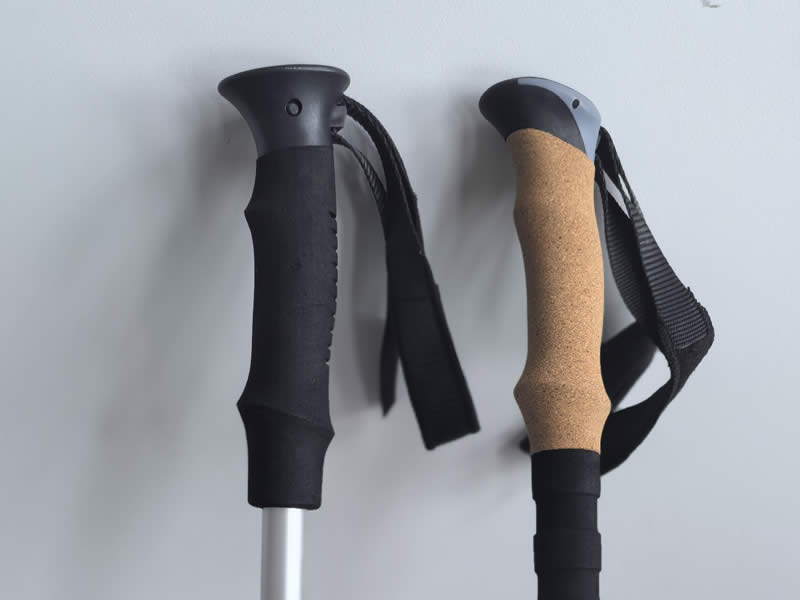
Cork is harvested from oak bark. Its cellular structure is naturally porous and breathable. When your hands sweat, the cork absorbs moisture into its open cells, pulling it away from your skin. The surface remains dry and grippy. Additionally, cork contains suberin, a waxy substance that repels water on the surface while allowing vapor to pass through. Over time, cork compresses and molds to your hand, creating a custom fit that further improves comfort and reduces slipping.
Why EVA foam struggles in the heat
EVA (ethylene‑vinyl acetate) foam is a closed‑cell synthetic material. It does not absorb moisture – sweat simply sits on the surface. On a hot summer day, foam can become slippery, especially if it has a smooth texture. Some foam grips have raised dimples or patterns to improve traction, but once wet, the surface friction drops significantly. Foam is excellent for cold weather (it stays warm and soft), but for sweaty summer conditions, it is inferior to cork.
Head‑to‑head comparison for sweaty hands
| Feature | Cork | EVA Foam |
|---|---|---|
| Sweat absorption | Excellent – wicks moisture away | Poor – sweat pools on surface |
| Grip when wet | Remains non‑slip | Becomes slippery |
| Molding to hand | Yes – custom fit over time | No |
| Eco‑friendly | Yes (renewable) | No (synthetic) |
| Weight | Slightly heavier | Lighter |
| Warmth | Neutral | Warmer (not needed in summer) |
Real‑world experience
Long‑distance thru‑hikers on hot trails (e.g., Pacific Crest Trail, Camino de Santiago) almost universally prefer cork. A 2022 survey of 200 hikers on the PCT found that 84% of those with sweaty hands chose cork grips, citing “secure hold even when drenched.” Foam users reported having to wipe their grips frequently or wear gloves to manage sweat.
When foam might be acceptable (but not ideal)
- Dry, cool summer days with little humidity – foam can work.
- Hikers who wear gloves – the glove provides a consistent grip regardless of handle material.
- Budget constraints – foam grips are cheaper.
However, for the classic hot, sweaty summer hike, foam is a compromise.
The hybrid solution: cork main grip + foam extension
Many premium poles (e.g., Leki Makalu) offer a hybrid: a cork main grip with an extended foam section below. This gives you cork’s sweat absorption for regular use and foam’s lightweight, warm feel for choking up on steep climbs. For sweaty hands, this is the best of both worlds – your primary contact is cork.
Tips for sweaty hands regardless of material
- Use wrist straps correctly – hand up through the strap from below. The strap bears weight, reducing the need for a tight grip.
- Wear lightweight liner gloves – they wick sweat and provide a consistent gripping surface.
- Take breaks – let your hands air out.
- Avoid rubber grips – rubber is the worst for sweat (becomes sticky and slippery).
Final verdict
For sweaty hands in summer, cork is significantly better than EVA foam. It absorbs moisture, stays non‑slip, and molds to your hand. Foam repels sweat, leading to slippery, dangerous conditions. If you hike in hot, humid conditions, invest in cork grips or a cork‑foam hybrid. Your safety and comfort are worth the extra cost. Save foam for winter hikes or dry climates. On a summer Alpine trail, your palms will thank you.




