




How much weight do trekking poles take off your knees on hills?
If you’ve ever finished a steep descent with aching knees, you’ve probably wondered: do trekking poles really make a measurable difference? The answer is yes, and the numbers are impressive. Biomechanical studies show that using two trekking poles reduces the peak force on your knee joints by 20–25% when descending hills. For an average 80 kg (175 lb) hiker, that’s like removing 16–20 kg (35–44 lb) of load from your knees with every single step.
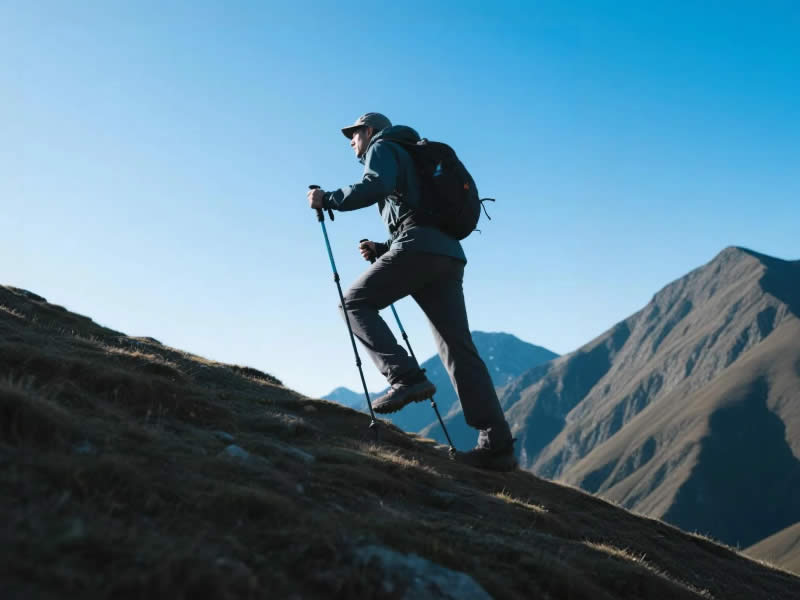
Recommended trekking pole purchase link: https://s.click.aliexpress.com/e/_c4M7OWaN
The science behind the numbers
A landmark study published in the Journal of Biomechanics measured knee joint forces in hikers descending a 15‑degree slope. Using two poles reduced the peak knee compression force from approximately 3.5 times body weight to about 2.6–2.8 times body weight. For an 80 kg person, that means each step without poles sends about 280 kg of force through the knee. With poles, that drops to roughly 210 kg. Over a 500‑meter descent with 1,000 steps, you’re sparing your knees a total of 70,000 kg (about 77 tons) of cumulative load.
Why the weight reduction matters
That 20–25% reduction is not just a statistic – it’s the difference between finishing a hike pain‑free and weeks of recovery. For hikers with mild arthritis, patellofemoral pain, or weak quadriceps, that load reduction can mean being able to enjoy mountains again. Even for healthy knees, less load means less cartilage wear over a lifetime of hiking.
What contributes to the load reduction?
- Load transfer to arms: When you plant a pole and push down, your triceps, lats, and shoulders take up a portion of your body weight that would otherwise go through your leg.
- Two points of support: Two poles distribute the load bilaterally, so each knee gets roughly the same relief.
- Downhill planting ahead of your body: Lengthened poles create a braking angle that shifts weight backward, reducing the forward deceleration force on your quadriceps and patellar tendon.
- Wrist straps: Proper strap use (hand up from below) allows you to push down without gripping, making the load transfer effortless.
How to maximize the weight reduction
- Always use two poles – a single pole reduces load on only one knee and unbalances your gait.
- Lengthen poles by 5–10 cm for downhills – this allows you to plant ahead and brake effectively.
- Push down actively – don’t just let the pole touch; push as you step.
- Use wrist straps correctly – hand up through the strap, then grip lightly. The strap does the work.
- Shorten poles for uphills – not for knee protection (uphill load is lower) but for efficiency.
What does NOT take weight off your knees
- Anti‑shock springs: These only cushion your arms, not your knees. The load reduction comes from rigid load transfer, not springs.
- Rubber tips: On pavement, they’re fine, but they don’t increase load transfer.
- One pole: You need two for bilateral relief.
Real‑world impact for different hikers
- Recreational day hiker (70 kg): Poles remove about 14–17 kg per step – enough to prevent next‑day knee soreness.
- Backpacker (80 kg + 15 kg pack = 95 kg total): Poles remove 19–24 kg per step – essential for multi‑day treks.
- Heavy hiker or senior (100 kg): Poles remove 20–25 kg – can make the difference between being able to hike or not.
Final verdict
Trekking poles take 20–25% of the load off your knees on downhill hills. For an average adult, that’s 16–20 kg per step. This is not a marketing claim – it’s proven by biomechanics. To achieve the full reduction, use two poles, adjust length correctly for descent, push down actively, and use wrist straps properly. Your knees will thank you after every downhill mile.




