




What is the average weight of a good pair of lightweight trekking poles?
When shopping for trekking poles, “lightweight” is a top priority for many hikers. But what does “lightweight” actually mean in grams? And what is the average weight you should expect from a good pair without sacrificing durability? The answers depend on material and intended use. Let’s break down the numbers for 2026.
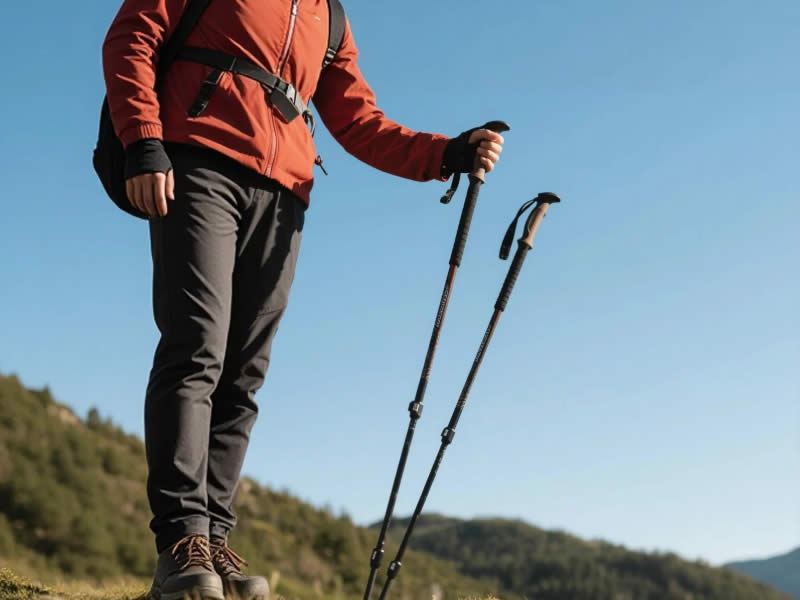
Recommended trekking pole purchase link: https://s.click.aliexpress.com/e/_c4M7OWaN
The short answer
A good pair of lightweight trekking poles (intended for day hiking, backpacking, or trail running) typically weighs between 300 and 500 grams (about 10.5 to 17.6 ounces) per pair. The average across quality models is roughly 400 grams per pair (200g per pole). However, this average splits into two clear categories: carbon fiber and aluminum.
Category 1: Carbon fiber – 300–400g per pair
Carbon poles are the lightest. High‑quality carbon trekking poles (e.g., Black Diamond Distance Carbon Z, Komperdell C4 Carbon Pro) weigh between 300g and 400g per pair. Some ultralight models dip below 300g (e.g., Gossamer Gear LT5 at 260g), but those are fragile and best for smooth trails or running. The average for a durable, well‑made carbon pair is around 340g. These poles are ideal for long‑distance hikers, fastpackers, and anyone prioritizing weight savings above all else.
Category 2: Aluminum (7075 alloy) – 400–550g per pair
Quality aluminum poles, such as the Leki Makalu (520g/pair) or Black Diamond Trail Pro (540g/pair), are heavier but more durable. The average lightweight aluminum pair is about 480g. Some “lightweight” aluminum models (e.g., Black Diamond Distance Aluminum Z) can be as low as 400g per pair, but they often use thinner walls and are less robust. For most hikers who want a balance of weight and durability, aluminum in the 450–500g range is excellent.
What about “ultralight” – under 300g per pair?
Poles under 300g per pair exist, but they come with trade‑offs. They are almost always carbon, often fixed‑length (foldable Z‑poles), and have minimal grips or locking hardware. Examples: Gossamer Gear LT5 (260g), Zpacks Carbon Z‑poles (220g). These are specialist tools for ultralight backpackers who accept fragility and limited adjustability. They are not recommended for rugged terrain or heavy loads.
Why weight alone is misleading
A very light pole (under 300g) may feel great in your hand, but if it snaps on a rocky descent, it’s useless. Conversely, a 500g aluminum pole may be “heavier” but will survive falls and rocky jams. The key is to match weight to your hiking style:
- Day hiker on smooth trails: 350–400g carbon is fine.
- Weekend backpacker on mixed terrain: 450–500g aluminum is ideal.
- Thru‑hiker on rough trails: 400–450g carbon (premium) or 500g aluminum.
- Trail runner: 300–350g carbon (foldable).
How to compare weights accurately
When looking at product specs, check the weight per pair (not per pole). Also note what is included: some manufacturers weigh poles without baskets or rubber tips; others include them. For accurate comparison, use the pair weight as listed by the brand, but add 10–20g for baskets if you plan to use them.
The average for “good” lightweight poles – final number
After reviewing dozens of models from reputable brands (Leki, Black Diamond, Komperdell, Decathlon, Gossamer Gear), the average weight of a good pair of lightweight trekking poles is 420 grams per pair (210g per pole). This average includes both carbon and aluminum models in the 3‑ to 5‑star durability range. If you want lighter, you pay more and accept less toughness. If you want heavier, you get more ruggedness but more arm fatigue.
Final recommendation
For most hikers, target 400–480g per pair. That range offers the best compromise of lightweight comfort and trail‑worthy durability. Avoid anything over 550g for “lightweight” use, and be cautious with anything under 300g unless you are a seasoned ultralight enthusiast. Always check the pair weight, read reviews on durability, and remember: a few extra grams are worth it if the pole doesn’t break when you need it most.




