




How important are adjustable and padded wrist straps?
Many hikers overlook wrist straps, or worse, remove them entirely. This is a mistake. Properly designed wrist straps – adjustable and padded – are not just a safety feature; they are a core component that affects efficiency, comfort, and joint protection. Here’s why they matter and what to look for.
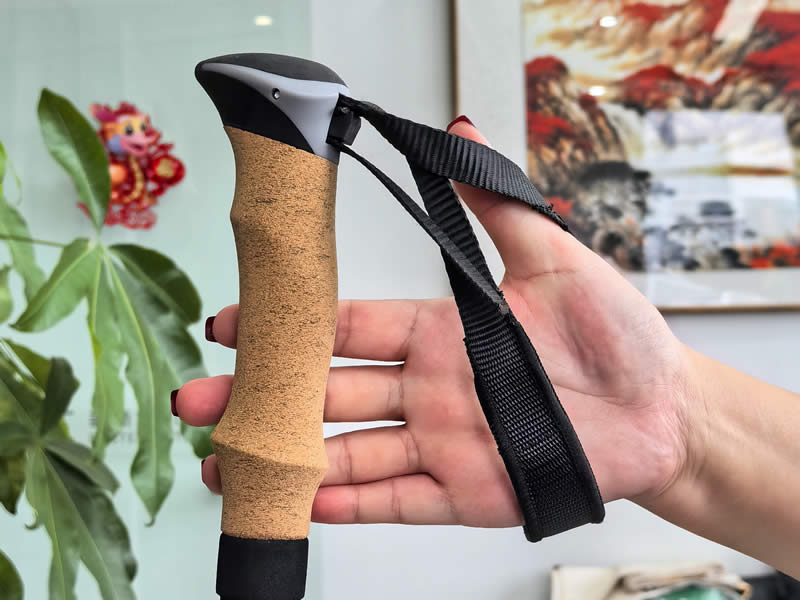
Recommended trekking pole purchase link: https://s.click.aliexpress.com/e/_c4M7OWaN
What adjustable and padded straps do
A wrist strap is a loop of webbing attached to the top of the pole grip. Unlike a simple fixed loop, adjustable straps have a slider or buckle that lets you change the diameter. This allows you to fit the strap snugly over bare hands, thin liner gloves, or thick winter mittens. Padding means the strap has a layer of soft foam or neoprene, reducing pressure points and chafing. Together, these features transform the strap from a passive leash into an active load‑bearing tool.
Why proper strap use transforms your hiking
When you simply grip the pole without using the strap, all the force goes through your fingers and palm. After a few hours, your hand tires, you grip harder, and blisters form. When you use the strap correctly – hand up through the loop from below, then grip – the strap bears the weight. Your fingers can relax. This has several benefits:
- Reduced hand fatigue: You no longer need to squeeze the pole to keep it from flying away. The strap does the work.
- Better energy efficiency: Force transfers directly from your arm to the pole without unnecessary muscle tension.
- Knee protection: With relaxed hands, you plant more consistently, improving load transfer from your legs to your arms – reducing knee impact by 20–25%.
- Safety: If you slip or fall, the strap keeps the pole attached to your wrist, preventing it from dropping down a slope or getting lost.
The importance of adjustability
A fixed‑size strap is useless if it doesn’t fit your hand. Too loose, and your hand slips through; too tight, and it cuts off circulation. Adjustable straps let you:
- Dial in the perfect fit for your anatomy.
- Accommodate different glove thicknesses (summer vs. winter).
- Loosen the strap quickly when you need to free your hand (e.g., to drink, use a map, or scramble).
- Share poles with family or friends of different hand sizes.
Without adjustability, you either suffer a poor fit or you don’t use the strap at all – which defeats its purpose.
Why padding matters
A thin nylon strap can dig into your skin, especially under heavy load or over long days. This causes pain, numbness, and even tendon irritation. Padding distributes the force across a wider area, preventing hot spots and maintaining circulation. It also provides a more comfortable interface, encouraging you to actually use the strap. On a long descent, where each plant transfers significant force, padding is not a luxury – it’s a necessity.
How to use wrist straps correctly
- Insert your hand from below – come up through the strap, not down from the top.
- Pull the strap so it sits around the base of your thumb and across the back of your hand – not across your palm.
- Grip the handle lightly – the strap should be snug enough that you can relax your fingers and the pole still stays attached.
- Adjust tension – use the slider to tighten or loosen until comfortable.
Signs of poor strap adjustment
- Your hand turns red or numb – too tight.
- Your hand slips out when you relax your grip – too loose.
- The strap rubs a blister on the side of your thumb – incorrect placement or low‑quality strap.
What to look for in a good strap
- Padded webbing – reduces pressure points. Look for foam or neoprene padding at least 2–3 mm thick.
- Quick‑release buckle or slider – easy one‑handed adjustment.
- Breathable material – less sweat accumulation.
- Durable stitching – straps are often the first thing to fail on cheap poles.
- Wide strap (at least 2 cm) – wider spreads the load better.
When straps are less critical
- Trail running with lightweight poles – some runners prefer no straps for quick hand swaps.
- Very short, flat walks where you don’t need to transfer much force.
- Using poles as tent supports – straps don’t matter.
Final verdict
Adjustable and padded wrist straps are extremely important for any serious hiking, especially on steep or long terrain. They reduce hand fatigue, improve energy efficiency, enhance safety, and help protect your knees by enabling proper load transfer. A good pair of trekking poles must have adjustable, padded straps. Learn to use them correctly – it takes two minutes to master and pays dividends over every kilometre. Never hike without straps, and never buy poles with fixed, non‑adjustable, unpadded loops.




