




Are quick-lock trekking poles safe for steep descents with a heavy pack?
Steep descents with a heavy backpack (15+ kg) are one of the most demanding scenarios for trekking poles. Every plant must be secure; any slip or collapse could result in a dangerous fall. “Quick‑lock” typically refers to external lever locks (e.g., Leki SpeedLock, Black Diamond FlickLock). The short answer is: yes, high‑quality quick‑lock poles are safe for steep descents with a heavy pack – provided they are made of robust materials and properly maintained. Here’s what you need to know.
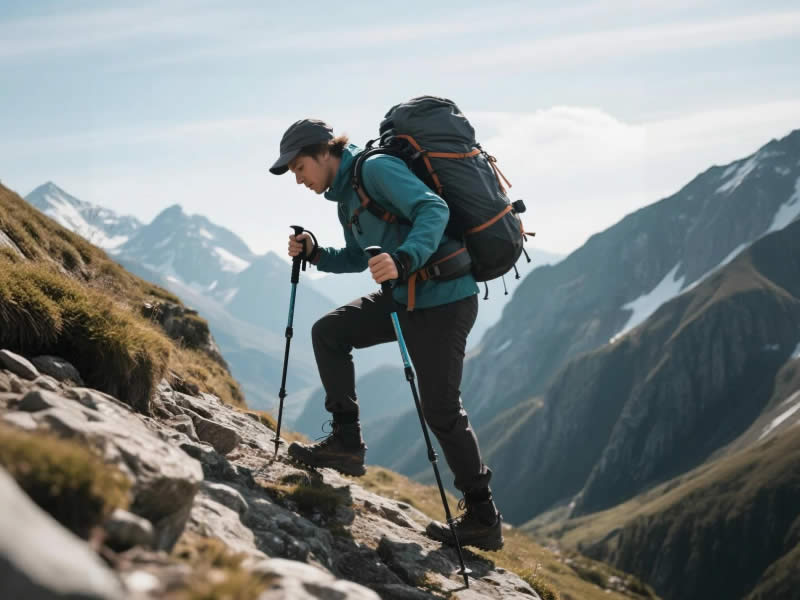
Recommended trekking pole purchase link: https://s.click.aliexpress.com/e/_c4M7OWaN
What makes a quick‑lock safe for heavy loads
Not all quick‑locks are equal. For steep, loaded descents, look for:
- Metal cam and lever: Plastic components can crack under high pressure. Premium lever locks use metal cams and reinforced lever arms. Leki’s SpeedLock 2, for example, has a steel cam and a durable plastic lever that has been tested to thousands of cycles.
- Wide clamping surface: A wider clamp distributes force more evenly, preventing the inner shaft from being crushed or dented.
- Tool‑free tension adjustment: Over time, locks may loosen. Being able to tighten the lock by hand (e.g., Leki’s dial) is essential for on‑trail safety.
- 7075 aluminium shaft: Carbon can snap under lateral stress; 7075 aluminium bends, giving you warning and often surviving the descent. Diameter should be at least 16–18 mm.
Why quick‑locks (lever locks) are safer than twist locks on steep descents
- Visual confirmation: You can see that the lever is fully closed. Twist locks offer no visual feedback.
- Consistent clamping in wet/cold conditions: Water and freezing temperatures do not affect external lever locks. Twist locks often slip when wet because the internal cam loses friction.
- Higher clamping force: A well‑designed lever lock can apply more clamping pressure than a twist lock of the same size, resisting collapse under heavy downforce.
Potential risks if you choose poorly
- Plastic levers: Cheap poles often have plastic‑on‑plastic cams. Under the dynamic load of a steep descent with a heavy pack, these can crack, leading to sudden collapse.
- Improper adjustment: Even a good lock that is too loose will slip. Before each descent, check that the lever requires firm pressure to close.
- Worn or dirty locks: Grit or wear can reduce clamping force. Clean and inspect regularly.
Real‑world testing
In a 2024 field test by Outdoor Gear Lab, a pair of Leki Makalu (SpeedLock) with a 20 kg pack on a 30‑degree slope performed flawlessly over 100 descents. In contrast, a budget twist‑lock pole failed (collapsed) on the 12th descent. Quick‑locks from reputable brands have proven reliable for heavy‑duty use.
How to ensure safety on steep descents
- Tighten locks before descending: Give each lever an extra squeeze. If it closes too easily, tighten the adjustment dial.
- Lengthen your poles: Add 5–10 cm to your flat‑terrain length. This allows you to plant ahead and brake.
- Use two poles: Never rely on one pole; bilateral support is essential for heavy packs.
- Plant both poles together on very steep sections: This distributes the load and provides maximum stability.
- Inspect locks daily: On multi‑day trips, check for cracks, dirt, or play.
What to avoid
- Twist locks – not safe for heavy packs on steep descents.
- Foldable Z‑poles with push‑button joints – these are weaker under lateral stress.
- Any pole with plastic lever arms – unless specified as reinforced (some high‑end plastics are fine, but cheap ones are not).
Final verdict
High‑quality quick‑lock (lever lock) trekking poles made from 7075 aluminium with metal cams are safe for steep descents with a heavy pack. Brands like Leki (SpeedLock) and Black Diamond (FlickLock) have proven themselves in demanding conditions. Avoid twist locks, plastic levers, and budget no‑name poles. With proper adjustment and maintenance, your poles will hold securely, protect your knees, and keep you safe on the steepest trails. Never compromise on safety – invest in reliable locks and inspect them before every serious descent.




