




Do trekking poles work well on slippery chalk downland?
Chalk downland – like the South Downs in England, the Champagne region in France, or the white cliffs along the Baltic coast – presents a unique challenge. When wet, chalk becomes treacherously slippery, like walking on wet soap. Trekking poles can be a great help, but only with the right tips and technique. The short answer is yes, carbide‑tipped trekking poles work well on slippery chalk – rubber tips are useless. Here’s how to stay safe.
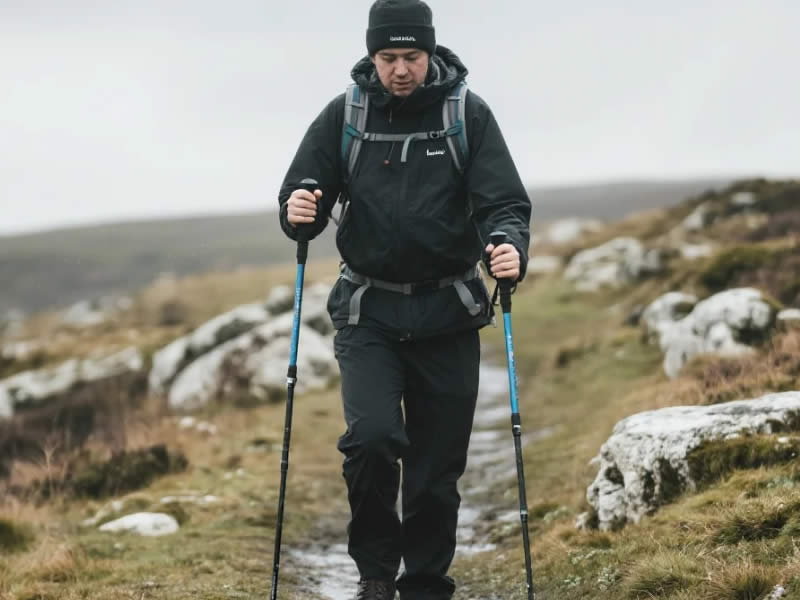
Recommended trekking pole purchase link: https://s.click.aliexpress.com/e/_c4M7OWaN
Why chalk is so slippery
Chalk is a soft, porous limestone. When dry, it has a gritty texture that provides decent grip. When wet, the surface becomes a smooth, slick paste. Your boots can slide, and without poles, you may find yourself slipping with every step. The key to stability is creating friction – and a sharp carbide tip does exactly that by penetrating the soft surface layer.
The right tip: carbide, not rubber
- Carbide tips: The sharp point digs into the soft chalk, even when wet. It creates a micro‑anchor, giving you a stable plant. This is essential on slippery slopes.
- Steel tips: Work initially, but chalk is abrasive and will wear down steel tips quickly. Replaceable carbide is better.
- Rubber tips (paw covers): Avoid completely. On wet chalk, rubber is dangerously slippery – your pole will skid sideways, offering no support.
Technique for chalk downland
- Use two poles – four points of contact are far more stable than two.
- Plant vertically – an angled plant is more likely to skid. Push the tip straight down.
- Apply firm pressure – a light tap won’t penetrate. Push down to let the carbide bite.
- Lengthen poles slightly (add 2–3 cm) – this gives you a better angle for braking on descents.
- Take shorter steps – keep your feet under your body to reduce sliding.
When poles are most helpful
- Descending steep, wet chalk slopes – plant both poles ahead and use them to brake, reducing the load on your feet.
- Traversing side‑hills – one pole on the downhill side can prevent a slide.
- Walking on chalk after rain – the most slippery condition. Poles provide confidence.
Limitations
- On very steep, smooth chalk (e.g., a polished chalk path), even carbide tips may struggle to find purchase. In such cases, consider walking on the grass beside the path or zig‑zagging.
- On frozen chalk (frost or ice), carbide tips may still work, but ice grips (spiked rubber covers) are better.
What about baskets?
Use small summer baskets. Large snow baskets are unnecessary and can tilt the tip, reducing grip. If the chalk is soft and muddy, small baskets prevent the pole from sinking too deep.
Real‑world example
On the South Downs Way (UK), hikers regularly use carbide‑tipped poles on the famous Seven Sisters cliffs. After rain, the chalk path is notorious for slips. Poles with carbide tips provide enough grip to walk safely, while countless walkers without poles slide and fall.
Final verdict
Yes, trekking poles work well on slippery chalk downland – provided you have sharp, unworn carbide tips and use proper technique. Avoid rubber tips entirely. Use two poles, plant vertically, and push down firmly. On very polished or frozen chalk, be extra cautious and consider alternative routes. With the right setup, poles will transform a nerve‑wracking slip‑fest into a secure, enjoyable walk across one of nature’s most challenging surfaces.




