




What is the difference between trekking poles and ski poles?
At first glance, a pair of trekking poles and a pair of ski poles look similar – two sticks with pointy ends and baskets. But they are designed for completely different activities and are not interchangeable. Using the wrong type can lead to poor performance, damage, or even injury. Here’s a comprehensive breakdown of the key differences.
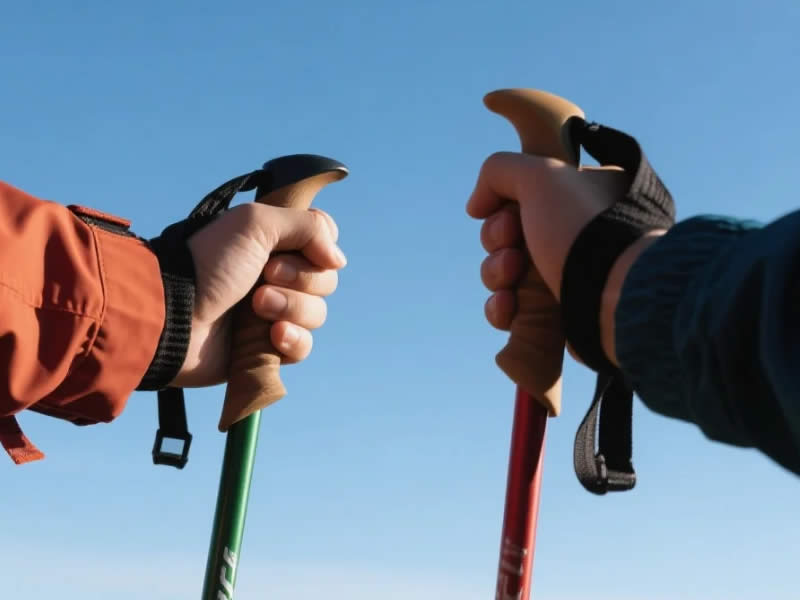
Recommended trekking pole purchase link: https://s.click.aliexpress.com/e/_c4M7OWaN
Purpose and movement
- Trekking poles are designed for walking and hiking on varied terrain: dirt, rock, gravel, mud, and snow. Their primary functions are to provide stability, reduce knee impact on descents, assist with balance on uneven ground, and help propel you uphill.
- Ski poles are designed for alpine (downhill) or cross‑country skiing. In alpine skiing, they help with timing, turns, and balance. In cross‑country skiing, they are essential for propulsion, transferring power from the upper body to the skis.
Adjustability
- Trekking poles: Almost always adjustable (telescopic or foldable). Length range typically 100–135 cm, allowing you to shorten for uphill and lengthen for downhill. This adjustability is crucial for varying trail gradients.
- Ski poles: Typically fixed length. The correct length is determined by your height and skiing style (e.g., alpine poles reach about armpit height; cross‑country poles are longer). Adjustable ski poles exist for backcountry touring, but they are the exception.
Baskets
- Trekking poles: Come with small interchangeable baskets (4–6 cm) for summer use to prevent sinking into soft dirt. Large snow baskets (7–10 cm) can be swapped on for winter hiking.
- Ski poles: Have large, often permanently attached baskets (8–12 cm) designed for deep snow. The basket helps prevent the pole from sinking too deep, and its shape may be angled to assist with poling.
Tips
- Trekking poles: Use a tungsten carbide tip (very hard and pointy) that bites into rock, dirt, and ice. Rubber covers are available for pavement.
- Ski poles: Typically use a steel tip with a small carbide point. The tip is designed for hard snow and ice but wears quickly on rock or dirt.
Grips and straps
- Trekking poles: Grips are made of cork, foam, or rubber, shaped for a relaxed handhold. The wrist strap is a simple adjustable loop; you insert your hand from below to transfer weight.
- Ski poles: Grips are often moulded plastic or rubber, with a special strap that may include a quick‑release mechanism or a full glove (for cross‑country). The strap is designed to allow you to let go of the pole without dropping it.
Materials and weight
- Trekking poles: Aluminium (7075) or carbon fibre, typically weighing 200–300g per pole (400–600g per pair). Focus on durability and lightweight for carrying.
- Ski poles: Aluminium, carbon, or composite. Alpine ski poles are heavier and sturdier to withstand aggressive planting; cross‑country poles are very light (under 150g per pole) but fragile.
Can you use trekking poles for skiing?
Not recommended. Trekking poles are too short for proper skiing technique, their small baskets sink in deep snow, and the wrist straps are not designed for release. You might manage on gentle, flat terrain, but it’s unsafe for real skiing.
Can you use ski poles for hiking?
Generally no. The large baskets catch on rocks and roots; the steel tips wear quickly on rock; the fixed length is uncomfortable on hills; and the straps may not fit hiking gloves. On paved or hardpacked trails, they could be used as walking sticks, but trekking poles are far better.
Final verdict
Trekking poles and ski poles are purpose‑built for different activities. Trekking poles are adjustable, have carbide tips and interchangeable baskets, and are designed for walking on varied terrain. Ski poles are fixed‑length, have large permanent baskets and steel tips, and are designed for snow. Do not interchange them for serious use. Choose the right tool for your adventure – your safety and performance depend on it.




