




What is the best trekking pole for people with carpal tunnel syndrome?
Carpal tunnel syndrome (CTS) causes pain, numbness, and weakness in the hand and wrist due to compression of the median nerve. For hikers with CTS, using standard trekking poles can aggravate symptoms – especially if the wrist is forced into an unnatural angle or if you have to grip tightly. The right poles, however, can allow you to hike comfortably and even provide relief by transferring load to your arms. Here’s what to look for and the best models for CTS.
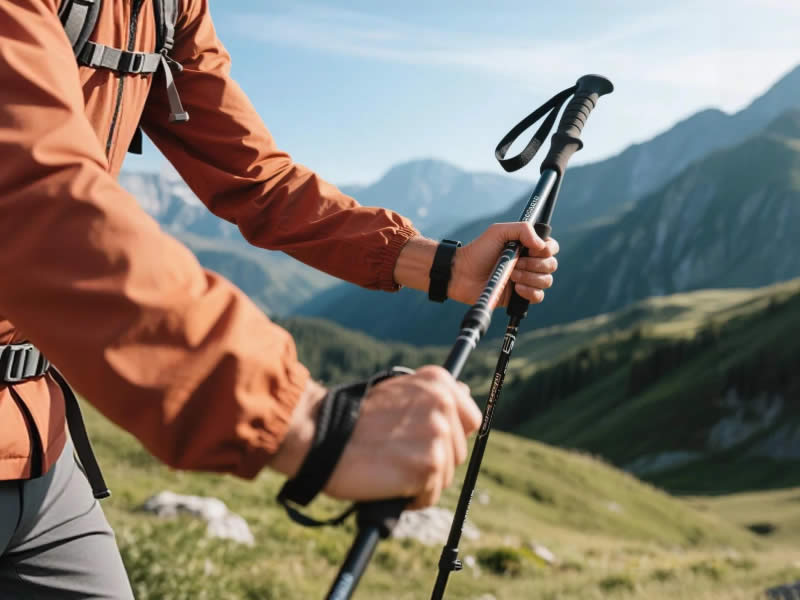
Recommended trekking pole purchase link: https://s.click.aliexpress.com/e/_c4M7OWaN
Key features to look for
- Ergonomic, left/right‑specific grips – most important. Standard cylindrical grips force your wrist into ulnar deviation (bent outward), which can compress the carpal tunnel. Look for grips that keep your wrist straight and neutral. Leki’s Aergon grips (available in left/right versions) have a subtle inward angle and a palm rest that aligns the wrist. Pacer Poles feature an angled 15‑degree handle that keeps the wrist in a natural, handshake position – often recommended by physiotherapists for CTS.
- Padded, adjustable wrist straps. A well‑cushioned strap allows you to transfer weight to your arm without gripping hard. The strap should be wide and soft, positioned to sit between thumb and index finger. This reduces the need for a tight grip, decreasing pressure on the median nerve.
- Lightweight construction. Heavy poles increase arm fatigue and may cause you to grip tighter. Aim for under 250g per pole (500g per pair). Carbon fibre or high‑quality aluminium (e.g., Leki Makalu) are good choices.
- Lever locks (not twist locks). Twist locks require a twisting motion that can aggravate wrist pain. Lever locks (e.g., Leki SpeedLock, Black Diamond FlickLock) are operated with a simple up/down motion of the lever, using larger muscle groups and minimal wrist rotation.
- Shock absorption – optional but helpful. The jarring impact of planting on hard ground can send vibrations up the wrist. A quality anti‑shock mechanism (e.g., Leki’s “Shock” models) can reduce this. However, be aware that springs add weight and complexity; for CTS, the ergonomic grip is far more important. Some users find rigid poles with good straps enough.
Top recommended poles for carpal tunnel syndrome
1. Leki Cressida or Makalu with Aergon grip (left/right specific) – These poles feature a contoured, ergonomic grip that keeps the wrist straight. The SpeedLock lever is easy to operate without twisting. Available with or without shock absorption. Weight ~240g per pole. Price ~€120–150.
2. Pacer Poles – Specifically designed with a 15‑degree angled handle that mimics a natural handshake position. This drastically reduces wrist deviation. Many CTS sufferers report significant pain relief. The poles are aluminium, with a simple push‑button adjustment (not ideal for heavy loads, but fine for day hiking). Weight ~280g per pole. Price ~€150.
3. Black Diamond Trail Pro (with FlickLock) – The foam grip is comfortable, and the FlickLock lever is easy to use. Not left/right specific, but the grip has a slight anatomical curve. Add aftermarket grip padding if needed. Price ~€120.
Tips for using poles with carpal tunnel
- Shorten your poles slightly for uphill and lengthen for downhill – this reduces wrist bending.
- Use wrist straps correctly – hand up from below, strap between thumb and index finger. The strap should bear weight, not your grip.
- Take breaks – shake out your hands every 20–30 minutes.
- Avoid death grip – consciously relax your fingers.
- Consider wrist splints – some hikers wear a light splint under their strap for support.
Final verdict
For hikers with carpal tunnel syndrome, the best trekking poles are those with ergonomic, left/right‑specific grips that keep the wrist straight, combined with padded straps and lever locks. The Leki Aergon series and Pacer Poles are top choices. Avoid standard cylindrical grips and twist locks. With the right poles, you can hike without aggravating your CTS – and may even find that proper pole use reduces symptoms by transferring load away from your hands. Consult your doctor or physiotherapist before starting any new activity, but know that the right equipment makes all the difference.




