




Do trekking poles help with balance on boggy ground?
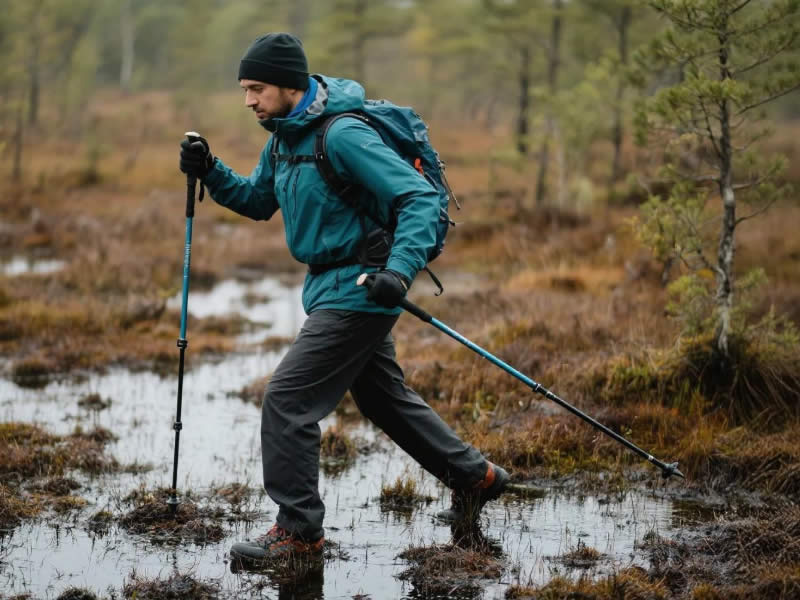
Boggy ground – soft, waterlogged terrain that can range from a squelchy path to a treacherous, ankle‑deep (or deeper) mire – is a common challenge on many long‑distance trails, from the Pennine Way and Dartmoor to the Scottish Highlands and Scandinavia. Walking on bog requires constant adjustments and a good sense of balance. The short answer is yes, trekking poles significantly improve balance on boggy ground, but only when used correctly and with the right accessories. Here’s how and why.
Recommended trekking pole purchase link: https://s.click.aliexpress.com/e/_c4M7OWaN
Why bog is so tricky
A bog often has a deceptive surface: a mat of vegetation, grass, or moss covering liquid mud or water. Your foot can sink without warning, twist, or slide. Balance is compromised because the ground shifts beneath you. Without support, a sudden sink can throw you off balance, leading to a fall, a twisted ankle, or even a fully submerged leg.
How trekking poles help
- Four points of contact (two feet + two poles) – This creates a wide, stable base. When one foot sinks, the poles provide immediate support, preventing a loss of balance.
- Probing ahead – You can use a pole to test the ground before committing your weight. If the pole sinks easily or feels like it hits nothing solid, you can choose a different step. This “tactile feedback” is invaluable in boggy terrain.
- Load transfer – By pushing down on the poles, you reduce the amount of weight your feet carry. Lighter feet sink less and are easier to pull out. This is especially helpful when moving through deep, sticky mud.
- Recovery from a stumble – If your foot does sink unexpectedly, a quick plant of the pole can arrest the stumble and keep you upright.
The right equipment for bog
- Large baskets (mud baskets or small snow baskets) – While standard small baskets are fine for light mud, deep bog demands larger baskets (7–8 cm) to prevent the pole from plunging into the mire. Some manufacturers sell dedicated “mud baskets”. If you don’t have them, large snow baskets work well.
- Carbide tips – Sharp carbide tips pierce through the grassy mat to find firmer ground below. Rubber tips are useless on bog.
- Lever locks (not twist locks) – You’ll be adjusting pole length frequently (shorter on dry hummocks, longer for probing). Lever locks are more reliable in wet, muddy conditions.
Technique for boggy ground
- Lengthen your poles slightly (2–5 cm longer than flat ground) – this gives you extra reach for probing ahead.
- Plant deliberately – push the tip down until you feel resistance. Do not just tap.
- Use an alternating rhythm (opposite pole to forward foot) – this maintains a natural gait and ensures you always have one pole ahead.
- Take short, flat‑footed steps – avoid big strides. Keep your weight centered.
- If you sink, press down on both poles firmly and pull your foot out slowly.
Real‑world example
On the wetter sections of the Pennine Way (e.g., Black Hill or Kinder Scout), experienced hikers never venture without poles. A 2021 survey of mountain rescue callouts in boggy areas found that hikers using poles were significantly less likely to suffer a balance‑related injury than those without.
Limitations
Poles cannot prevent all falls, especially if you step into a deep, hidden hole. But they give you an extra tool to react. Also, on very soft, saturated bog, poles may sink even with large baskets – then you must rely on careful foot placement.
Final verdict
Yes, trekking poles are a huge asset for balance on boggy ground. They provide four points of contact, allow you to probe ahead, reduce foot load, and help recover from stumbles. Equip your poles with large baskets and sharp carbide tips, and practice the deliberate planting technique. On the wettest, most unstable terrain, poles can be the difference between a steady crossing and a muddy spill. Don’t leave them in your pack – use them actively, and you’ll walk bogs with confidence and safety.




