




How to use trekking poles for stream crossings in the Lake District?
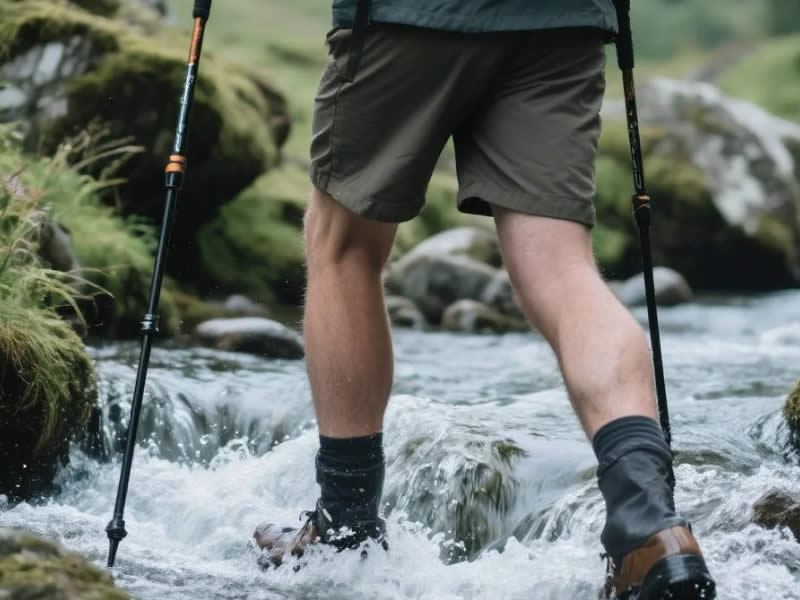
The Lake District is famous for its countless streams, gills, and rivers – from small trickles across a path to significant crossings like the River Esk or the streams descending from Scafell Pike. After rain (which is frequent), these crossings can become hazardous. Trekking poles are an invaluable tool for safe stream crossings, but you must use them correctly. Here’s a step‑by‑step guide for Lake District terrain.
Recommended trekking pole purchase link: https://s.click.aliexpress.com/e/_c4M7OWaN
Before you step into the water
- Unbuckle your pack’s hip belt and chest strap. If you fall, you need to free yourself from the pack quickly. A heavy, waterlogged pack can pin you down.
- Lengthen your poles by 5–10 cm beyond your flat‑terrain length. Longer poles give you better reach for probing and greater leverage.
- Remove rubber tips – use bare carbide tips for maximum grip on wet rock.
- Keep small baskets on – they help prevent the pole from sinking into soft stream beds (mud or gravel).
- If you have ice grips (spiked rubber covers), you can use them for extra bite on smooth, slimy rocks. But carbide alone is usually sufficient.
The basic technique: downstream bracing
Always face upstream or slightly angled across the current. Plant both poles firmly on the downstream side of your body (the side the water is flowing toward). Lean your weight into the poles, creating a stable tripod with your two feet. Move one foot at a time, keeping at least three points of contact (two poles + one foot, or one pole + two feet). Never lift both poles at once.
Step‑by‑step for Lake District streams
- Probe the streambed – Before stepping, use one pole to feel for depth, rocks, or hidden holes. The water may be murky.
- Choose your line – Look for shallower, wider sections where the current is slower. Avoid stepping on green, slimy rocks – they are extremely slippery.
- Plant both poles downstream – The current will push against the poles, not your legs. Angle the poles slightly downstream.
- Shuffle sideways – Move sideways, facing upstream or slightly across. Keep your feet flat and slide them, rather than lifting high.
- Move one pole at a time – After you shift a foot, reposition the pole that is now free. Keep the other pole planted.
- Lean into the poles – Your body weight should press down on the poles. This transfers load from your legs to your arms and increases stability.
Special considerations for the Lake District
- Wet, polished rock: Many Lake District stream beds have smooth, slate‑like rock. Carbide tips bite well, but avoid planting on a steeply sloping rock face – the tip can skid.
- Fast‑flowing water after rain: If the water reaches above your knees and is moving fast, turn back or find a safer crossing. Poles cannot compensate for a strong current.
- Cairns and stepping stones: Use poles to steady yourself when hopping between stones. Plant the pole on each stone before stepping.
- Ghyll scrambling (e.g., in Stickle Ghyll): For steep, rocky stream ascents, collapse and stow your poles – you’ll need your hands free.
Common mistakes
- Planting poles upstream – The current pushes the poles back toward you, reducing stability.
- Lifting both poles at once – You lose two points of contact.
- Facing straight across – A sideways shuffle keeps your centre of gravity low and wide.
- Not lengthening poles – Short poles force you to lean too far forward.
- Wearing waterproof socks? – Still use poles; balance is more important than dry feet.
After crossing
- Drain your poles – Shake out water from locking mechanisms.
- Dry the grips – Wet cork or foam can be slippery.
- Readjust length back to trail settings.
- Inspect for damage – If you jammed a pole between rocks, check for bends or cracks.
Final verdict
Trekking poles are essential for safe stream crossings in the Lake District. Lengthen them, plant both poles downstream, and use a sideways shuffle with three points of contact. Probe ahead, take your time, and never cross if the water is dangerously high or fast. With the right technique, you’ll cross safely and keep your gear dry – ready for the next fell.




