




Can trekking poles be used as emergency tent poles in the Scottish Highlands?
The Scottish Highlands are famous for their wild, unpredictable weather – and for the fact that tent poles sometimes snap in a sudden gale. If you’re backpacking with a lightweight tent that relies on aluminium or carbon poles, a breakage can turn a remote bothy night into a survival situation. The good news is that your trekking poles can serve as excellent emergency tent poles – but only if you have a suitable shelter design and the right technique. Here’s how to do it.
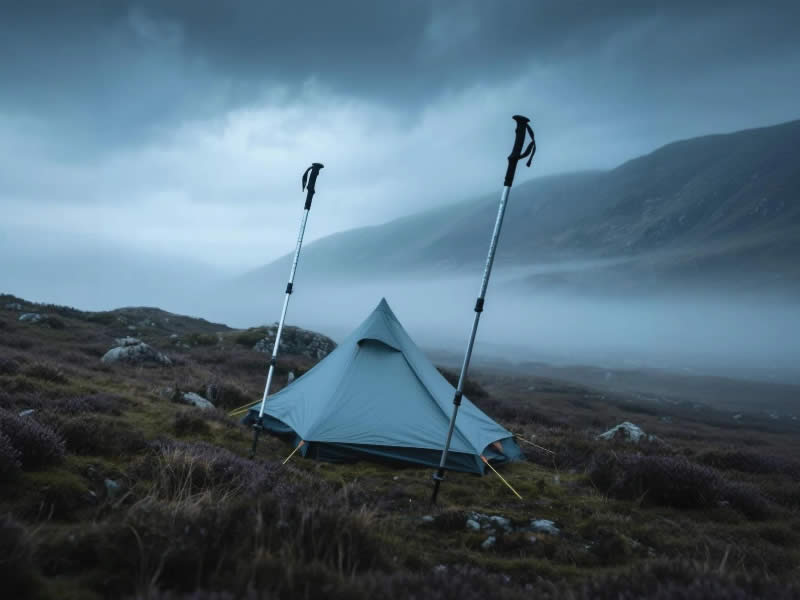
Recommended trekking pole purchase link: https://s.click.aliexpress.com/e/_c4M7OWaN
What you need
- A tarp, bivvy, or ultralight tent that is designed to be pitched with trekking poles (e.g., a pyramid tarp or a flat tarp). Many modern shelters, like the Zpacks Duplex or the Lanshan, are specifically made for trekking‑pole support. If your tent uses a conventional pole set, you can still rig a tarp or the flysheet using your poles.
- Trekking poles – adjustable aluminium poles are best because they can be set to the exact height needed. Fixed‑length Z‑poles may work if the length matches your tent’s requirement, but adjustability is a huge advantage in the Highlands where wind direction often demands a lower profile.
- Guy lines (paracord or thin cord) and pegs (or improvised stakes – rocks, sticks).
How to set up an emergency shelter
- Choose a sheltered spot out of the worst wind, ideally with good drainage.
- Extend your poles to the recommended height for your shelter (typically 110–130 cm for a mid‑tarp or A‑frame).
- For an A‑frame: Place two poles about 1.5 m apart, tips dug into the ground. Drape your tarp or tent fly over them, forming a ridge. Stake down the four corners and add side guylines.
- For a pyramid: Plant one pole in the centre, lift the tarp over it, and spread the corners out evenly. Stake down all edges.
- Secure the poles – use guy lines from the pole tops to pegs or heavy rocks. Do not rely on the poles alone; the wind will topple them.
Why trekking poles are ideal for Highland conditions
- Lightweight – you’re already carrying them.
- Adjustable height – you can lower the shelter to reduce wind exposure.
- Carbide tips – bite into rocky ground where tent pegs won’t hold.
- Strong enough – quality aluminium poles (7075) can withstand significant wind load when guyed properly. Carbon poles are more brittle; use them only if no alternative.
Tips for success in the Scottish Highlands
- Practice at home – before you need it, set up your tarp with your poles in a calm garden.
- Carry a small repair kit – spare guy line, pegs, and a multi‑tool. Also carry a small tube repair sleeve (e.g., a short section of aluminium tube) to splint a broken pole if needed.
- Use large rocks – if the ground is too rocky for pegs, tie guylines to heavy rocks.
- For a broken conventional tent pole – you can splint it using your trekking pole alongside, lashing them together with cord. This is a true emergency use.
Limitations
- Your trekking poles will be unavailable for hiking while they’re holding up your shelter.
- Not all tents can be pitched with poles – requires a compatible design or a tarp.
- In extreme winds (50+ mph), a trekking‑pole shelter may need additional guylines and a very low profile.
Final verdict
Yes, trekking poles can be used as emergency tent poles in the Scottish Highlands, especially if you carry a lightweight tarp or a trekking‑pole‑compatible tent. Aluminium adjustable poles are best; carbon is riskier. Practice the setup, carry spare cordage, and you’ll have a robust backup plan for those wild Highland nights. Your poles are more than just walking aids – they’re a potential life‑saving piece of shelter kit.




