




How to adjust trekking pole straps for maximum efficiency on long days?
On a long hike – whether it’s a 30‑km day on the West Highland Way or a multi‑day trek across the Pyrenees – small inefficiencies multiply into major fatigue. One of the most overlooked areas is the wrist strap adjustment. Most hikers never learn to use straps correctly, losing up to 30% of their poles’ potential. Here’s how to adjust your straps for maximum efficiency, comfort, and energy savings.
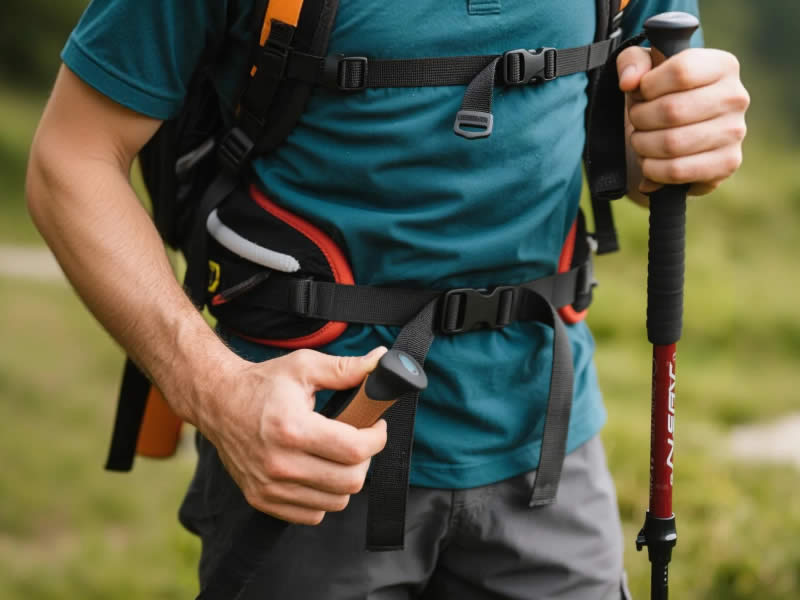
Recommended trekking pole purchase link: https://s.click.aliexpress.com/e/_c4M7OWaN
The wrong way (and why it fails)
The common mistake: slip your hand through the strap from above, so the strap wraps around your wrist. Then grip the handle tightly. In this position, the strap does almost nothing – your fingers bear all the weight. After a few hours, your forearms ache, your hands may go numb, and you develop blisters. You also lose the mechanical advantage of transferring load to your arms.
The correct way: hand up from below
Follow these steps for each pole:
- Open the strap so the loop is large enough for your hand to pass through easily.
- Insert your hand from below – push your hand up through the loop so the strap comes up around your wrist.
- Bring your hand down onto the grip – the strap should now sit between your thumb and index finger, crossing the back of your hand.
- Adjust the strap tension using the slider or buckle. It should be snug enough that when you relax your fingers, the pole stays attached to your hand. It should not be so tight that it cuts off circulation or leaves red marks.
- Grip the handle lightly – you should feel the strap bearing the weight when you push down. Your fingers can almost open.
Why this works for long days
- Load transfer: The strap transfers force directly from your arm to the pole, bypassing your fingers. This reduces hand fatigue by up to 50%.
- Improved circulation: A relaxed grip means blood flows freely to your fingers, preventing cold, numb hands.
- Better power transfer: With your wrist in a neutral position (not bent), you can push down more efficiently, saving leg energy.
- Blister prevention: Friction between your skin and the grip is minimized because you’re not gripping tightly.
Fine‑tuning for different conditions
- Summer, bare hands: Adjust the strap so you can slide your hand out with a little wriggle. It should feel secure but not constricting.
- Thin liner gloves: Loosen the strap slightly to accommodate the extra material.
- Thick winter gloves or mittens: Open the strap fully, then tighten just enough to prevent the pole from falling when you relax your grip. You may need to re‑adjust during the day as gloves compress.
- For running or fastpacking: Some runners prefer a looser strap or no strap, but for long, efficient walking, a properly adjusted strap is still beneficial.
Common mistakes to avoid on long days
- Strap too loose: The pole dangles, and you instinctively grip harder to control it. Tighten it.
- Strap too tight: Restricts blood flow, leading to cold, painful hands after hours of swinging.
- Strap across the palm: Should be across the back of the hand, not the palm. Re‑insert your hand if needed.
- Hand inserted from above: This puts the strap on the wrong side; always come up from below.
- Death grip: Even with correct strap adjustment, some hikers still clench. Consciously relax your fingers every few minutes.
How to test your adjustment
After adjusting, stand still and let your arms hang with the poles planted. Open your fingers completely. The poles should stay attached. Shake your hand gently – if the pole falls, tighten the strap. If your hand feels pressured or you see red marks, loosen it.
Practice before the long day
On a short walk, practice adjusting the straps with one hand while walking. Learn to fine‑tune the tension without stopping. Mark the correct setting on the strap webbing with a small stitch or a dot of nail polish for quick reference.
Final verdict
Properly adjusted wrist straps are the single most important factor for efficiency on long days. Insert your hand from below, adjust so the strap sits between thumb and index finger, and ensure a snug fit that lets you relax your grip. This simple 30‑second adjustment will save you hours of hand fatigue and allow you to hike longer, stronger, and more comfortably. Master it before your next long trek – your hands will thank you.




