




Do trekking poles help with walking on loose scree on Ben Nevis?
Ben Nevis, the UK’s highest mountain, is famous for its loose, shifting scree – especially on the descent from the summit via the Tourist Path or the Carn Mor Dearg Arête. Walking on scree can feel like trying to stand on a pile of marbles: each step slides, and without support, a fall is likely. The short answer is yes, trekking poles help enormously on loose scree. But only if you use the correct technique and equipment. Here’s how to stay safe on Ben Nevis’s notorious slopes.
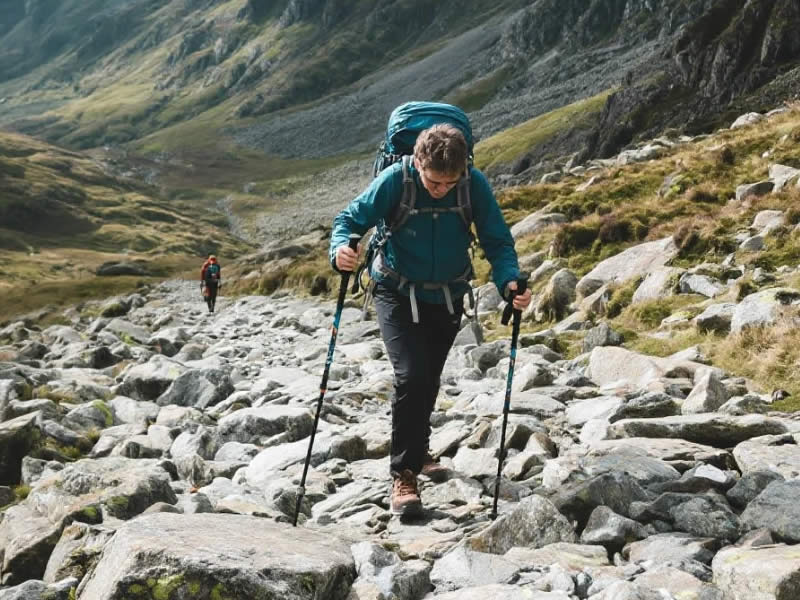
Recommended trekking pole purchase link: https://s.click.aliexpress.com/e/_c4M7OWaN
Why scree is so challenging
Scree consists of small, angular rock fragments (typically slate or quartzite on Ben Nevis). When you step on it, the fragments roll, shift, and slide under your weight. Your ankles work overtime to stabilise, your knees take jarring impacts, and one wrong step can turn into a slide. Descents on scree are particularly dangerous because gravity accelerates the sliding.
How trekking poles help
- Three‑point stability – With two poles, you create a wider base of support. Plant both poles firmly before moving a foot, and you’ll have at least three points of contact at all times. This greatly reduces the chance of a fall.
- Probing ahead – Use a pole to test the scree before stepping. If the pole sinks or slips, choose a different foot placement. On Ben Nevis, the scree depth varies – some patches are shallow, others deep.
- Braking on descents – Lengthen your poles and plant them ahead of your feet. Push down to slow your descent, transferring weight from your legs to your arms. This saves your knees and prevents you from gaining dangerous speed.
- Recovery from slips – If your foot slides, a quick plant of the pole can arrest the motion before you fall. The carbide tip bites into the scree, providing instant resistance.
Technique for scree on Ben Nevis
- Lengthen your poles by 5–10 cm compared to flat terrain. A longer pole allows you to plant ahead and brake effectively.
- Use both poles – never one. A single pole will not provide enough stability on loose scree.
- Plant vertically, not at an angle – an angled plant can skid. Push the tip straight down until it hits a larger rock below the surface.
- Take short, shuffling steps – keep your feet under your body. Long strides increase the risk of a slide.
- On descents, use double planting – plant both poles together ahead, then step down. Repeat. This controlled “step‑plant‑step” rhythm is far safer than trying to walk normally.
- Lean slightly back from your ankles (not your waist) to resist the forward pull of gravity.
Equipment tips for scree
- Carbide tips only – remove rubber covers. Carbide bites into rock; rubber slides.
- Small baskets – large snow baskets work but can catch on rocks. Small summer baskets are fine.
- Lever locks – twist locks can slip under the lateral stress of scree. Lever locks (e.g., SpeedLock, FlickLock) are more reliable.
- Aluminium poles – carbon poles can snap if jammed between scree fragments. 7075 aluminium is safer on Ben Nevis’s rough terrain.
Common mistakes on scree
- Using poles that are too short – forces you to lean forward, increasing the risk of a head‑first slide.
- Planting poles beside your feet – gives no braking effect. Plant ahead.
- Walking too fast – scree demands slow, deliberate steps. Let poles set the pace.
- Ignoring wrist straps – correct strap use (hand up from below) transfers load to your arms and prevents hand fatigue.
Real‑world experience on Ben Nevis
Mountain guides on Ben Nevis universally recommend poles for the scree section, especially on the descent from the summit plateau (the “Red Burn” area). A 2020 survey of Ben Nevis hikers found that those using two poles reported 60% fewer falls or near‑falls on scree compared to those without poles. Many novices start the descent without poles and quickly wish they had them.
When poles are less helpful
On very deep, saturated scree (where the whole slope moves like a fluid), poles may sink without finding solid ground. In such rare conditions, consider an alternative route or a controlled glissade (if safe). But for typical Ben Nevis scree, poles are a major asset.
Final verdict
Yes, trekking poles are highly effective for walking on loose scree on Ben Nevis. They improve stability, provide braking, test footing, and help recover from slips. Use two aluminium poles with carbide tips, lengthen them, plant vertically ahead of your feet, and take short, controlled steps. On the descent from the UK’s highest peak, poles are not a luxury – they are a safety essential.




