




How to use trekking poles to clear spiderwebs or ferns on narrow paths?
Anyone who hikes on narrow, vegetated trails – especially early in the morning – knows the annoyance of a face full of spider silk. In summer, overgrown paths are often draped with webs and hanging ferns. Your trekking poles are the perfect tool to clear the way without damaging the plants or getting silk all over yourself. Here’s how to do it effectively and considerately.
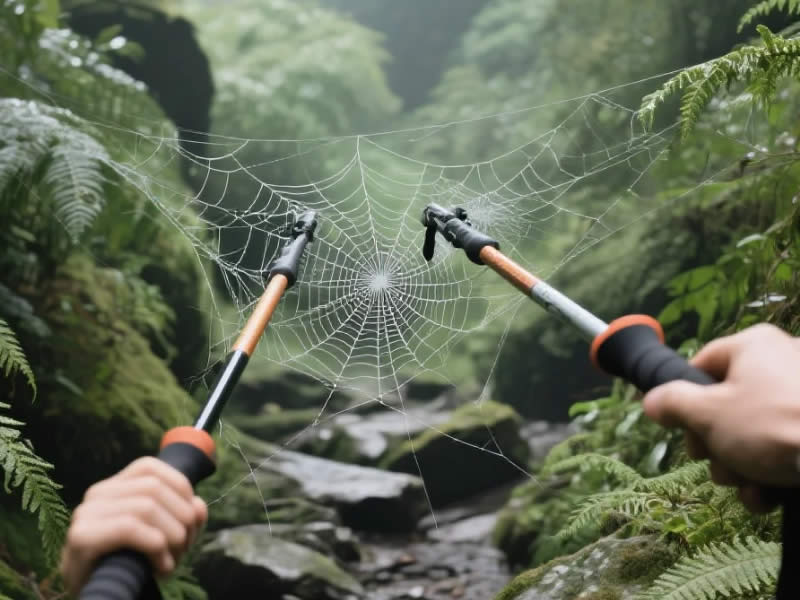
Recommended trekking pole purchase link: https://s.click.aliexpress.com/e/_c4M7OWaN
Why use poles instead of brushing with hands
- Avoid direct contact: Spiderwebs are sticky and often carry dust, pollen, or small insects. A pole keeps your hands clean.
- Reach further: A pole extends your reach, allowing you to clear a path ahead of your face without slowing down.
- Gentle on plants: A light sweep with a pole disturbs ferns and grasses less than thrashing with your arms.
- Safety: Ferns may hide thorns, nettles, or poison ivy. A pole gives you a buffer.
The basic technique: one‑pole “aerial broom”
- Hold one pole horizontally in front of you, at about face height.
- Grip it near the center (or a little toward the front) for balance.
- Sweep gently from side to side as you walk, keeping the pole just ahead of your leading foot.
- For ferns or tall grass, lower the pole to knee or waist height and sweep in a wider arc.
- Use a light touch – the goal is to part the vegetation, not chop it.
Two‑pole method for dense vegetation
If the path is completely overgrown with ferns or brambles:
- Hold both poles together in one hand, forming a single horizontal bar.
- Sweep in front of you with a windshield‑wiper motion.
- Alternatively, use one pole in each hand and “part” the vegetation like opening curtains – push the left pole left, the right pole right. This is very effective for tall ferns.
Tips for spiderwebs specifically
- Avoid breaking the web: Many spiders rebuild every night. Instead of slashing, try to lift the web upward with the pole tip and place it to the side. Some hikers twirl the pole to gather the silk like cotton candy.
- For low webs between knee and face, a simple upward flick of the pole tip often lifts the web over your head.
- If you collect silk on your pole, wipe it off on a leaf or rock – don’t touch it with bare hands.
How to avoid harming plants and wildlife
- Use a gentle sweeping motion, not a forceful hack. Ferns are resilient, but repeated heavy beating can damage them.
- Don’t break young tree branches – use the flat side of the pole to push aside, not the tip.
- Look before you sweep: A pole can knock down a bird’s nest or a resting butterfly. Scan ahead.
- Stay on the path: Clearing vegetation wildly can widen the trail or trample sensitive plants. Only clear what is directly in your way.
Common mistakes
- Swinging too hard – you’ll tire your arms and may snap a fern that could have been parted gently.
- Using the carbide tip – the sharp point can cut stems and leaves. Use the side of the pole or the basket end.
- Forgetting the second pole – while you’re busy sweeping, you may still get a web in the face from the other side. Sweep with both poles or alternating.
- Not looking where you step – focused on the web, you might trip on a root.
After the hike
- Clean your poles – spider silk is sticky and can attract dirt. Wipe with a damp cloth.
- Check for damage – ferns and brambles can scratch paint or coatings; not a big issue for aluminium or carbon.
Alternative: use a dedicated “web wand”
If you hike very early frequently, some hikers carry a lightweight, telescopic stick specifically for webs. But your trekking poles are already in your hands – why carry extra gear?
Final verdict
Trekking poles are excellent tools for clearing spiderwebs and ferns on narrow paths. Use a one‑pole horizontal sweep at face height for webs, or a two‑pole parting motion for dense ferns. Always be gentle to avoid harming plants and wildlife. With a little practice, you’ll walk through overgrown trails smoothly, with no sticky surprises – and your poles will earn their keep even when you’re not climbing.




