




How to clean trekking poles after hiking in UK mud and peat?
The UK’s beautiful trails – from the peat bogs of Dartmoor and the Pennines to the sticky, iron‑rich mud of the South Downs and the acidic peat of the Scottish Highlands – are tough on gear. Peat and mud are not just messy; they are corrosive, abrasive, and can damage the locking mechanisms of your trekking poles if left uncleaned. Here’s a step‑by‑step guide to properly cleaning your poles after a day in UK mud and peat, ensuring they last for many hikes.
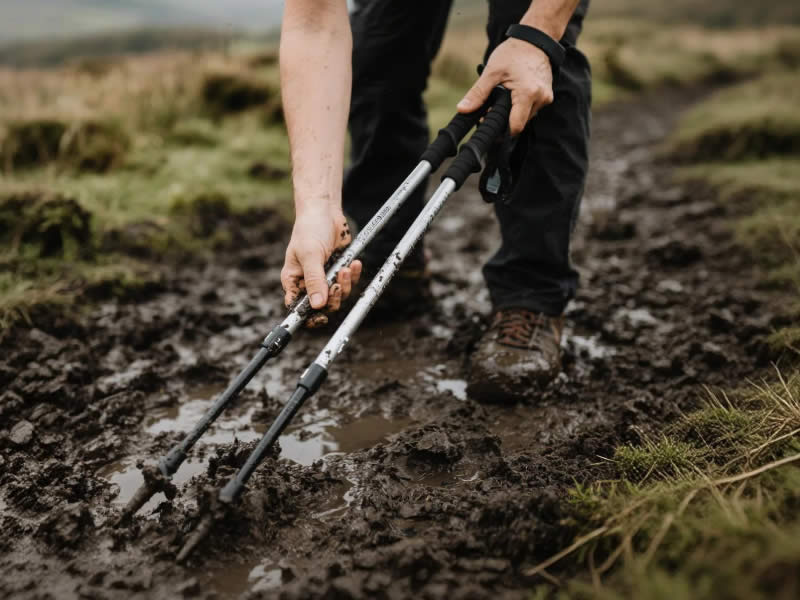
Recommended trekking pole purchase link: https://s.click.aliexpress.com/e/_c4M7OWaN
Why UK peat and mud are particularly damaging
- Peat is acidic: The pH of peat can be as low as 3.5 (similar to vinegar). If left on aluminium shafts or steel springs, it can cause pitting corrosion over time.
- Mud contains grit: Fine sand and quartz particles work their way into lever locks, twist mechanisms, and between telescopic sections, grinding down the surfaces.
- Dried mud shrinks and hardens: It can lock sections together, making it impossible to collapse or extend your poles without using excessive force (which can bend them).
What you need
- Clean water (a tap, a stream, or a bottle of water at the trailhead)
- A soft brush (old toothbrush or a small scrubbing brush)
- A cloth or old towel
- Silicone spray or WD‑40 (optional, for locks)
- A bucket or basin (if cleaning at home)
Step‑by‑step cleaning process
1. Remove loose mud immediately on the trail
As soon as you finish your hike, knock the poles together to dislodge large clumps of peat and mud. Use a stick or the edge of a rock to scrape off thick deposits. Don’t let the mud dry – it’s much harder to remove later.
2. Rinse with clean water
If you have access to a tap or a stream, rinse the poles thoroughly. Pay special attention to:
- The tips and baskets (mud loves to hide there)
- The locking mechanisms (open the levers and flush water through)
- The joints between telescopic sections
3. Extend the poles fully for cleaning
Extend each pole to its full length (but not past the STOP mark). This allows you to clean the entire shaft and ensures grit trapped between sections is rinsed out. For foldable Z‑poles, disassemble them completely (pull apart the sections).
4. Scrub with a soft brush
Dip the brush in clean water and scrub:
- The grooves around the baskets and tips
- The lever locks (open and closed positions)
- Inside the twist‑lock sleeves (if you have twist locks – but lever locks are better)
- The grip (cork or foam – use only water, no soap)
Avoid using metal brushes or hard abrasives – they can scratch the anodised coating on aluminium poles.
5. Rinse again and dry thoroughly
After scrubbing, rinse once more with clean water. Use a cloth to dry the poles, paying attention to:
- The inside of the locking mechanisms (use a corner of the cloth)
- The sections where the shafts overlap
- The tips and baskets
6. Allow to air dry completely
Extend the poles and leave them in a well‑ventilated area (not a damp shed) for several hours or overnight. Never collapse or store poles while they are still wet – trapped moisture can cause corrosion and mildew.
7. Lubricate moving parts (optional but recommended)
Once completely dry, apply a small amount of silicone spray or a light machine oil (like WD‑40) to:
- The lever lock cams and pivots
- The threads of screw‑on baskets
- The push‑buttons on foldable Z‑poles
Wipe off any excess – you don’t want oil on the shaft where you grip.
8. Inspect for damage
Before storing, check:
- Carbide tips: Are they still sharp? Is the tip loose?
- Shafts: Any nicks, cracks (carbon), or bends (aluminium)?
- Locks: Do they close firmly? Any rust?
What to avoid
- Pressure washers: They can force water and grit into sealed sections.
- Soap or detergent: Residue can make grips slippery. Use only water.
- Abrasive pads: They remove the protective coating.
- Leaving poles in a closed bag wet: Promotes rust and mould.
Special care for different materials
- Carbon fibre: Avoid soaking the shafts; water can seep into hairline cracks. Wipe with a damp cloth, not a hose.
- Cork grips: Do not scrub aggressively; cork is soft. Rinse and pat dry.
- Aluminium with anodised finish: Mild scrubbing is fine, but avoid scratching.
How to deal with dried‑on mud
If the mud has already dried, soak the poles in a bucket of clean water for 30 minutes to loosen the dirt. Then scrub gently. Do not use a knife or metal scraper – you’ll damage the finish.
Prevention for next time
- Before a hike in peat or clay mud, apply a thin layer of wax (e.g., car wax) to the shafts – this makes mud slide off more easily.
- Extend poles slightly (just a few cm) when storing them after cleaning, to keep the internal surfaces from sticking.
Final verdict
Cleaning trekking poles after hiking in UK mud and peat is straightforward: rinse off loose mud, extend the poles, scrub with a soft brush and clean water, dry thoroughly, and lubricate moving parts. Never let mud dry on the poles, and never store them wet. With regular care, your poles will resist the acidity and abrasiveness of British peat and mud, and they’ll continue to perform reliably for years.




