




How to fix a trekking pole that keeps collapsing under load?
A trekking pole that collapses unexpectedly under your weight is not just annoying – it’s dangerous, especially on steep descents or rocky terrain. The good news is that most causes of slipping can be fixed with basic cleaning, adjustment, or minor part replacement. Here’s a step‑by‑step guide to diagnosing and fixing a collapsing pole.
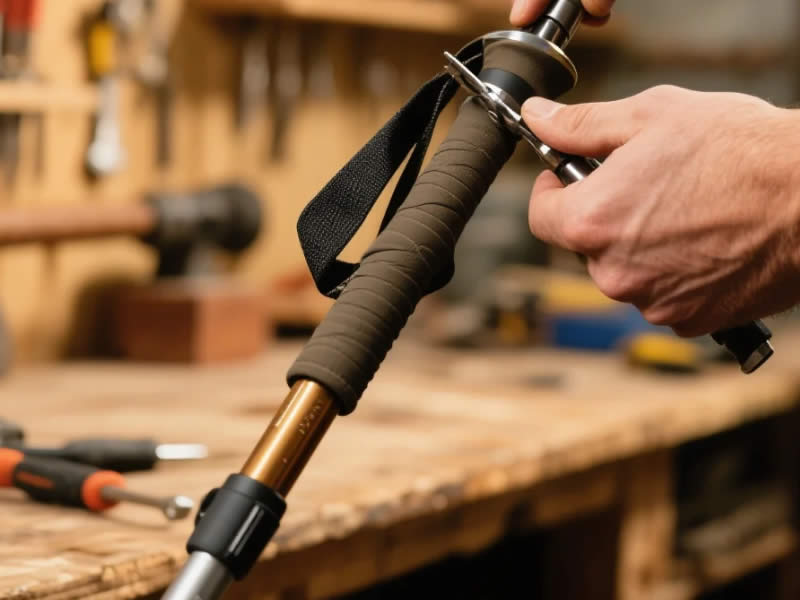
Recommended trekking pole purchase link: https://s.click.aliexpress.com/e/_c4M7OWaN
First, identify the type of lock
- Lever lock (external clamp): Leki SpeedLock, Black Diamond FlickLock, etc. Most reliable and easiest to fix.
- Twist lock (internal cam): Common on budget poles; older designs.
Why do poles collapse?
- Dirt or moisture on the clamping surfaces (most common).
- Lock tension too low (lever lock needs tightening; twist lock needs more twisting).
- Worn or damaged parts (cracked cam, stripped dial, bent shaft).
- Oil or lubricant on the inner shaft (causes immediate slipping).
Step 1: Clean everything thoroughly
Before adjusting anything, clean your pole:
- Extend the pole fully.
- Wipe the inner shaft with a dry cloth. Use a little isopropyl alcohol to remove any grease or sweat.
- For lever locks: open the lever and clean inside the clamp with a brush or cloth. Ensure no grit is trapped.
- For twist locks: unscrew the lock (if possible) and clean the plastic cam and the inside of the outer tube. Let dry completely.
Step 2: Adjust lever lock tension
Most lever locks have adjustable clamping force.
- Leki SpeedLock: Turn the small dial on the side of the lever clockwise (using your finger or a coin). Each click increases tension. Close the lever – it should require firm pressure to fully close. If it closes too easily, tighten more. If it’s very hard to close, loosen slightly.
- Black Diamond FlickLock: Use a 2.5 mm or 3 mm hex key (Allen wrench) to tighten the screw on the side of the lever. Turn clockwise to increase tension. Test – the lever should snap closed with a definitive click.
- Generic lever locks: Look for a screw or dial; same principle.
Step 3: Adjust twist lock tension
Twist locks rely on friction. If cleaning doesn’t help:
- Hold the lower section and twist the upper section clockwise as hard as you can by hand – do not use tools. If it still slips, the cam may be worn or the shaft is oily. Clean again with alcohol.
- Do not lubricate the friction surface – that will make it slip more.
- If the lock has a small screw or bolt, you may be able to tighten it, but many are non‑adjustable.
Step 4: Check for worn or broken parts
- Cracked lever or dial: If the plastic is cracked, the lock will never hold. Order a replacement lever kit from the manufacturer (Leki, Black Diamond, etc.). Many are user‑replaceable.
- Worn twist‑lock cam: If the plastic ribs have flattened, the cam cannot grip. Replace the lock assembly (available from the brand). For cheap poles, it may be time to replace the whole pole.
- Bent or dented shaft: A bent inner shaft will not make even contact. Attempt to straighten it (aluminium only). If dented near the lock area, the pole is compromised – replace the section.
Step 5: Test the fix
After cleaning and adjusting, extend the pole and lock it. Apply your full body weight vertically (push down on a flat surface). The pole should not slip. If it still collapses, repeat the cleaning/adjusting process. If it still fails, the locking mechanism is likely beyond repair.
Preventive measures for the future
- Keep poles clean – after muddy or rainy hikes, extend and wipe down.
- Dry them thoroughly before collapsing and storing.
- Do not over‑tighten lever locks – it can deform the shaft.
- Store poles extended (or at least not fully collapsed) to prevent moisture buildup.
- Use silicone or grease only on threads (twist locks) or hinge pins (lever locks) – never on the clamping surfaces.
When to replace rather than repair
- The pole was very cheap (under €30) and the lock is not adjustable.
- The shaft is cracked or severely bent.
- Replacement parts are not available.
- The pole has already collapsed on you more than once – trust your safety to new poles.
Final verdict
A collapsing trekking pole is almost always fixable with cleaning and tension adjustment – especially for lever locks. Start by cleaning the shaft and lock, then tighten the lever mechanism or twist the lock harder. If parts are worn or broken, order replacements from the manufacturer. With regular maintenance, your poles will hold securely for thousands of kilometres. Never ignore a slipping lock – fix it before your next hike.




