




How to sharpen blunt carbide trekking pole tips?
Carbide tips are the most durable part of your trekking poles, but over hundreds of kilometres on abrasive rock, even they will eventually become rounded or blunt. A blunt tip skids on rock, reduces stability, and can make descents dangerous. The question is: can you sharpen carbide? The short answer is yes, but only slightly, and with the right tools. For severely worn tips, replacement is the only reliable solution. Here’s what you need to know.
Recommended trekking pole purchase link: https://s.click.aliexpress.com/e/_c4M7OWaN
Why carbide is hard to sharpen
Tungsten carbide has a hardness of 8.5–9 on the Mohs scale – just below diamond (10). Standard files, sandpaper, or sharpening stones will have almost no effect. You need diamond abrasives to grind carbide effectively. Even then, you can only restore a modest point, not a full “factory sharp” edge.
When to sharpen vs. when to replace
- Mildly rounded tip: The point is still defined but feels less sharp. A light sharpening may restore enough bite.
- Severely rounded or mushroomed tip: The carbide has lost its point and the steel ferrule may be exposed. Sharpening will not restore the shape – replace the tip.
- Chipped or cracked carbide: Replace immediately – a cracked tip can break off completely.
- Replaceable tips: Most quality poles have screw‑in or press‑fit replaceable tips (€5–15 per pair). This is always the best option if available.
How to sharpen a carbide tip (diamond stone method)
Tools needed:
- A diamond sharpening stone (fine grit, 300–600 mesh). A diamond bench stone or a small diamond file works.
- Alternatively, a diamond‑coated rod (e.g., from a chainsaw sharpener) or a diamond‑impregnated sanding pad.
- Safety glasses (tiny carbide particles can fly).
- A bowl of water (for wet sharpening).
Step‑by‑step:
- Remove the tip if possible (unscrew or pull it off). If not replaceable, work carefully on the pole.
- Secure the tip in a vice or hold it firmly with pliers (wrap the shaft with cloth to avoid scratches).
- Wet the diamond stone – water reduces friction and catches dust.
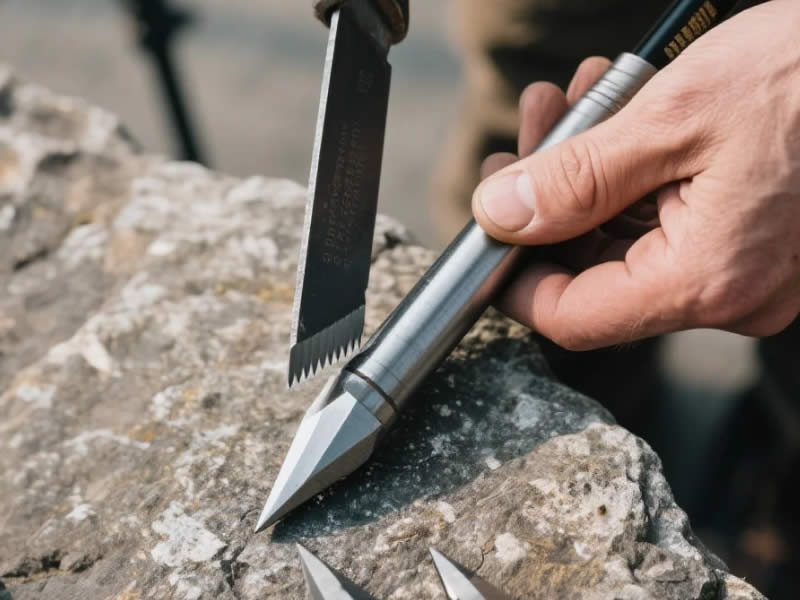
- Grind the tip using a gentle circular or back‑and‑forth motion, holding the tip at a 20–30° angle. You are trying to re‑create a point, not sharpen an edge.
- Check frequently – stop as soon as the tip feels noticeably sharper. Over‑grinding will shorten the tip and may expose the steel ferrule.
- Rinse and test – plant the pole on a rock. It should bite, not skid.
Alternative: diamond file or rotary tool
- Diamond file: A small, flat diamond file can be used to carefully reshape the tip from the sides. Work slowly.
- Rotary tool with diamond bit (e.g., Dremel): For advanced users only. Use a fine grit diamond ball bit at low speed. Risk of overheating and damaging the tip. Dip in water frequently.
What NOT to do
- Do not use a standard metal file – it will not cut carbide and will ruin the file.
- Do not use a bench grinder – unless it has a diamond wheel. Standard wheels will not cut carbide and can overheat the tip, causing it to crack.
- Do not attempt to sharpen a worn‑out replaceable tip – replacement is cheaper and safer.
- Do not sharpen so much that the carbide is reduced to a nub – you’ll lose the biting surface.
Why replacement is almost always better
For the cost of a pair of diamond stones (€20–50), you could buy several sets of replacement tips. Most hikers should simply:
- Check if your poles have replaceable carbide tips (most quality brands do).
- Buy a spare set (€5–15) and swap them when worn.
- Keep the old tips for practice sharpening if you wish.
If your poles have non‑replaceable tips (common on budget poles), sharpening may extend their life a bit. But eventually, the entire pole is worthless when the tip wears out – another reason to buy poles with replaceable tips.
Test after sharpening
After sharpening, plant the pole on a flat, hard rock and push sideways. A sharp tip will not skid. Walk with the pole on a rocky trail for a few minutes. You should feel more bite. If not, you either need more sharpening or a new tip.
Final verdict
Carbide trekking pole tips can be slightly sharpened using diamond abrasives, but the process is slow and only effective for mildly rounded tips. For severely worn or damaged tips, replacement is the only reliable solution. Always choose poles with replaceable carbide tips – a spare set costs little and ensures you always have sharp, safe tips. Sharpening is a temporary fix; replacement is the permanent answer.




