




Can trekking poles be used as avalanche probes in emergency?
In a backcountry avalanche emergency, every second counts. If someone is buried, you need to locate them quickly and precisely. A dedicated avalanche probe is the tool for the job. But could your trekking poles double as a makeshift probe in a life‑or‑death situation? The short answer is no, absolutely not. Relying on trekking poles instead of a proper probe is dangerous and could waste critical time. Here’s why.
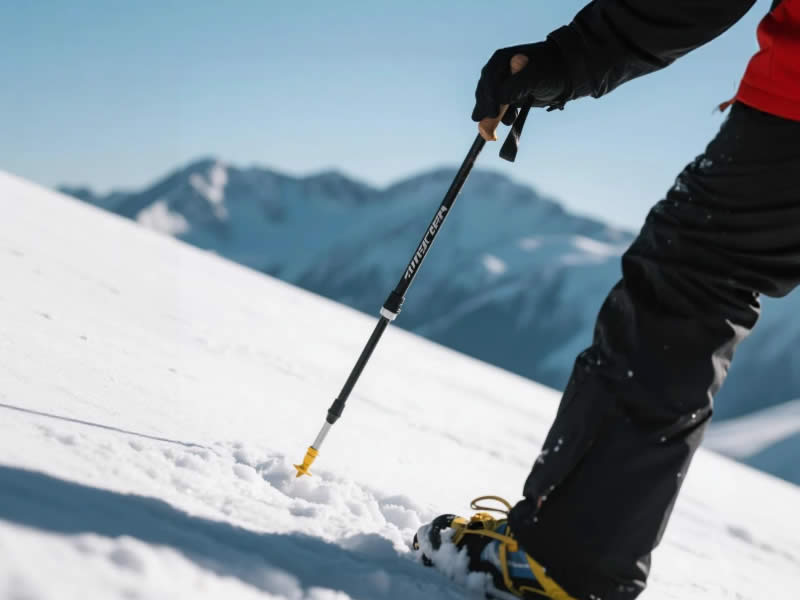
Recommended trekking pole purchase link: https://lightenup.aliexpress.com/store/1101521655
Why trekking poles fall short
- Length – Avalanche probes are typically 240–300 cm (8‑10 feet) long when extended. Trekking poles max out at about 135 cm (4.5 feet). In deep snow, a buried victim may be 1‑2 metres below the surface. A trekking pole simply won’t reach.
- Lack of depth markings – Probes have clear depth markings (every 10 or 20 cm) so you can measure how deep the victim is and determine the correct excavation point. Trekking poles have no such markings.
- Rigidity – Probes are made of stiff aluminium or carbon sections that lock together firmly, allowing you to push through dense, refrozen snow. Trekking poles are designed for walking, not for penetrating hard avalanche debris. Their tips can bend or break under the force needed to probe.
- Tip design – Probe tips are blunt or rounded to avoid damaging a buried victim. Trekking poles have sharp carbide tips that could injure someone if you strike them – exactly what you don’t want.
- Assembly speed – Probes are designed to deploy in seconds. Trekking poles take longer to extend and lock, especially with cold, gloved hands.
What the experts say
Avalanche safety organisations (e.g., the Canadian Avalanche Centre, UIAA) explicitly state that trekking poles are not substitutes for avalanche probes. In tests, using trekking poles resulted in significantly slower and less accurate probing, and in many cases the poles failed (bent or snapped) when pushed through hard avalanche debris.
What you should do instead
- Carry a dedicated avalanche probe – lightweight, collapsible, and specifically designed for the task. They weigh as little as 150 g and pack down to 30‑40 cm. Pair it with a transceiver and a shovel – the essential avalanche safety trio.
- If you forget your probe, do not use trekking poles. Turn back or stay on safe terrain. Your life is not worth the risk.
- In an emergency without a probe, you can use a ski pole (if you have skis) – but it’s still a poor substitute. The best option is to have the correct gear.
A note on “emergency” improvisation
If you are in a remote area without any probe and a life is at stake, any tool is better than nothing – but understand the limitations. Use two trekking poles taped or tied together to extend length? Likely too weak and wobbly. Use a long tree branch? Possibly, but you won’t have depth markings. The bottom line: proper avalanche safety gear is non‑negotiable in avalanche terrain.
Final verdict
Trekking poles are not safe or effective as avalanche probes in any emergency. They are too short, unmarked, insufficiently rigid, and have dangerous tips. Always carry a proper avalanche probe when travelling in avalanche terrain. Your life – and the lives of your companions – depend on the right equipment.




