




Can trekking poles help with walking after hip replacement surgery?
Yes, trekking poles can be a valuable tool during recovery after hip replacement surgery. They offer a number of benefits for walking, balance, and confidence – but they are not a substitute for medical advice or prescribed walking aids. Always consult your surgeon or physiotherapist before using trekking poles, especially in the early stages of rehabilitation. When used appropriately, trekking poles can help you transition from crutches or a cane to independent walking, and later to more active outdoor walking. Here’s what you need to know.
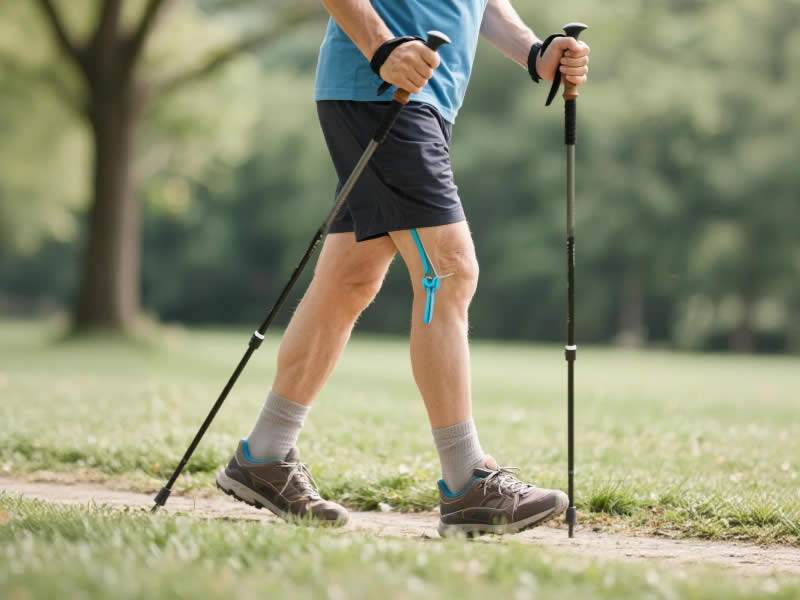
Recommended trekking pole purchase link: https://lightenup.aliexpress.com/store/1101521655
How trekking poles help after hip replacement
- Improved balance and stability – Hip surgery can temporarily weaken the muscles that stabilise your pelvis and leg. Trekking poles provide two extra points of contact, creating a wide, stable base. This reduces the risk of falls – a major concern during recovery.
- Reduced load on the new hip – Walking with two poles transfers some of your body weight from your lower body to your arms and shoulders. This decreases the forces going through the new hip joint, which can reduce pain and protect the implant while surrounding muscles and tissues heal.
- Confidence to walk outdoors – Many people feel anxious walking on uneven ground or inclines after surgery. Trekking poles give you a sense of security, encouraging you to walk further and more often – which is essential for a good recovery.
- Symmetrical gait training – Unlike a single cane (which can encourage a limp), using two poles promotes a more natural, alternating walking rhythm. This helps retrain your brain and muscles to walk evenly, reducing the risk of developing a long‑term limp.
- Progression from crutches/cane – As your strength improves, you may need less support. Trekking poles can be used as a “step down” from crutches: they offer more support than a single cane, but are less bulky than crutches and encourage a more normal arm swing.
Important safety and usage guidelines
- Get professional approval – Do not start using trekking poles without your doctor or physiotherapist’s OK. The timing depends on your surgical approach (anterior, posterior, etc.) and your individual healing.
- Use two poles – Never one. Two poles provide bilateral support and prevent you from leaning to one side, which could stress the new hip.
- Set the correct length – Stand upright with your arms relaxed. Bend your elbow to 90°. Adjust the pole so the tip (with rubber cover) touches the ground. Mark this length.
- Use wrist straps correctly – Insert your hand up through the strap from below, then grip lightly. The strap should bear weight, not your fingers. This reduces hand fatigue and improves safety.
- Always use rubber tips on pavement – Carbide tips can slip on smooth floors or asphalt. Rubber “paw” covers provide safe traction indoors and on hard surfaces.
- Start on flat, even ground – Practice indoors first, then move to a smooth garden path, then gentle park trails. Avoid steep inclines or loose terrain until your physiotherapist says it’s safe.
When to avoid trekking poles after hip replacement
- In the immediate post‑op period (first few weeks) – You will likely be prescribed a walker or crutches. Trekking poles do not provide the same level of support or upper‑body weight‑bearing capacity. Follow your surgeon’s specific protocol.
- If you have significant upper body weakness – You need enough arm and shoulder strength to use poles safely. If you have arthritis or weakness in your arms, a walker may be safer.
- If you have balance or cognitive issues – Poles require coordination. For some older adults or those with neurological conditions, a walker or rollator may be more appropriate.
Choosing the right trekking poles for post‑op walking
- Lightweight aluminium (e.g., Leki Makalu, Decathlon Forclaz MT500) – sturdy, adjustable, and not too heavy.
- Lever locks – easier than twist locks, especially if you have arthritis or reduced grip strength.
- Comfortable cork or foam grips – reduce hand fatigue.
- Rubber tips included – essential for indoor and pavement use.
- Padded wrist straps – help distribute weight comfortably.
Sample progression plan (with physio approval)
- Weeks 2–4: Use crutches/walker as prescribed.
- Weeks 4–6: Transition to two walking sticks (standard single‑point cane) or trekking poles on flat surfaces, under supervision. Continue using crutches for longer walks.
- Weeks 6–12: Use trekking poles for most outdoor walking. Gradually reduce reliance, but keep them for uneven ground or longer distances.
- Week 12 onwards: Use poles as needed – many people continue to enjoy them for hill walking and balance.
Final verdict
Trekking poles can absolutely help with walking after hip replacement surgery – once you are past the initial healing phase and have your doctor’s approval. They improve balance, reduce joint load, boost confidence, and encourage a natural walking pattern. However, they are not a replacement for crutches in early recovery. Always work with your physiotherapist to time the transition correctly. With the right guidance, trekking poles can be a wonderful tool to get you back on your feet – and back to enjoying the outdoors – safely and comfortably.




