




Are trekking poles recommended for people with osteoporosis?
Yes, trekking poles are often recommended for people with osteoporosis, particularly for walking outdoors on uneven ground. Osteoporosis weakens bones, making them more susceptible to fractures – especially in the spine, hips, and wrists. The primary goal for anyone with osteoporosis is to prevent falls and reduce impact on vulnerable bones. Trekking poles can help achieve both. However, it is essential to consult your doctor or physiotherapist before starting any new exercise or mobility aid. Here’s why trekking poles are beneficial and how to use them safely.
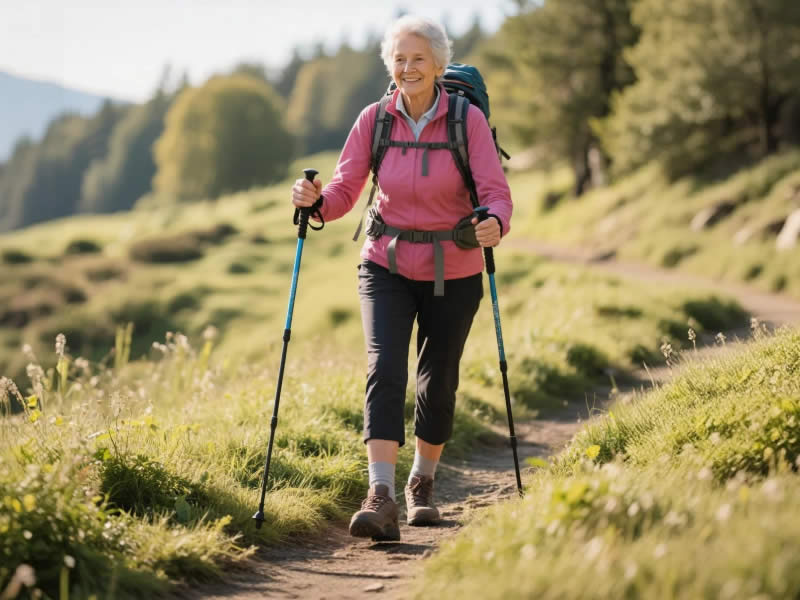
Recommended trekking pole purchase link: https://lightenup.aliexpress.com/store/1101521655
How trekking poles help with osteoporosis
- Improved balance and fall prevention – The most dangerous risk for someone with osteoporosis is falling. A single stumble can cause a hip or wrist fracture. Trekking poles convert two points of contact (your feet) into four points of contact (feet + poles), dramatically increasing stability. They also allow you to “probe” the ground ahead, detecting uneven surfaces, cracks, or holes before you step into them.
- Reduced joint loading and impact – Walking, especially on hard pavement, sends shock waves through your skeleton. By transferring some of your body weight from your legs to your arms, trekking poles reduce the load on your hip and knee joints, as well as the spine. This is particularly beneficial for people with vertebral compression fractures or osteoarthritis that often accompanies osteoporosis.
- Upper‑body engagement – Osteoporosis can lead to a stooped posture (hyperkyphosis). Using two poles with proper technique encourages you to stand upright, opening your chest and engaging your back muscles. This can help improve posture and strengthen the muscles that support your spine – an important part of osteoporosis management.
- Confidence to stay active – Fear of falling often leads people with osteoporosis to avoid walking, which leads to muscle weakness and further bone density loss. Trekking poles provide confidence, allowing you to walk on varied surfaces (grass, gravel, pavement) safely.
Important safety considerations
- Consult a healthcare professional first – Your doctor or physiotherapist should assess your balance, bone density, and any specific risks (e.g., high risk of wrist fracture). They can advise on pole use and may recommend additional aids like a hip protector.
- Use two poles, not one – A single walking stick can cause you to lean asymmetrically, increasing fall risk. Two poles provide balanced support and protect both sides.
- Always use rubber tips on pavement – Carbide tips are for dirt and grass. On hard surfaces, rubber “paw” covers provide better grip and reduce impact shock. They also protect the metal tip from wear.
- Set the correct length – Stand upright with arms relaxed. Bend your elbow to 90°. Adjust the pole so the tip (with rubber cover) touches the ground. Incorrect length can strain your shoulders or cause you to hunch.
- Use wrist straps correctly – Insert your hand up through the strap from below, then grip lightly. The strap should bear your weight, not your fingers. This reduces the risk of a wrist fracture if you fall (you won’t instinctively put your hand out to break the fall because the strap keeps your hand in position).
- Avoid twisting movements – People with osteoporosis should avoid sudden twisting of the spine. When turning, turn your whole body rather than rotating your torso while planting a pole.
Choosing the right poles for osteoporosis
- Lightweight aluminium or carbon – Heavy poles increase arm fatigue. Aim for under 250g per pole.
- Lever locks – Easier to use than twist locks, especially for people with reduced hand strength.
- Cork or foam grips – Comfortable, absorb sweat, and non‑slip. Larger diameter grips reduce the need to grip tightly.
- Adjustable length – Allows fine‑tuning for different terrains and ensures proper fit.
- Rubber tips included – Essential for pavement use.
Technique tips
- Start on flat, smooth ground (e.g., a quiet pavement or a flat park path) to learn the rhythm.
- Walk with an opposite arm‑leg pattern: right foot forward, left pole forward.
- Keep your back straight and your head up – look ahead, not at your feet.
- Take shorter, more frequent steps – this reduces impact and improves balance.
- If you need to rest, plant both poles firmly and lean on them – they can support your weight.
When not to use trekking poles
- If you have severe osteoporosis with a very high fracture risk, your doctor may recommend a walker (which offers more stability) or a rollator with a seat.
- If you have advanced wrist arthritis or previous wrist fractures that make gripping painful, a different aid may be better.
- On ice or very slippery surfaces, trekking poles may still slip; consider adding ice grips or using microspikes on your shoes.
Final verdict
For most people with osteoporosis, trekking poles are a highly recommended, low‑cost, and effective tool to improve balance, prevent falls, and promote safe walking. They reduce the load on vulnerable bones, encourage upright posture, and build confidence to stay active – which is crucial for managing osteoporosis. Always get professional advice, choose poles with rubber tips and comfortable grips, and practise the correct technique. With the right approach, trekking poles can help you walk safely and maintain your independence for years to come.




