




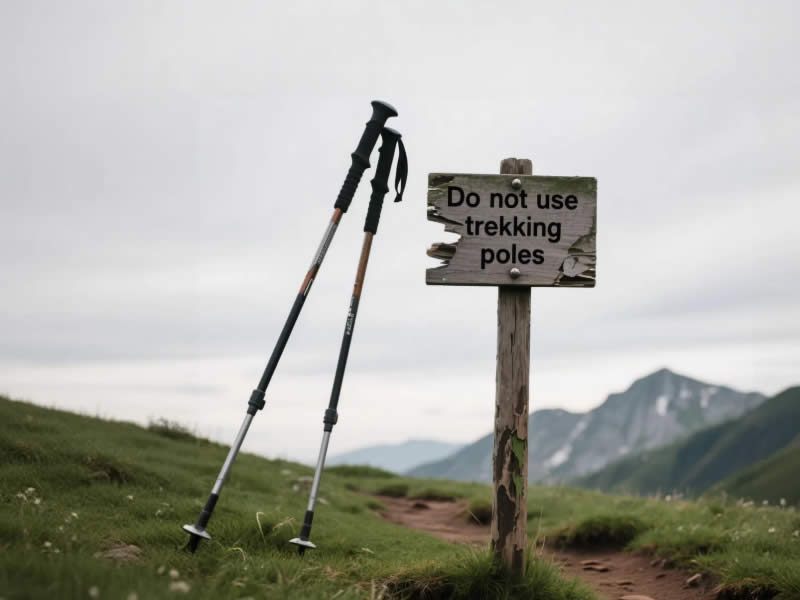
Can trekking poles damage footpaths and fragile trails?
Yes – under certain conditions, trekking poles can contribute to trail erosion and damage sensitive vegetation. However, the impact is generally minor compared to boots, mountain bikes, or horses. With a few simple adjustments, you can minimise your footprint and protect the paths we all love. Here’s an honest look at the issue and practical advice for responsible hiking.
Recommended trekking pole purchase link: https://lightenup.aliexpress.com/store/1101521655
How trekking poles can cause damage
- Carbide tip punctures – The sharp, hard tip of a trekking pole is designed to bite into rock and ice. On soft, wet ground (mud, peat, fragile alpine turf), the tip can leave small puncture holes. While each hole is tiny, thousands of hikers over a season can accelerate erosion, especially on already saturated paths. The puncture can break the surface crust, allowing water to penetrate and weaken the trail.
- Scarring on rock and stone – On popular mountain routes, the repeated scraping of carbide tips on limestone, slate, or sandstone can leave light scratch marks. Over many years, this can polish or scar rock steps, though the effect is cosmetic more than structural.
- Disturbing fragile vegetation – In heathlands, alpine moss, or lichen‑covered terrain, stabbing a pole into a cushion plant can kill that small patch. Rare or slow‑growing plants may take decades to recover.
- Widening paths – Some hikers use poles to push aside vegetation, effectively widening the corridor. This can fragment habitats and disturb nesting birds or small mammals.
How the impact compares to other factors
- Boots cause far more erosion through heel scouring on slopes, braking on descents, and trampling vegetation.
- Mountain bikes create deep ruts, especially in wet conditions.
- Horses can churn a path into a muddy mess.
Trekking poles are a minor contributor, but on already fragile or overused trails, every little bit matters.
What you can do to minimise damage
- Use rubber tips on soft ground – Fit rubber “paw” covers over your carbide tips when walking on dirt, mud, grass, or peat. Rubber tips distribute pressure over a larger area, reducing punctures. They also improve grip on hard surfaces and reduce noise. For boggy sections, rubber tips are a simple win‑win.
- Save carbide tips for rock and ice – Carbide is essential for grip on limestone, granite, or frozen trails. Use them only when needed.
- Remove snow baskets on rocky trails – Baskets can scrape against rock edges, but this is minor.
- Stick to the defined path – Even with rubber tips, avoid planting off‑trail in fragile vegetation. Stay on durable surfaces (rock, gravel, compacted dirt).
- Avoid stabbing into moss or lichen – If you must walk on fragile ground, lift your poles rather than planting them. Use your feet and balance instead.
- Join a trail maintenance volunteer day – The best way to offset any impact is to help repair paths. Organisations like the National Trust, Ramblers, and local footpath groups welcome volunteers.
What about alpine and arctic environments?
In high mountains or tundra, where plant growth is extremely slow, the impact of a single pole plant can last for years. Use rubber tips where possible, step on rock or snow rather than vegetation, and keep to existing tracks. Many alpine clubs now recommend rubber tips for summer hiking.
The counterpoint: poles can also protect trails
When used correctly, trekking poles can actually reduce erosion. By transferring some of your weight to your arms, poles reduce the force of each footstep, lessening heel scouring on descents. On steep, loose slopes, poles can prevent you from sliding and skidding, which can loosen soil. So responsible pole use is part of the solution, not just the problem.
Guidelines from national parks
Several UK national parks (e.g., Lake District, Peak District, Snowdonia) have published advice on trekking poles:
- “Use rubber tips on soft ground.”
- “Avoid planting poles on fragile moss or lichen.”
- “Keep to the centre of the path.”
- “Consider leaving poles at home on very sensitive routes (e.g., some peatland restoration areas).”
Final verdict
Yes, trekking poles can damage footpaths and fragile trails, but the effect is small compared to boots and other factors. You can easily minimise your impact by using rubber tips on soft ground, sticking to durable surfaces, and avoiding unnecessary planting into vegetation. Do not stop using poles – they are valuable for balance, knee protection, and fall prevention. Just be conscious of where you place them. A little thought goes a long way in preserving our beautiful trails for future generations.




