




Can I use just one trekking pole for general rambling?
Yes, you can. For gentle, flat rambling on well‑maintained paths, a single trekking pole can provide useful support, improve balance, and reduce minor joint strain. However, using two poles is almost always better for your body, especially as terrain becomes uneven or hilly. Here’s an honest look at the pros and cons of using one pole versus two for general rambling.
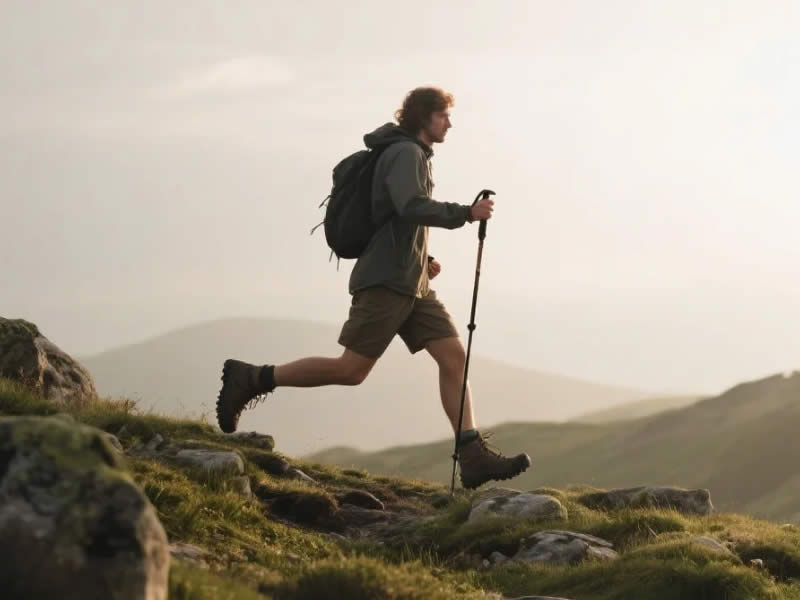
Recommended trekking pole purchase link: https://lightenup.aliexpress.com/store/1101521655
When one pole is acceptable
- Flat, smooth paths (e.g., canal towpaths, gravel trails, pavement). A single pole can help you maintain a steady rhythm, reduce minor knee impact, and give a little extra stability.
- If you have an injury or weakness on one side. For example, a bad left knee – using a pole in your right hand (opposite side) offloads the injured joint.
- When you need the other hand free – for carrying a dog lead, a camera, or a toddler’s hand. One pole leaves one hand free while still offering some support.
- For very short walks (under 3 km) on easy ground – the benefits of two poles may not outweigh the hassle of carrying both.
Why two poles are almost always better for rambling (even easy rambling)
- Bilateral balance – With two poles, you have four points of contact with the ground (two feet + two poles). This widens your base of support, dramatically reducing the risk of tripping or slipping, even on gentle slopes or wet grass. One pole creates asymmetry – you may lean to one side, which can lead to back pain or a limp over time.
- Even knee protection – A single pole offloads only the opposite knee. The knee on the same side as the pole receives little benefit. Over a long ramble, one knee may become more tired or sore than the other. Two poles protect both knees equally.
- Natural gait – Humans are built for alternating arm‑leg motion. Two poles allow you to replicate this rhythm (right foot, left pole; left foot, right pole). A single pole disrupts this pattern – you either use the same‑side arm (waddling) or the opposite arm, leaving the other arm swinging freely. Both feel unnatural.
- Better posture – With two poles, your torso stays upright and centred. With one pole, you may twist or lean, leading to back and shoulder strain.
- Uphill and downhill assistance – On gentle inclines, two poles help push you up; on descents, they brake. One pole provides only half the benefit, and on a slope, the asymmetry becomes more pronounced.
- Fall prevention – If you stumble, two poles give you two chances to catch yourself. With one pole, your free hand may not react in time.
What ramblers say from experience
Many casual ramblers who start with one pole eventually switch to two after trying them. The feedback is consistent: “I didn’t think I needed two, but after a few miles, the balance feels so much better.” Conversely, those who use one pole often complain of backache or feeling “lopsided” after a long walk.
The exception: traditional wooden walking stick
In British rambling culture, a single wooden stick (e.g., a shillelagh or a simple thumb stick) has been used for centuries. It serves as a balance aid and a prop for resting. If you are walking on very flat, dry, well‑groomed paths, a single stick works fine. However, a modern trekking pole – with its carbide tip and wrist strap – is a different tool. Even then, many ramblers who switch from a single stick to two trekking poles never go back.
Practical considerations for using one pole
If you decide to use one pole, follow these tips:
- Hold it in the hand opposite your weaker leg (e.g., right hand for left knee pain). This offloads the injured side.
- Set the length to the 90° elbow rule on flat ground.
- Use a wrist strap correctly (hand up from below) to transfer weight.
- Be mindful of your posture – avoid leaning into the pole.
- On slopes, consider shortening or lengthening – even one pole benefits from terrain adjustment.
The best of both worlds: carry two, use one when convenient
Many experienced ramblers carry two poles but sometimes use only one – for example, when walking on a wide, flat section with a friend and needing a hand free. They simply strap the second pole to their pack or hold both in one hand. This gives you the option to use two on tougher sections and one on easier parts.
Final verdict
For general rambling on flat, easy terrain, you can use just one trekking pole, but two is better for your balance, knees, and posture. The weight penalty of a second pole is minimal (200–250g), and the benefits far outweigh the small extra effort. If you have never tried two poles, borrow a pair and walk 5 km with them – you will likely notice the difference. For those who truly want to minimise gear, a single pole will do; but for a safer, more comfortable ramble, make it a pair.




