




How to choose trekking poles for steep climbs in Serra dos Órgãos?
Serra dos Órgãos, located in Rio de Janeiro state, is famous for its dramatic, steep granite peaks, such as Dedo de Deus (God’s Finger), Pedra do Sino, and the challenging Travessia Petrópolis–Teresópolis. The terrain is a mix of wet, slippery forest sections, sharp quartzite rocks, and exposed, often humid granite slabs. Choosing the right trekking poles for these conditions can mean the difference between a confident ascent and a dangerous slip. Here’s what you need to know.
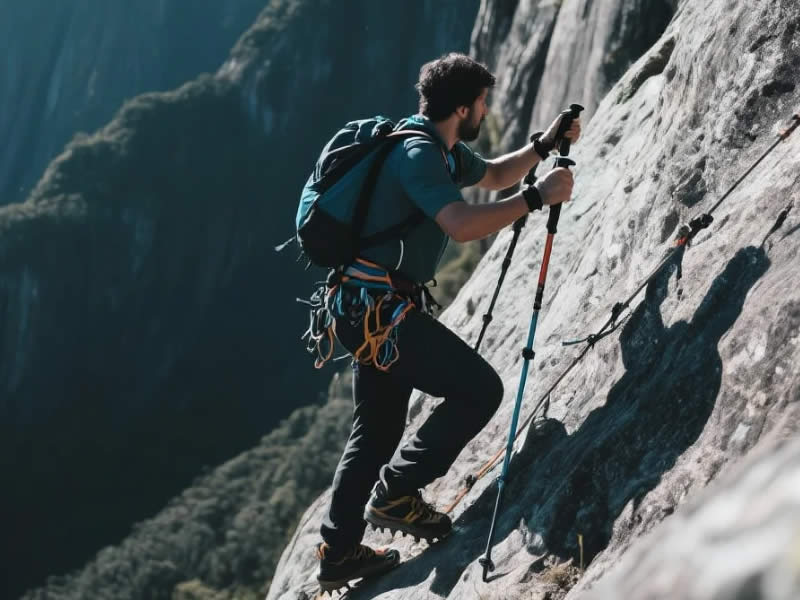
Recommended trekking pole purchase link: https://lightenup.aliexpress.com/store/1101521655
Key challenges of Serra dos Órgãos
- Steep, sustained grades: Many trails climb 1,000 m or more over short distances. You’ll be constantly adjusting pole length.
- Slick, polished granite: Rain is common. Carbide tips must bite; rubber tips are useless.
- Loose quartzite scree: Poles need to plant firmly without sliding.
- Roots and mud in lower forest: Locks must not jam with dirt.
- High humidity: Metal parts can corrode; grips must handle sweat.
Essential features for the Serra
1. Material: 7075 aluminium – Carbon fibre is too brittle. A sideways jam between granite blocks can snap carbon instantly. Aluminium bends; you can often straighten it with your hands or a rock. For the Serra’s unforgiving rocks, aluminium is the only safe choice.
2. Locking mechanism: lever locks – Twist locks slip when wet and are hard to clean. Lever locks (Leki SpeedLock, Black Diamond FlickLock) are external, easy to operate with sweaty hands, and reliable in mud. They also allow quick length changes – essential for the constant ups and downs of the Travessia.
3. Grip material: cork – You will sweat. Cork absorbs moisture, stays non‑slip, and moulds to your hand. Foam can become slippery; rubber is terrible. Look for extended foam sections below the cork for choking up on steep, exposed moves.
4. Tips: tungsten carbide, replaceable – The quartzite in Serra wears tips faster than almost any other rock. Buy poles with screw‑in carbide tips and carry a spare pair. Avoid poles with moulded‑in steel tips.
5. Length adjustability – On a steep climb like the ascent to Pedra do Sino, you’ll want to shorten poles by 5–10 cm. On the descent, lengthen them. Fixed‑length foldable poles are not suitable. Choose 3‑section telescopic poles with a range of 100–135 cm (or longer for tall hikers).
6. Baskets – Small summer baskets are fine. Large snow baskets are unnecessary unless you hike in winter mud (rare). Remove baskets entirely on rock sections to avoid catching.
Top pole recommendations for Serra dos Órgãos
- Leki Makalu (7075 aluminium, SpeedLock, cork grip) – The gold standard. Durable, repairable, and comfortable. Spare parts are available online if you import. Best for frequent climbers.
- Black Diamond Trail Pro (aluminium, FlickLock, foam grip) – Very robust. The foam grip is warm but may become slippery in heavy sweat; some prefer cork. Bombproof locks.
- Decathlon Forclaz MT500 (budget option) – Available in Brazil at Decathlon stores (Rio, São Paulo). Aluminium, lever locks, cork/foam hybrid grip. Excellent value for the price. Just ensure the locks are tightened properly before each climb.
Technique tips for steep climbs in the Serra
- Shorten poles for uphill – On grades over 15%, reduce length by 5–10 cm. Keep your arms low; push down with each plant to transfer load from legs.
- Use double planting – On very steep sections, plant both poles together ahead, then pull yourself up. This engages your upper body and saves your quads.
- On polished granite, plant vertically – An angled plant will skid. Push straight down until the carbide bites into a small depression or grain.
- Descending steep, loose scree – Lengthen poles, plant both ahead, and lean back slightly. The poles act as brakes.
- Protect your tips – Avoid planting in deep cracks where the tip could wedge and snap. Use the side of the shaft on rock steps.
What to avoid
- Carbon poles – Not safe for the Serra’s lateral stresses.
- Twist locks – They will slip after the first stream crossing.
- Rubber tips – Slide on granite; remove them before the hike.
- Fixed‑length poles – You cannot adjust for the steep gradients.
Maintenance after climbing
- Rinse poles with fresh water – The red mud in Serra (terra rossa) is acidic and can corrode aluminium if left on.
- Dry thoroughly – Extend poles and leave in a ventilated place. Humidity inside collapsed poles breeds corrosion.
- Check lock tension – Lever locks may loosen after rocky descents. Tighten the dial before each climb.
- Inspect tips – After a few climbs in quartzite, carbide tips will round. Replace them when they no longer bite.
Final verdict
For steep climbs in Serra dos Órgãos, choose 7075 aluminium poles with lever locks, cork grips, and replaceable carbide tips. The Leki Makalu is ideal, while the Decathlon Forclaz MT500 offers great value. Avoid carbon, twist locks, and fixed lengths. With the right poles and proper technique, you’ll conquer the Dedo de Deus and the Travessia with more confidence, less knee pain, and a greater appreciation for these spectacular Brazilian mountains.




