




Should I buy trekking poles with cork or EVA foam handles for humid conditions?
When hiking in humid environments – whether the Brazilian Atlantic Forest, the Amazon basin, or a misty European mountain – your hands will sweat. A lot. The grip material of your trekking poles becomes critical for safety and comfort. The short answer: choose cork. Here’s a detailed comparison of cork versus EVA foam handles for humid conditions, and why cork is the superior choice.
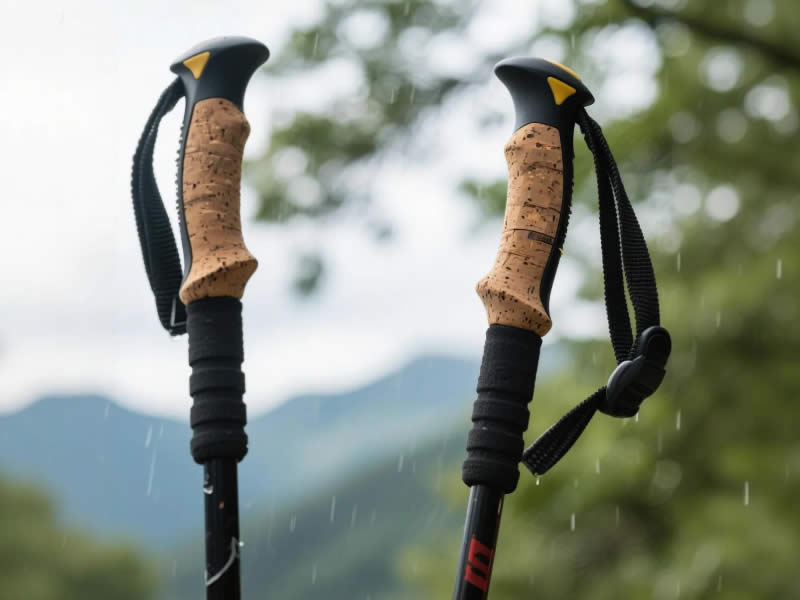
Recommended trekking pole purchase link: https://lightenup.aliexpress.com/store/1101521655
How humidity affects grip materials
In high humidity, your palms produce more sweat, and the air itself is saturated with moisture. This creates two problems: slippery handles and the growth of bacteria or mould on porous materials. The handle must absorb or wick away moisture, provide friction, and resist becoming slimy.
Cork handles – the humid‑weather champion
Cork is harvested from oak bark. Its natural cellular structure is both porous and slightly waxy (due to suberin). Here’s how it performs in humidity:
- Moisture absorption: Cork absorbs sweat directly into its open cells, pulling it away from your skin. The surface remains dry and grippy, even after hours of exertion.
- Non‑slip when wet: Unlike foam or rubber, cork does not become slick when wet. In fact, a little moisture can slightly soften the cork, increasing friction.
- Moulds to your hand: Over time, cork compresses to fit your hand shape, providing a custom, secure grip – even as conditions change.
- Breathable: Cork allows air circulation, reducing the clammy feeling.
- Temperature neutral: It doesn’t get hot or cold quickly, comfortable in warm, humid air.
Downsides of cork: Slightly heavier than foam, more expensive, and can crack if dried out (rare in humid conditions). However, in humidity, cork thrives.
EVA foam handles – the lightweight alternative
EVA (ethylene‑vinyl acetate) foam is a closed‑cell synthetic material. It is lightweight, warm, and cheap. But in humid conditions:
- Poor moisture management: Foam does not absorb water. Sweat sits on the surface, creating a slippery film. As you sweat more, the grip becomes increasingly slick.
- Wet becomes slippery: Unlike cork, wet foam loses friction. You may find yourself gripping tighter to compensate, leading to hand fatigue and blisters.
- Some foams have textured patterns (dimples, ridges) to improve wet grip, but they are less effective than cork.
- Dries quickly: Once you stop sweating, foam dries fast – but during active hiking, it stays wet.
- Warmth: Foam is warmer than cork, which is fine in cool climates but can feel stuffy in hot, humid weather.
Real‑world comparison in humid conditions
- Cork: After an hour of steep climbing in 28°C with 85% humidity, your hands will still feel secure. The cork darkens with sweat but remains tacky.
- Foam: The same conditions will leave the foam grip slippery. You may need to wipe it on your shirt every 10–15 minutes.
What about hybrid grips? Some poles (e.g., Leki Makalu) have a cork main grip with an extended foam section below. The cork gives you excellent sweat management for the main grip; the foam extension is for choking up on climbs (which you do briefly). This is a good compromise.
Other factors to consider in humidity
- Mould and odour: Cork’s natural antimicrobial properties resist mould. Foam can harbour bacteria and develop a musty smell over time. Rinse foam grips after each hike.
- Durability: Cork can last for years if not abused. Foam may degrade faster in high UV and humidity, becoming crumbly.
- Cost: Cork grips are typically on higher‑end poles (€80+). Foam is found on budget poles (€30‑60). For occasional use in humid conditions, foam may be acceptable if you are willing to wipe it often.
Maintenance for humid conditions
- Cork: Rinse with fresh water after a sweaty hike (salt from sweat can dry out cork). Avoid harsh detergents. Let air dry.
- Foam: Wash with mild soap and water, scrub with a soft brush to remove mould. Dry completely before storing.
Final verdict
For humid conditions, cork handles are significantly better than EVA foam. They absorb sweat, stay non‑slip, and provide a secure grip even when your hands are drenched. Foam becomes slippery and requires constant wiping, which can be annoying and potentially dangerous on steep, wet terrain. If you hike regularly in high humidity (tropical forests, coastal trails, or summer mountain storms), invest in poles with cork grips. Your hands – and your safety – will thank you.




