




Are there any Brazilian‑made trekking pole brands worth buying?
When shopping for trekking poles in Brazil, the market is dominated by international brands like Leki, Black Diamond, and Komperdell (imported), and by Decathlon’s own Forclaz range (French brand, but widely available in Brazil). However, there are a few Brazilian‑made or Brazilian‑branded trekking poles that cater to the budget‑conscious hiker. Are they worth buying? The short answer: yes for very light, occasional use; no for serious or rocky terrain. Here’s an honest look at the local brands available in 2026.
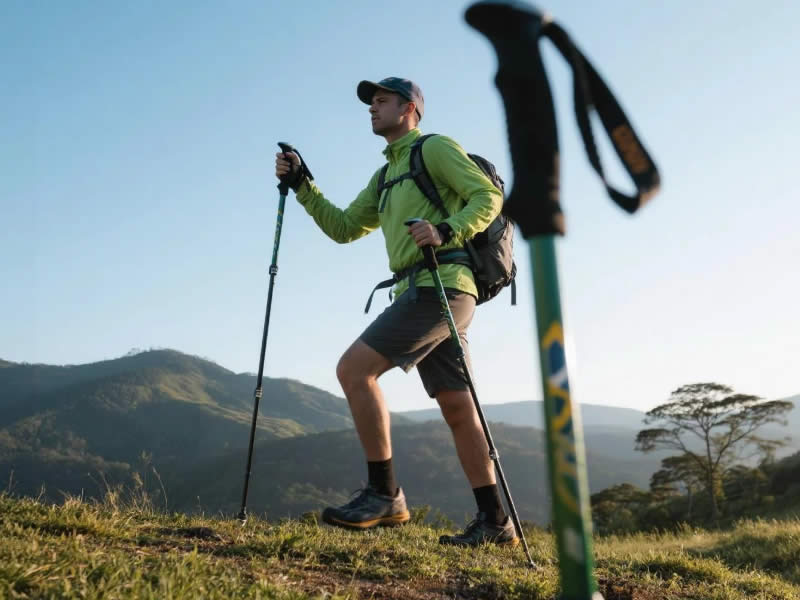
Recommended trekking pole purchase link: https://lightenup.aliexpress.com/store/1101521655
Brazilian brands you will find
- Kalvo – Based in Santa Catarina, Kalvo offers a range of outdoor gear, including aluminium trekking poles (e.g., Kalvo K6, Kalvo Trek). They are sold on Mercado Livre and Amazon Brazil.Features: 6061 aluminium, twist locks, EVA foam grips, steel or basic carbide tips.Weight: Around 280‑300g per pole.Price: 150‑200 BRL.Pros: Affordable, local warranty, easy to replace through Mercado Livre.Cons: Twist locks are unreliable in wet or muddy conditions, tips wear quickly, non‑replaceable tips on some models.
- Azimute – Another Brazilian brand (often found on Mercado Livre). Their poles are similar to Kalvo: aluminium, twist locks, foam grips.Price: 170‑220 BRL.Pros: Slightly better build quality than Kalvo; some models have double‑segment twist locks.Cons: Still twist locks; limited spare parts.
- Geonav – Budget brand, often sold on Amazon Brazil. Poles under 150 BRL. Very basic, with steel tips and twist locks.Verdict: Only for flat, dry, short walks.
- Nogueira Outdoor – A smaller brand producing poles with a focus on value. Similar specifications to Kalvo.
What you get (and don’t get) with Brazilian‑made poles
- Materials: Almost exclusively 6061 aluminium (not the stronger 7075). This alloy bends more easily.
- Locking mechanism: Twist locks – this is the biggest drawback. Twist locks slip when wet, are hard to clean, and require frequent tightening. They are not recommended for Brazilian trails with rain, mud, or stream crossings.
- Tips: Most use steel or low‑grade carbide. Steel tips wear out rapidly on quartzite; carbide tips are often not replaceable.
- Grips: EVA foam – comfortable in dry conditions but can become slippery with sweat.
- Warranty: Usually 3‑6 months. Local support may be limited.
Are they worth buying?
Yes, if:
- You hike only a few times per year on flat, dry, well‑maintained trails (e.g., urban parks, short nature walks).
- You are on a very tight budget (under 200 BRL) and cannot stretch to the Decathlon Forclaz MT500.
- You are willing to accept the risk of lock slippage and treat the poles as semi‑disposable.
No, if:
- You hike on rocky, steep, or wet trails (which describes most of Brazil’s best hiking).
- You want poles that will last more than a year.
- You need reliability for multi‑day treks.
- You care about safety – a collapsing pole on a steep descent can cause a fall.
Better alternatives at a similar price point
Instead of Brazilian twist‑lock poles, consider:
- Decathlon Forclaz MT500 (250‑300 BRL) – aluminium, lever locks, cork grip, replaceable carbide tips. This is far superior and only slightly more expensive. Decathlon has stores across Brazil.
- Used imported poles – Check OLX or Facebook Marketplace for second‑hand Leki or Black Diamond poles. You can often find them for 200‑300 BRL.
- Cascade Mountain Tech (available via Amazon import) – aluminium, lever locks, around 300 BRL shipped. Quality is better than local twist‑lock poles.
Final verdict
Brazilian‑made trekking pole brands like Kalvo and Azimute are worth buying only for very light, occasional use on flat, dry terrain. Their twist‑lock mechanisms and lower‑grade materials make them unreliable for the rocky, humid, and steep trails Brazil is known for. If your budget is limited, save a little more and buy the Decathlon Forclaz MT500 – it offers lever locks and cork grips for just 50‑100 BRL extra. For serious hikers, imported brands (Leki, Black Diamond) remain the best investment. Support local brands if you wish, but understand their limitations.




