




What are the best trekking poles for thru‑hiking the Gold Trail (São Paulo to Rio)?
The Gold Trail (Caminho do Ouro) is a historic 240‑km route connecting São Paulo to Rio de Janeiro, passing through the Serra do Mar and remnants of the Atlantic Forest. This thru‑hike demands poles that can handle steep, slippery climbs, rocky descents, frequent river crossings, and relentless humidity. The best poles for this challenge are 7075 aluminium with lever locks, cork grips, and replaceable carbide tips. Avoid carbon fibre (too brittle) and twist locks (fail when wet). Here’s a detailed guide to choosing and using poles for the Gold Trail.
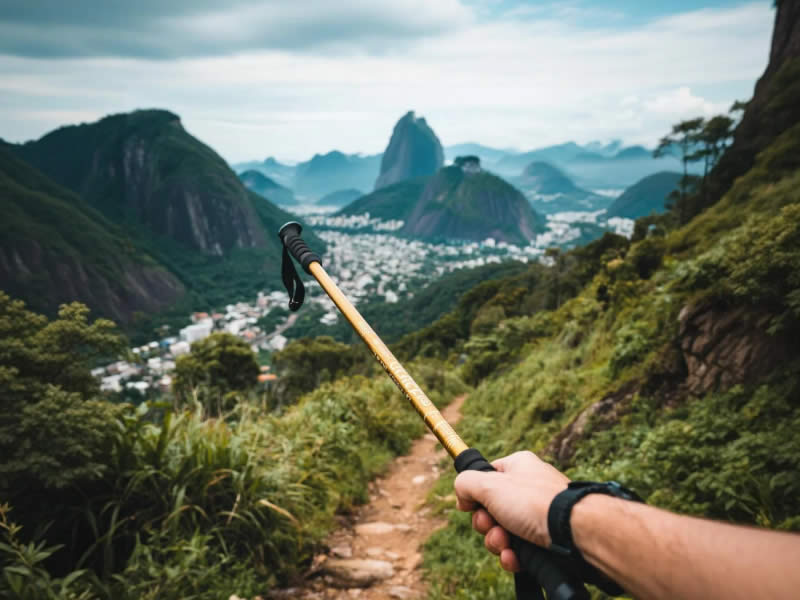
Recommended trekking pole purchase link: https://lightenup.aliexpress.com/store/1101521655
Why aluminium and lever locks?
- 7075 aluminium is strong and ductile. When you inevitably jam a pole between rocks or roots, aluminium bends – you can often straighten it on the trail. Carbon fibre can snap without warning, leaving you with one pole for the remaining 100 km.
- Lever locks (e.g., Leki SpeedLock, Black Diamond FlickLock) are external, self‑cleaning, and unaffected by rain or mud. Twist locks allow water ingress and become slippery – dangerous on steep descents.
Grip and tip essentials
- Cork grips absorb sweat and stay non‑slip in high humidity. Foam can become slippery; rubber is uncomfortable.
- Tungsten carbide tips bite into wet rock and quartzite. Ensure they are replaceable – you’ll likely need to change tips midway through the Gold Trail due to abrasion. Carry a spare pair.
Top pole recommendations
- Leki Makalu – 7075 aluminium, SpeedLock lever, cork grip, replaceable tips. Length 100–140 cm. Spare parts available online. Premium choice for serious thru‑hikers.
- Decathlon Forclaz MT500 – Aluminium, lever lock, cork/foam hybrid grip, replaceable tips. Available in Brazil for ~250‑300 BRL. Excellent value, perfect for most hikers.
- Black Diamond Trail Pro – Aluminium, FlickLock lever, foam grip. Very robust; the foam grip is less ideal for sweat but acceptable. Good alternative.
Why not carbon or twist locks? Carbon poles have snapped on the Gold Trail’s rocky sections (e.g., the descent to Visconde de Mauá). Twist locks slip after the first stream crossing. Stick with aluminium and lever locks.
Technique tips for the Gold Trail
- Set flat length to 90° elbow. Mark it. Shorten 5‑10 cm for climbs (e.g., Serra da Bocaina), lengthen for descents.
- Use wrist straps correctly – hand up from below, strap between thumb and index finger. Relax your grip; the strap bears weight.
- Cross rivers with two poles planted downstream, using a side‑shuffle and keeping three points of contact.
- Clean poles daily – rinse off mud and dry them fully extended. The trail’s red mud (terra rossa) can corrode locks.
Final verdict
For thru‑hiking the Gold Trail, the best trekking poles are 7075 aluminium with lever locks, cork grips, and carbide tips. The Decathlon Forclaz MT500 offers unbeatable value for Brazilian hikers, while the Leki Makalu is a long‑term investment. Avoid carbon and twist locks. With the right poles, you’ll conquer the Atlantic Forest, the historic cobblestone sections, and the stunning mountain vistas – safely and with less knee pain.




