




What is the average weight of good trekking poles for Brazilian backpacking?
When choosing trekking poles for backpacking in Brazil, weight is a key factor – but it must be balanced with durability. The average weight of a good pair of trekking poles for Brazilian trails is 500–550 grams for aluminium and 300–400 grams for carbon. However, due to the country’s rocky, humid, and often abrasive terrain (e.g., Chapada Diamantina, Serra dos Órgãos, Pico da Bandeira), aluminium poles are generally preferred despite being heavier. Here’s a detailed breakdown.
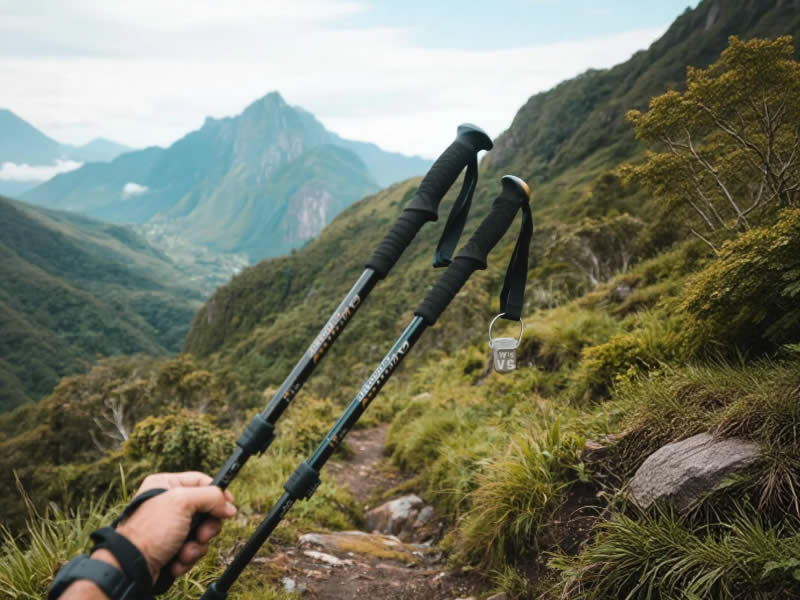
Recommended trekking pole purchase link: https://lightenup.aliexpress.com/store/1101521655
Why weight matters for backpacking
When you carry a multi‑day pack (10–15 kg), every gram counts. Lighter poles reduce arm fatigue, especially on long ascents. However, ultra‑light poles often compromise durability. In Brazil, where trails are frequently rocky and steep, a pole that bends or snaps can be a safety hazard.
Aluminium poles – the durable standard
- Typical weight: 500–550 g per pair (250–275 g per pole)
- Examples: Leki Makalu (520 g), Decathlon Forclaz MT500 (520 g), Black Diamond Trail Pro (540 g)
- Why this weight range? 7075 aluminium provides excellent strength without excessive bulk. The extra 100–200 g compared to carbon buys you field repairability (you can often straighten a bent aluminium pole) and resistance to snapping.
- Best for: Most Brazilian backpacking, especially on rocky, off‑trail, or technical routes.
Carbon poles – light but fragile
- Typical weight: 300–400 g per pair (150–200 g per pole)
- Examples: Black Diamond Distance Carbon Z (300 g), Komperdell Carbon C4 Pro (280 g), Leki Cressida Carbon (400 g)
- Why lighter? Carbon fibre is very stiff and light. However, it is brittle. One sideways jam between quartzite blocks can shatter a carbon pole, leaving you with a useless stick.
- Best for: Smooth, non‑rocky trails, ultralight backpacking with very light loads, or trail running.
What about weight alone? Some ultra‑light poles under 250 g per pair exist, but they are too fragile for Brazilian backpacking. Avoid them.
How to choose based on weight and durability
| Type | Weight (per pair) | Durability on Brazilian rock | Recommended |
|---|---|---|---|
| 7075 Aluminium | 500–550 g | Excellent (bends, can be straightened) | Yes, for most hikers |
| High‑grade aluminium (6061) | 450–500 g | Moderate (may bend more easily) | Only for light use |
| Carbon | 300–400 g | Poor (snaps) | Only for smooth trails |
| Cheap twist‑lock aluminium | 550–700 g | Poor (locks fail, heavy) | No |
Real‑world advice from Brazilian backpackers
- “My Leki Makalu poles weigh 520 g and have lasted 5 years on the hardest trails. I don’t notice the extra 200 g compared to carbon because my pack already has 12 kg.”
- “I tried carbon poles once. They snapped on a scree field in Chapada. Never again.”
Does weight affect arm fatigue? Yes, but for multi‑day backpacking, the difference between a 520 g aluminium pair and a 400 g carbon pair is only 120 g – less than a small energy bar. The safety of aluminium outweighs the small weight penalty.
Other features that add weight (but are worth it)
- Lever locks – heavier than twist locks but far more reliable.
- Cork grips – slightly heavier than foam but much better for sweat.
- Replaceable carbide tips – add a few grams but extend pole life.
Final recommendation
For Brazilian backpacking, aim for aluminium poles in the 500–550 g range (total pair weight). The Decathlon Forclaz MT500 (520 g) is an excellent value, and the Leki Makalu (520 g) is a premium choice. Avoid carbon unless you are absolutely certain your trails are rock‑free. Remember: a pole that works is far better than a lighter pole that breaks. Pack smart, and enjoy the incredible beauty of Brazil’s backcountry.




