




How to use trekking poles correctly for steep ascents in Pico da Neblina?
Pico da Neblina, Brazil’s highest peak (2,995 m), lies deep in the Amazon rainforest, near the Venezuelan border. The ascent is a true jungle mountaineering challenge: relentless steep slopes, slippery mud, dense vegetation, high humidity, and frequent rain. Using trekking poles correctly is not just helpful – it is essential for saving energy, maintaining balance, and protecting your knees. Here is a step‑by‑step guide to mastering the steep ascents of this iconic Brazilian mountain.
Recommended trekking pole purchase link: https://lightenup.aliexpress.com/store/1101521655
1. Shorten your poles for the climb
On flat ground, your poles should be set so your elbow is at 90° when the tip is on the ground. For the steep, sustained climbs of Pico da Neblina (often 20–30° grades), shorten your poles by 5–10 cm (2–4 inches). A shorter pole keeps your arms low, allowing you to push down effectively without raising your shoulders. If your poles are too long, your arms will be forced high, straining your neck and shoulders and reducing your ability to transfer weight.
2. Use double planting (both poles together) on steep sections
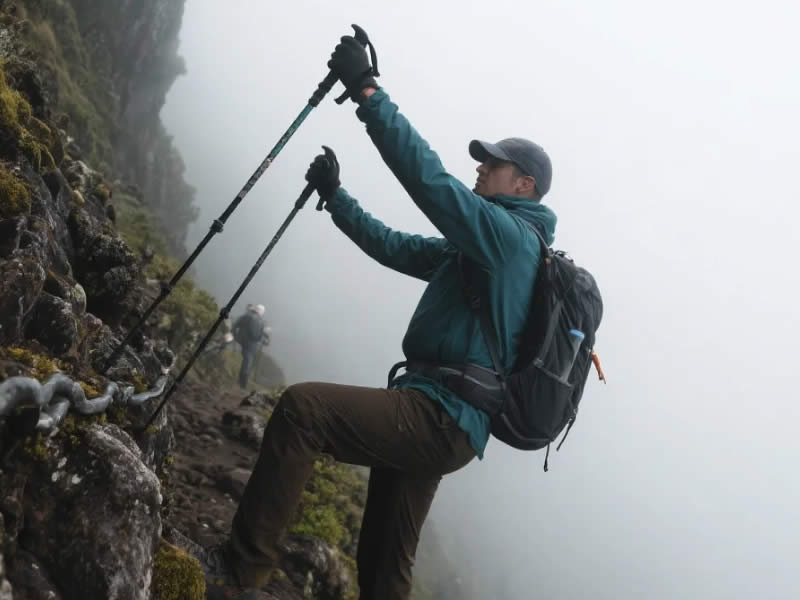
On very steep pitches – common on the approach to the base camp and the final summit push – switch from the normal alternate rhythm to double planting. Plant both poles together ahead of your body, about 30–50 cm in front of your toes. Then, as you step forward, push down and pull back on the poles to help lift your body. This engages your triceps, lats, and shoulders, taking significant load off your quadriceps. In the humid, energy‑sapping Amazon climate, this upper‑body assistance is invaluable.
3. Use wrist straps correctly – hand up from below
Even on steep climbs, the wrist strap is your best friend. Insert your hand up through the strap from below, then bring your hand down onto the grip. The strap should sit between your thumb and index finger, crossing the back of your hand. Tighten it so it is snug but not cutting off circulation. Then relax your fingers – the strap bears your weight. This technique prevents hand fatigue and blisters, which are common on long, sweaty climbs.
4. Keep your back straight and lean from the ankles
As you climb, avoid hunching over your poles. Keep your chest open, shoulders back, and eyes ahead. Lean slightly forward from your ankles – not from your waist. This keeps your centre of gravity correctly positioned and allows the poles to work as efficient levers. Hunching strains your lower back and reduces the effectiveness of the poles.
5. Take short, frequent steps
On steep, slippery slopes, long strides are inefficient and increase the risk of slipping. Use a short, shuffling step, planting your poles with every step (double planting) or every other step (alternate rhythm on moderate grades). A higher cadence (more steps per minute) spreads the workload and reduces the peak force on your legs.
6. Choke down on extended foam grips if available
Many trekking poles have an extended foam section below the main grip. When the slope becomes extremely steep, slide your hand down to this foam extension. This effectively shortens the pole even further, giving you maximum leverage. It also keeps your hand away from the cold, wet metal shaft.
7. Adjust your rhythm as the slope changes
Pico da Neblina’s terrain varies: from muddy jungle paths to rocky, root‑covered sections to exposed, windy ridges. Continuously adapt your technique:
- Moderate slopes (10–15%) – Use alternate planting (opposite pole to forward foot). Shorten poles slightly.
- Steep slopes (20%+) – Switch to double planting. Shorten poles further.
- Short, very steep pitches – Choke down on the foam extension and use double planting with an aggressive pull.
8. Use carbide tips, not rubber
The slippery roots, wet rock, and mud of Pico da Neblina require the sharp bite of tungsten carbide tips. Remove any rubber tip covers before starting the ascent. Carbide tips penetrate mud, grip root surfaces, and find purchase on wet stone. Rubber tips would slide dangerously.
9. Stay hydrated and take micro‑breaks
The Amazon humidity is exhausting. Use your poles to support your weight while you take a quick break. Plant both poles firmly, lean back slightly, and catch your breath. This allows you to rest without sitting down, keeping your momentum.
10. Practice the technique before the expedition
Before attempting Pico da Neblina, practice the shortened‑pole, double‑planting technique on steep local hills. Build the muscle memory so that on the mountain, you can focus on the environment and your breathing.
Gear recommendations for Neblina’s steep ascents
- Poles: 7075 aluminium with lever locks (Leki Makalu, Decathlon Forclaz MT500). Avoid carbon – it can snap on sharp rocks.
- Grips: Cork – absorbs sweat and stays non‑slip.
- Tips: Replaceable carbide – carry spares.
- Baskets: Small baskets for mud; remove them on rock sections.
Final thoughts
Mastering trekking pole technique on steep ascents transforms the gruelling climb of Pico da Neblina into a manageable, even enjoyable, challenge. Shorten your poles, use double planting, engage your upper body, and let the wrist straps do the work. With proper technique, you’ll conserve leg energy, reduce knee strain, and arrive at the summit of Brazil’s highest peak feeling stronger and more confident. Happy climbing!




