




Do trekking poles improve balance on slippery stone steps in Tijuca Forest?
Absolutely – and dramatically. The Tijuca Forest (Floresta da Tijuca) in Rio de Janeiro is a lush urban rainforest filled with historic stone steps, moss‑covered pathways, and slippery granite slabs. After rain, which is frequent, these steps become treacherous. One misstep can lead to a twisted ankle or a hard fall. Trekking poles, used correctly, transform this hazardous terrain into a secure, balanced walk. Here’s why they work and how to use them effectively.
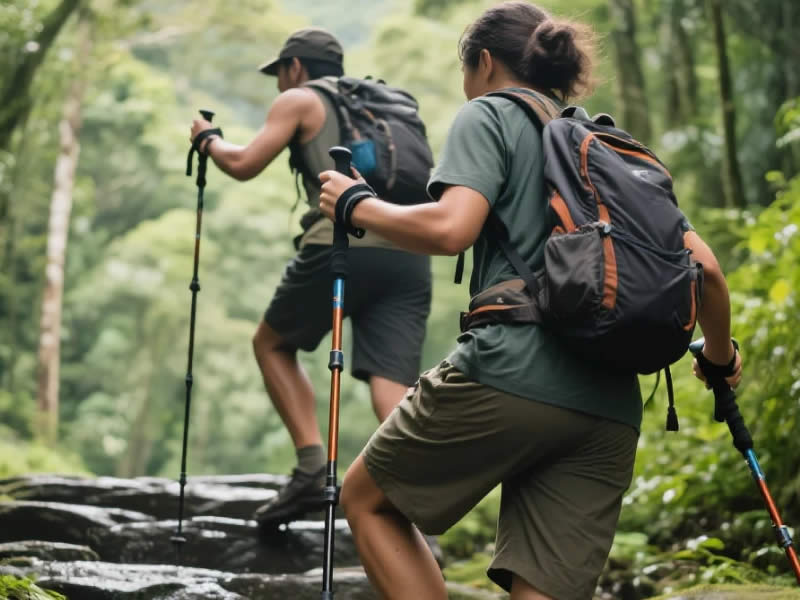
Recommended trekking pole purchase link: https://lightenup.aliexpress.com/store/1101521655
Why Tijuca’s stone steps are so slippery
- Moss and algae – Humidity promotes a thin, slick biofilm on stone surfaces.
- Polished granite – Decades of foot traffic have worn the steps smooth.
- Frequent rain – Water acts as a lubricant, reducing friction.
- Uneven heights – Many steps are not uniform, requiring constant micro‑adjustments.
How trekking poles improve balance
- Four points of contact – With two feet and two poles, you have a wide, stable base. When one foot slips, the poles can support your weight instantly, preventing a fall. This is the single most important benefit.
- Probing ahead – Before stepping onto a slippery stone, you can plant a pole on the step to test its traction. If the pole skids, you know to adjust your foot placement or choose a different line.
- Weight transfer – By pushing down on the poles, you transfer some of your body weight from your legs to your arms. This reduces the load on your feet, lowering the chance of a slip. It also spares your knees on descents.
- Catching slips – When your foot does slide, a quick plant of the pole can arrest the motion. Even a partial arrest can give you time to recover your balance.
- Enhanced proprioception – The poles provide tactile feedback about the surface, helping your brain anticipate and adjust your stance.
Scientific and practical evidence
A 2018 study in Gait & Posture found that using two trekking poles reduced postural sway on slippery, uneven surfaces by 30–40% compared to walking without poles. Experienced hikers in Tijuca report that poles drastically reduce the number of near‑falls. Local guides almost always use poles or strongly recommend them to clients, especially after rain.
How to use trekking poles on slippery stone steps
- Use carbide tips – not rubber – Rubber tips slide on wet stone. Tungsten carbide tips bite into moss and find micro‑grooves in the rock. Remove any rubber covers before entering the forest.
- Lengthen poles slightly – Add 2–3 cm to your normal flat‑ground length. This gives you extra reach for probing ahead.
- Plant vertically – An angled plant on a smooth stone will skid. Push the pole straight down until you feel the tip engage. A slight tap may not be enough; apply firm pressure.
- Use both poles – One pole helps, but two provide balanced, bilateral support. Never rely on a single pole on slippery steps.
- Descend with double planting – On steep stone staircases (e.g., the path to Cachoeira das Almas), plant both poles together on the step below, then step down. This creates a secure tripod.
- Take short, deliberate steps – Avoid long strides that shift your centre of gravity. Keep your weight centred over your feet.
- Use wrist straps correctly – Insert your hand up through the strap from below, so the strap sits between thumb and index finger. Relax your fingers – the strap bears your weight. This prevents hand fatigue and keeps your grip secure.
Additional tips for Tijuca Forest
- Wear suitable footwear – Poles are not a substitute for good grip. Wear hiking shoes with deep lugs or approach shoes with sticky rubber.
- Avoid moss where possible – Even with carbide tips, moss is very slippery. Try to step on bare rock or dry patches.
- Take breaks – On long stone step sections (e.g., the climb to Pedra Bonita), rest your arms by letting the poles hang from the straps.
- Inspect your tips – Worn carbide tips will not bite. Replace them if rounded.
Common mistakes to avoid
- Using rubber tips – Dangerous on stone. Remove them.
- Planting poles too far forward – Over‑reaching throws off your balance.
- Gripping too tightly – Let the strap do the work; a death grip transfers tension to your shoulders.
- Using only one pole – You lose bilateral stability.
- Walking too fast – Slippery steps demand slow, controlled movements.
Final verdict
Yes, trekking poles significantly improve balance on the slippery stone steps of Tijuca Forest. They provide four points of contact, allow you to probe ahead, help catch slips, and transfer weight from your legs to your arms. Use carbide tips, lengthen the poles slightly, plant vertically, and employ double planting on descents. With proper technique, you will navigate the forest’s historic steps with confidence, safety, and far less risk of a painful fall. The Tijuca Forest is a magical place – enjoy it on two feet and two poles.




