




Can trekking poles be used as emergency shelter poles in Brazilian national parks?
Yes – and in many remote areas of Brazil, knowing how to use your trekking poles as emergency shelter poles could be a lifesaver. While you should always carry a lightweight tarp or emergency bivvy, your poles can transform that fabric into a functional shelter to protect you from rain, wind, or intense sun. This is especially relevant in Brazilian national parks like Chapada Diamantina, Serra dos Órgãos, or the Amazon, where weather can change suddenly. Here is a practical guide to turning your poles into an emergency shelter.
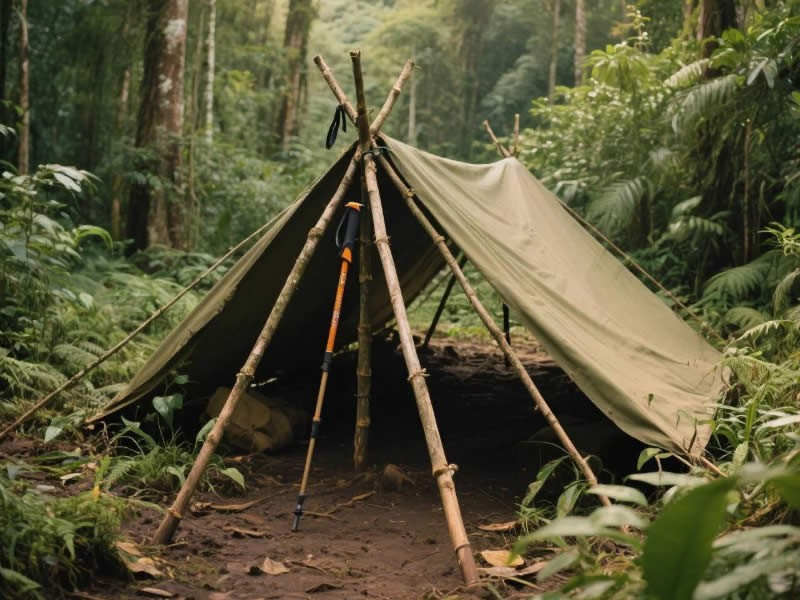
Recommended trekking pole purchase link: https://lightenup.aliexpress.com/store/1101521655
What you need
- Two trekking poles – Adjustable poles are best, but fixed‑length folding poles can also work.
- A tarp, poncho, or space blanket – At least 2 m × 2 m (6.5 ft × 6.5 ft). Even a large garbage bag can be slit open.
- Guy lines (paracord, shoelaces, or even stripped vines) – at least 4 m total.
- Stakes or natural anchors – tent pegs, sticks, heavy rocks, or logs.
Basic shelter designs using two poles
1. A‑frame (two poles, most common)
- Set both poles to the same height (typically 110–130 cm, depending on your height and desired coverage).
- Plant them about 1–1.5 m apart, with tips firmly in the ground (or on flat rock, use rocks to hold the bases).
- Drape your tarp over the poles, forming a ridge.
- Stake or weigh down the four corners and the sides. If you have extra cord, tie guylines from the pole tops to trees or rocks to prevent wind collapse.
- Best for: Rain protection, moderate wind.
2. Lean‑to (one pole)
- Use a single pole to prop up one edge of the tarp. Plant it firmly, or tie the tarp’s edge to the pole.
- Stake the opposite edge directly to the ground.
- This provides a wind block and reflects heat from a fire (if safe).
- Best for: Sheltering from side‑wind or sun.
3. Pyramid (one pole)
- Place the pole in the centre of the tarp, lift the tarp over the tip, and spread the corners out to form a pyramid.
- Stake all four corners. This works well on flat ground and sheds rain.
- Best for: Light rain, no wind.
4. Flat tarp with two poles at opposite corners
- Use poles at two opposite corners to lift the tarp off the ground, creating a low, sloping shelter.
- Stake the other corners directly.
- Good for bivouacking.
Step‑by‑step for an emergency A‑frame in a Brazilian national park
- Choose a sheltered spot – Avoid low areas prone to water pooling, dead trees, or loose rock. In the Amazon, also avoid ant nests.
- Extend your poles to a comfortable height (for sitting, about 120 cm; for lying, lower to 80 cm to reduce wind exposure).
- Push the tips into the ground – If the soil is hard, use a rock to hammer them in a little, or place the tips against a rock and lean the poles.
- Drape your tarp over the poles. Ensure the tarp is centred.
- Secure the corners – Use stakes, heavy rocks, or logs. If no stakes, tie the guylines to tree roots or large branches.
- Add guylines from the pole tops to trees or heavy rocks – this prevents the wind from collapsing the ridge.
- Test stability – Gently push on the tarp. If it wobbles, add more weight to the corners or lower the pole height.
Important considerations for Brazilian conditions
- Humidity and rain – A tarp alone may not keep you dry if the ground is saturated. If possible, build a bed of leaves or use a waterproof groundsheet (e.g., your pack liner).
- Wind – In exposed areas like the high plateaus of Chapada Diamantina, winds can be strong. Lower your poles as much as possible and use many guylines.
- Insects – A tarp does not have a mesh enclosure. In bug‑heavy areas (e.g., Amazon, Atlantic Forest), you may need a mosquito head net or treat your tarp with permethrin.
- Sun – In the dry season of Chapada or Serra do Cipó, the sun is intense. A tarp provides excellent shade.
What to do if you have only one pole
A single pole still works for several designs:
- Lean‑to (as above)
- Diagonal tarp – Prop one corner on the pole, stake the other three directly. This creates a small, low shelter.
- Use a tree or rock – Tie the tarp to a branch or overhang, then use the pole to prop out another corner.
Improvised stakes and anchors
- Sticks – Whittle a point on a sturdy stick.
- Heavy rocks – Stack them on the tarp edges.
- Tent pegs – Always carry a few lightweight pegs in your emergency kit.
- Your backpack – Place your pack on a corner to hold it down.
Practice before you need it
Set up your tarp with your poles in a garden or park before your trip. Time yourself. Learn the quirks of your specific tarp and pole combo. This will make the difference between a frustrating, wet night and a safe, dry shelter.
What to pack for emergency shelter in Brazilian national parks
- Lightweight tarp (e.g., 2 m × 3 m silnylon, ~200 g) – this is the single most important item.
- Four to six tent pegs (or use sticks).
- At least 4 m of lightweight cord (e.g., 2 mm Dyneema).
- Your trekking poles – they are already with you.
- A space blanket (as a backup).
Final thoughts
Your trekking poles are not just for walking – they are versatile tools that can become the backbone of an emergency shelter in Brazilian national parks. With a lightweight tarp and some cord, you can create a protective A‑frame, lean‑to, or pyramid in minutes. This could save you from hypothermia in a sudden rainstorm or from heatstroke under the blazing sun. Always carry a tarp, practice the setup, and remember: in remote areas, the ability to improvise a shelter with your poles is a vital backcountry skill.




