




What is the correct arm swing when using trekking poles for fast walking?
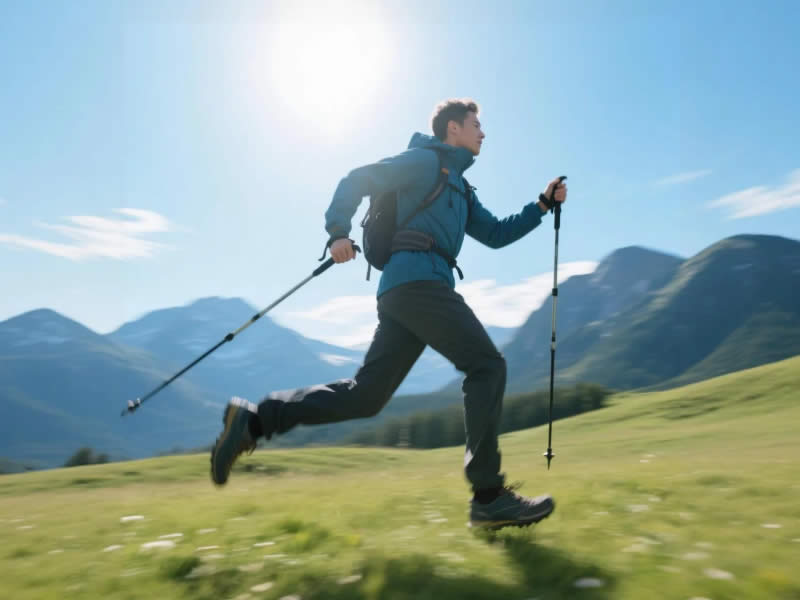
Fast walking with trekking poles – whether you are power‑hiking a rolling trail, training for a fitness event, or simply trying to cover ground efficiently – requires a specific arm swing that differs from casual strolling. The correct arm swing saves energy, increases speed, and reduces the risk of shoulder and neck strain. Here is a detailed guide to mastering the arm swing for fast walking with trekking poles.
Recommended trekking pole purchase link: https://lightenup.aliexpress.com/store/1101521655
The principle: swing from the shoulder, not the elbow
Many beginners lock their elbows and swing their arms like pendulums, but with the elbow stiff. This is inefficient and stresses the elbow joint. Instead, initiate the swing from your shoulder joint. Your arm should hang naturally with a slight bend at the elbow (about 90° when the tip is on the ground). The shoulder drives the motion; the elbow remains relaxed.
When you swing from the shoulder, you use your larger, stronger muscles (deltoids, trapezius). This reduces fatigue and allows a smoother, more powerful forward motion.
The rhythm: opposite arm to opposite leg
Fast walking, like normal walking, is contralateral: your right foot steps forward, your left arm swings forward, and vice versa. Your poles should follow this natural pattern.
- Right foot forward → plant left pole at the same time.
- Left foot forward → plant right pole at the same time.
This diagonal rhythm uses your body’s natural counter‑rotation, adding momentum to each step. If you plant the same‑side pole (right foot with right pole), you will waddle, waste energy, and may experience back pain.
The plant: timing and placement
For fast walking, do not over‑reach. Plant the pole when your hand is roughly level with the heel of your forward foot. The tip should touch the ground slightly ahead of your foot, but not far out in front. Over‑reaching slows you down and strains your shoulder.
The push: back, not down
After the plant, do not simply lift the pole. Push back (toward the rear) as you step forward. This backward push adds forward propulsion – it’s like a mini rowing stroke. You should feel your triceps and latissimus dorsi engaging. This active push is what makes fast walking with poles more efficient than walking without them.
The recovery: lift and swing
After the push, lift the pole tip cleanly off the ground. Do not drag it. Swing it forward in a smooth arc, led by the grip, with the tip low. The swing should be relaxed – let the pole’s weight help you.
Wrist straps: essential for fast walking
For fast walking, the wrist strap is not a safety leash; it is a load‑bearing tool. Insert your hand up through the strap from below, so the strap sits between your thumb and index finger. Tighten it snugly. Then relax your fingers – the strap should bear your weight. You should be able to open your hand and the pole remains attached. This allows you to push back forcefully without gripping tightly, saving your forearms from fatigue.
Arm angle: keep elbows at 90°
Fast walking requires a compact arm swing. Your elbow should be at approximately 90° when the tip is on the ground. If the pole is too long, your elbows will be straighter, reducing leverage and causing shoulder strain. If too short, your arms will work inefficiently. Adjust your pole length so that on flat ground, your elbow is at 90°.
Cadence: aim for a quick turnover
Fast walking is about high cadence (steps per minute), not long stride. A good target is 120–130 steps per minute. Use a metronome app to practice. Your pole plants should occur on every second step (alternating). A quick, light plant is more efficient than a slow, heavy one.
Common mistakes to avoid
- Planting both poles together – this breaks the natural rhythm and slows you down. Save double planting for steep hills.
- Planting too far forward – over‑reaching slows you and strains your shoulder.
- Gripping tightly – let the strap work; a death grip wastes energy.
- Swinging from the elbow – keeps your arm too stiff; swing from the shoulder.
- Dragging the tips – lift the pole cleanly; dragging creates drag and wears tips.
Drills to improve your arm swing
- No‑pole walk – Walk without poles, paying attention to your natural arm swing. Notice how your arms swing opposite your legs.
- Strap awareness – With poles, adjust straps and walk with your fingers open. The poles should dangle from the straps. This builds trust in the strap system.
- Metronome drill – Set a metronome to 120 bpm. Plant a pole on every second beat. Walk to the rhythm.
- Push drill – On a flat track, focus on pushing back firmly with each plant. Feel the difference in forward speed.
Adapting for terrain
- Uphill fast walking – Shorten poles slightly. Your arm swing will be shorter, but the opposite arm‑leg rhythm remains. Use double planting on very steep sections.
- Downhill fast walking – Lengthen poles slightly. Plant ahead to brake. Your arm swing will be more extended, but still from the shoulder.
Final verdict
The correct arm swing for fast walking with trekking poles is a relaxed, shoulder‑driven motion with a slight elbow bend, opposite arm‑leg rhythm, and a backward push after planting. Use wrist straps correctly, keep a high cadence, and avoid over‑reaching. Practice on flat, smooth trails before increasing speed. With proper technique, you will walk faster, longer, and with less effort – and your poles will feel like natural extensions of your arms.




