




How to use trekking poles to push away vegetation on overgrown Brazilian trails?
Overgrown trails are a common reality in Brazil – whether you’re exploring the Atlantic Forest (Mata Atlântica), the Amazon jungle, or the mountainous paths of Chapada Diamantina. Vines, ferns, tall grasses, and thorny bushes often reclaim paths quickly, especially in the rainy season. Your trekking poles are not just for balance and knee protection; they can be indispensable tools for clearing or pushing aside vegetation as you walk. Used correctly, they keep your hands safe, reduce fatigue, and minimise damage to plants. Here’s how to use them effectively on overgrown Brazilian trails.
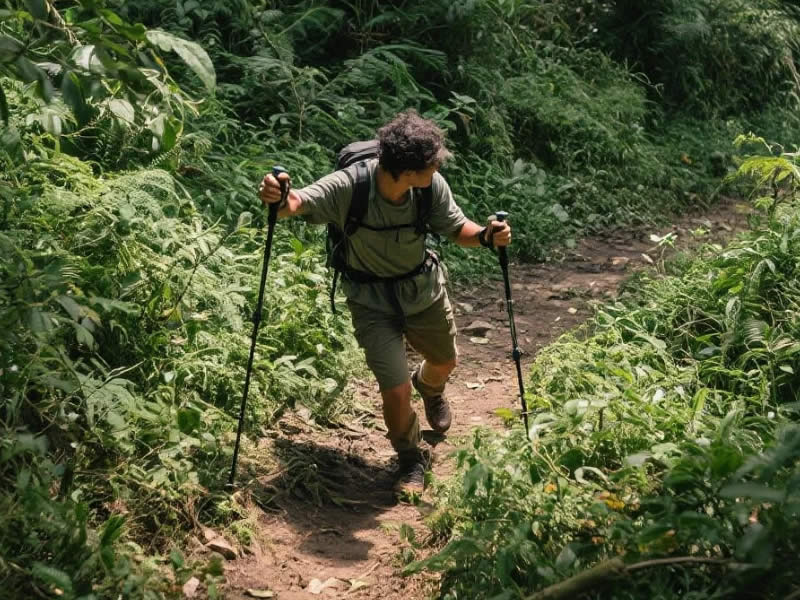
Recommended trekking pole purchase link: https://lightenup.aliexpress.com/store/1101521655
Why use poles to clear vegetation?
- Protects your hands – Many Brazilian plants have thorns, spines (e.g., “cansanção” or “urtiga”), or irritating hairs. Using a pole keeps your skin safe.
- Reach ahead – A pole extends your reach, allowing you to push aside a fern or vine before you step into it.
- Avoids direct contact with insects – Spiders, ants, and other creepy crawlies often hide on vegetation. A pole lets you disturb them without getting bitten.
- Preserves your clothing – Pushing thorns away with a pole prevents rips and tears.
- Reduces arm fatigue – Using the pole’s leverage is easier than swatting with your hand.
The basic technique: one‑pole horizontal sweep
- Hold one pole horizontally in front of you, at about knee or waist height (depending on the vegetation). Grip it near the centre for better control.
- Sweep gently from side to side as you walk, keeping the pole just ahead of your leading foot. The goal is to part the plants, not to beat them.
- For tall ferns or grasses, raise the pole to chest or face height and sweep in a wider arc. Be careful not to hit your own face.
- For thorny vines, use the pole to lift the vine upward or push it to the side. Avoid grabbing with your hand.
Two‑pole method for dense vegetation
When the trail is completely overgrown – for example, in a section of the Atlantic Forest where bamboo grass or bracken has grown head‑high – use both poles:
- Hold both poles together in one hand, forming a single horizontal bar. Sweep in front of you.
- Alternatively, use one pole in each hand and part the vegetation like opening curtains: push the left pole left, the right pole right. This is very effective for tall, thick ferns.
Tips for different types of vegetation
- Ferns and soft broad‑leaved plants – A gentle sweep is enough. The leaves will bend aside and usually bounce back.
- Bamboo grass (taquara) – This grass can be tough and sharp. Use a firmer push, but avoid slashing; you could cut your hand on the edge. Push from the base to bend the stems.
- Vines (ciums, cipós) – Use the pole to lift the vine up and step under it, or push it to the side. If the vine is thick, you may need to use the pole as a hook.
- Thorny bushes (e.g., rose brambles, “marmelada”) – Push gently from the base to bend the whole branch away from the trail. Avoid jabbing the tip into the bush, as it may get stuck.
- Stinging nettle (urtiga) – Keep the pole at a distance. Sweep the leaves aside without touching them. The pole’s shaft is safe, but the tip may get caught.
Important: avoid damaging plants unnecessarily
Brazil’s ecosystems are fragile. Overly aggressive pole use can break stems, uproot seedlings, or damage delicate orchids and bromeliads. Follow these guidelines:
- Use a gentle pushing motion, not a chopping swing. You want to part the vegetation, not decapitate it.
- Avoid using the carbide tip to cut or slash. The tip is sharp and can slice leaves, but this harms the plant and blunts your tip.
- Push from the base of the plant – This bends the whole stem rather than breaking the top.
- Step over, not through – If you can step over a low plant without moving it, do so.
- Stay on the trail – Pushing vegetation aside is fine, but do not widen the trail unnecessarily by beating down plants on both sides.
Consider switching to rubber tips for soft vegetation
If the trail is overgrown with soft, non‑thorny plants (e.g., grasses, ferns), consider fitting rubber tip covers (paw covers) on your poles. Rubber tips are less likely to cut stems and are gentler on plants. They also protect your carbide tips from unnecessary wear. However, on thorny or woody vegetation, carbide tips are better because they can hook and push without slipping.
What about using the pole as a machete? – No
Never use your trekking pole as a machete to chop through thick vines or branches. The pole is not designed for that; you risk snapping it (especially carbon poles) or damaging the lock. For thick vegetation, bring a lightweight folding saw or machete if needed, but ideally stay on well‑maintained trails.
Common mistakes to avoid
- Swinging the pole like a baseball bat – You could hit a fellow hiker, snap the pole, or lose your balance.
- Using the carbide tip to stab plants – This damages the plant and quickly blunts your tip.
- Forgetting to look down – While clearing face‑high ferns, you might trip on a root or rock. Watch your feet.
- Clearing vegetation on both sides of the trail – Stay on the path; widening the trail harms the ecosystem.
After the hike
Inspect your poles for plant sap, mud, or thorns. Clean the shafts and locks. If you have used rubber tips, check that no thorns have pierced them. Dry your poles before collapsing.
Alternative: use a dedicated “web wand” or branch
Some hikers carry a lightweight, collapsible stick specifically for clearing vegetation. However, your trekking poles are already in your hands – why carry extra weight? With proper technique, they work perfectly.
Final thoughts
Using trekking poles to push away vegetation on overgrown Brazilian trails is a skill that makes your hike safer, faster, and more comfortable. Master the horizontal sweep, use two poles for dense growth, and always be gentle to preserve the environment. With a little practice, you’ll part the green curtain effortlessly, revealing the beauty of Brazil’s lush trails without harming the plants that make them so special.




