




How to use trekking poles on steep grassy slopes after rain in Campos do Jordão?
Campos do Jordão, nestled in the Serra da Mantiqueira, is famous for its cool climate, pine forests, and steep, grassy slopes. After a rain – which is common in this region – those beautiful green hills become treacherously slippery. Walking down (or up) a wet, steep grass slope without proper technique is a recipe for a slide, a fall, or a knee injury. Trekking poles, used correctly, can transform this hazardous surface into a manageable, safe walk. Here is a step‑by‑step guide tailored to Campos do Jordão’s post‑rain conditions.
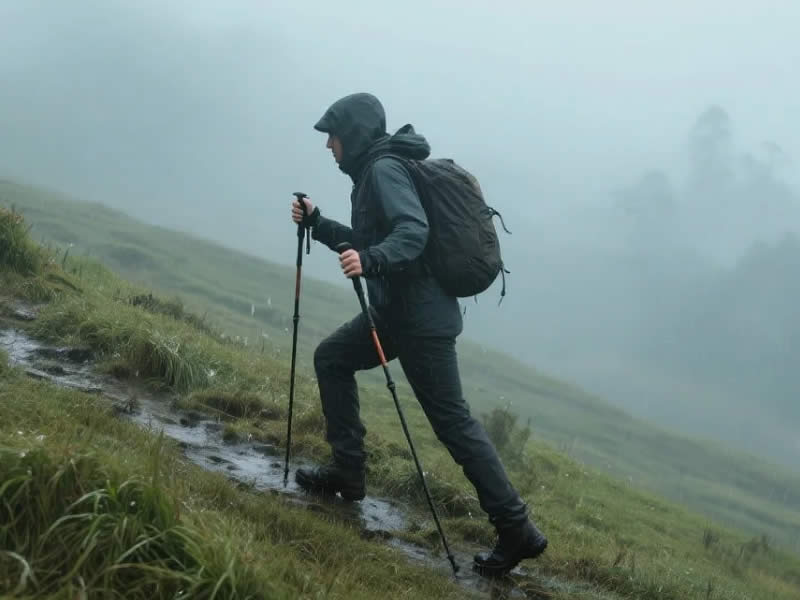
Recommended trekking pole purchase link: https://lightenup.aliexpress.com/store/1101521655
Why wet grass is so dangerous
Grass blades are smooth and often grow in a direction that encourages sliding. When wet, they become like a lubricated surface. Your boots have little friction, and even the slightest incline can cause you to lose footing. Compounding this, many of Campos’ trails have steep sections (e.g., the slopes to Pedra do Baú or the trails around Horto Florestal). Without support, you might find yourself sliding uncontrollably.
Essential preparation: pole setup
Before stepping onto the grassy slope, adjust your poles:
- Lengthen your poles by 5–10 cm (2–4 inches) from your flat‑ground length. A longer pole allows you to plant ahead of your body, creating a braking angle.
- Remove rubber tips – use bare tungsten carbide tips. Rubber slides on wet grass; carbide bites through the grass layer into the soil beneath.
- Use small baskets – they prevent the pole from sinking too deep into soft soil. Remove large snow baskets.
- Check lever locks – ensure they are tight; a collapsing pole on a slippery slope is dangerous.
Descending steep grassy slopes after rain
This is where you need the most protection. Descending wet grass is more challenging than ascending.
- Face the slope – do not turn sideways. You need to see where you are planting.
- Lengthen poles (as above). Plant both poles together about 30–50 cm ahead of your feet, shoulder‑width apart.
- Push down firmly – drive the carbide tips through the grass until they contact the soil. You will feel a distinct bite.
- Lean back slightly – from your ankles, not your waist. Your weight should be behind your feet, resisting gravity. The poles will help you maintain this upright posture.
- Take short, flat‑footed steps – do not lift your feet high. Shuffle or slide your feet forward, keeping them in contact with the grass. High steps increase the chance of slipping.
- Move one pole at a time – keep at least one pole planted at all times. After taking a step, reposition the poles ahead again.
- Use a “step‑plant‑step” rhythm – plant both poles, step forward with one foot, bring the other foot to meet it, then plant the poles again. This is slow but maximises stability.
Ascending steep grassy slopes after rain
Climbing up wet grass is less dangerous than descending, but still tricky. Use this technique:
- Shorten your poles by 5–10 cm from flat length.
- Use double planting – plant both poles together ahead, then pull yourself up. This engages your arms and reduces the load on your legs.
- Take shorter steps – keep your feet under your body.
- Lean slightly forward – from your ankles, not your waist. The poles will help you push up.
- If you start to slide – plant both poles further ahead and use them as brakes.
How to handle side‑hilling (traversing a grassy slope)
Often trails cut diagonally across a slope. Here, you need to adjust each pole individually:
- Uphill pole: shorten it by 5–10 cm.
- Downhill pole: lengthen it by 5–10 cm.
- Plant both poles – the downhill pole will be longer, giving you support on the lower side. Keep your torso upright; do not lean into the hill.
Footwear matters
Poles alone won’t save you if your boots have no grip. For Campos’ wet grass, wear boots with deep, aggressive lugs (e.g., Vibram Megagrip). Avoid shoes with smooth soles. Even with poles, you will slip if your boots cannot bite.
What about using ice grips? – If the grass is frozen (rare in Campos, but possible on very cold winter mornings), add spiked ice grips over your carbide tips. They provide extra traction on icy grass.
Common mistakes to avoid
- Using rubber tips – they are useless on wet grass. Always use carbide.
- Planting poles beside your feet – gives no braking. Plant ahead.
- Leaning forward on descents – shifts weight downhill, increasing slip risk. Lean back.
- Taking long strides – short steps are safer.
- Relying solely on poles – keep your knees soft and use your leg muscles to control speed.
After the descent
- Rinse your poles – grass and mud can contain grit. Rinse with fresh water and dry thoroughly.
- Inspect carbide tips – if they have become rounded from stabbing into soil, replace them.
- Check locks – wet grass may have entered the mechanism; open and close lever locks to clear debris.
Real‑world tip from Campos locals
Experienced hikers in Campos do Jordão often attach small rubber bands or tape around the pole shaft to mark the “grass slope” length. They can quickly lengthen the poles without measuring. Also, many carry a small cloth to wipe mud off the tips after each section.
Final thoughts
Walking on steep grassy slopes after rain in Campos do Jordão is challenging, but with the right pole technique, you can do it safely. Lengthen your poles for descents, shorten for ascents, use carbide tips, plant both poles ahead, push down firmly, and take short, controlled steps. Practice on a gentle slope first, then tackle the steeper hills. With a little practice, you’ll navigate Campos’ beautiful, slippery grasslands with confidence – and without a muddy spill.




