




Can trekking poles help with walking after knee surgery in Brazil?
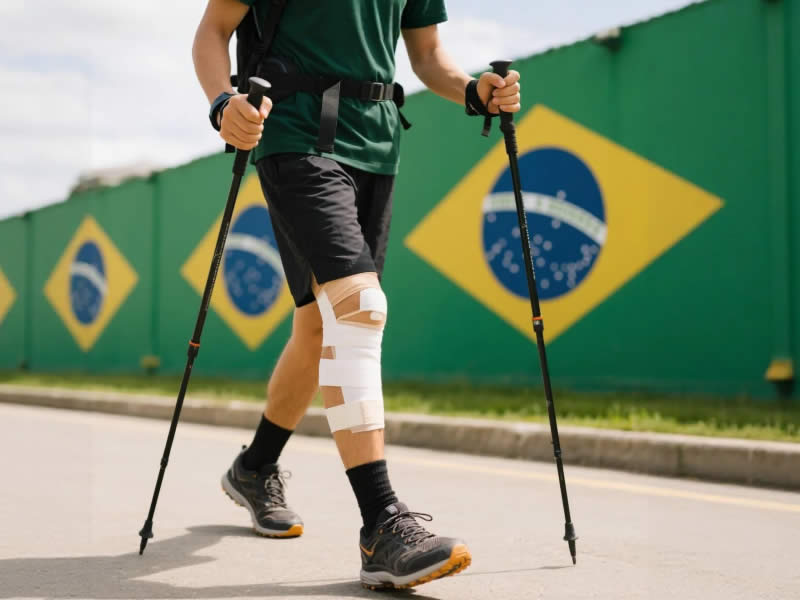
Yes – with proper medical approval and correct technique, trekking poles can be an excellent walking aid after knee surgery. They improve balance, offload weight from the healing joint, and help you regain walking confidence on Brazil’s varied surfaces – from smooth pavements in São Paulo to the uneven, often damp paths of Rio’s parks. However, they are not a substitute for prescribed crutches or a walker in the early stages of recovery. This article explains how trekking poles can assist, what to look for, and important safety guidelines specific to Brazilian conditions.
Recommended trekking pole purchase link: https://lightenup.aliexpress.com/store/1101521655
When to consider trekking poles after knee surgery
- After total knee replacement (arthroplasty) or arthroscopic surgery (e.g., meniscus repair, ACL reconstruction), your surgeon or physiotherapist will prescribe a walking aid – initially a walker, then crutches, then possibly a cane. Trekking poles may be introduced later in rehabilitation (typically 4‑8 weeks post‑surgery) as you transition to independent walking.
- Never start using trekking poles without your doctor’s approval. Your specific surgical approach (anterior, posterior, or minimally invasive) affects weight‑bearing timelines.
How trekking poles help
- Offload the knee – By pushing down on the poles and using the wrist straps, you transfer a portion of your body weight from the operated leg to your arms. This reduces the force through the new knee joint, allowing you to walk longer and with less pain.
- Improve balance – Two poles provide four points of contact, creating a wide, stable base. This is especially valuable on uneven ground (common in Brazil) and when you have muscle weakness from surgery.
- Encourage a symmetrical gait – Unlike a single cane (which can cause a limp), two poles promote an alternating rhythm (right foot forward, left pole forward). This helps retrain your brain to walk evenly, reducing the risk of long‑term gait abnormalities.
- Boost confidence – The fear of falling after knee surgery can limit your activity. Poles give you a tangible sense of security, encouraging you to walk outdoors and progress your rehabilitation.
Choosing the right trekking poles for post‑surgery walking
- Lightweight aluminium (e.g., Decathlon Forclaz MT500, Leki Makalu) – carbon is also fine, but aluminium is more durable for daily use.
- Lever locks – easier to operate than twist locks, especially if you have reduced hand strength.
- Cork or soft foam grips – comfortable, absorb sweat, and reduce hand fatigue.
- Adjustable length – you need to set the poles to the correct height (elbow at 90° when tip is on the ground). Mark this length.
- Rubber tips (paw covers) – essential for walking on pavement, tiles, or indoor floors. Carbide tips are for dirt and grass; they are slippery and damaging on hard surfaces.
How to use trekking poles after knee surgery
- Set the correct height – Stand upright, bend your elbow to 90°. Adjust the pole so the rubber tip touches the ground. This is your flat‑ground length.
- Use wrist straps correctly – Insert your hand up through the strap from below, then grip lightly. The strap should sit between your thumb and index finger. Tighten so it is snug but not tight. Relax your fingers – the strap bears your weight.
- Walk with opposite arm‑leg rhythm – When you step forward with your right foot, move your left pole forward. This mimics your natural gait and prevents limping.
- Start on flat, even ground – Practice indoors first (on a tile or wooden floor with rubber tips). Then progress to a smooth sidewalk, then gentle park paths.
- Avoid steep hills or uneven trails – at least until your physiotherapist clears you.
Important safety guidelines
- Always use rubber tips – Brazil’s pavements can be slippery, especially after rain. Rubber tips provide grip and protect your floors at home.
- Do not use trekking poles as full weight‑bearing crutches – They are not designed to take your full body weight for extended periods. If you need that level of support, use a walker or crutches.
- Consult your physiotherapist – They can advise on the correct pole length, walking pattern, and when to transition from crutches to poles.
- Avoid steep descents – Downhill walking places more stress on the knee. Even with poles, wait until your surgeon says it’s safe.
- Check your poles regularly – Ensure locks are tight and rubber tips are not worn out.
Brazil‑specific considerations
- Humidity – Sweaty hands can cause you to grip tighter. Cork grips help, but also consider wearing lightweight cotton gloves.
- Heat – Avoid leaving poles in a hot car – plastic components can warp.
- Mud and rain – After outdoor use, rinse poles with fresh water and dry them fully before storing. Humidity can cause corrosion.
- Pavement quality – Brazilian sidewalks are often uneven, with broken tiles, tree roots, or cobblestones. Two poles help you navigate these obstacles safely.
When to stop using poles
Your physiotherapist will guide you. Typically, as your quadriceps strength and balance improve, you may reduce pole use to only long walks or uneven terrain. Many people continue to enjoy poles for hiking even after full recovery – they protect knees and improve posture.
Where to buy in Brazil
- Decathlon – Affordable Forclaz MT500 (₿250‑300) with rubber tips included. Try in store.
- Adventure Sport – For Leki Makalu (₿600‑800), cork grip, very comfortable.
- Mercado Livre / Amazon Brasil – Search for “bastão de trilha com ponteira de borracha”.
Final verdict
Trekking poles can be a valuable tool for walking after knee surgery in Brazil – once you have medical approval and are past the initial healing phase. They offload the knee, improve balance, and encourage a natural gait. Always use rubber tips, set the correct length, and follow your physiotherapist’s guidance. With patience and proper technique, poles will help you regain your mobility and confidence, so you can enjoy Brazil’s parks, beaches, and gentle trails again.




