




Can I use regular trekking poles for frosty ground conditions in Brazil?
Yes, you absolutely can – but with one crucial addition: ice grips. Brazil’s frosty ground conditions, common in high‑elevation areas like the Serra da Mantiqueira, Caparaó National Park (Pico da Bandeira), and the highest peaks of the Serra do Mar, are typically characterised by a thin layer of frost, frozen grass, and occasional ice patches. This is not deep snow or solid glacier ice. Your regular three‑season trekking poles are perfectly capable – provided you equip them with spiked rubber covers (ice grips) and follow a few simple adaptations. This article explains what works, what doesn’t, and how to stay safe on frosty Brazilian trails.
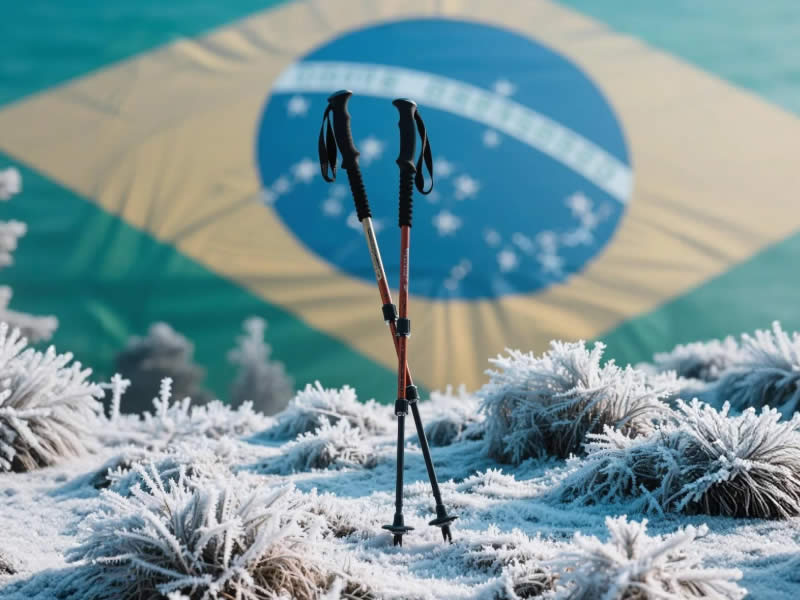
Recommended trekking pole purchase link: https://lightenup.aliexpress.com/store/1101521655
What “frosty ground” means in Brazil
Unlike alpine winters, Brazil’s coldest mornings bring:
- Light frost (thin layer of ice crystals on grass and exposed rock).
- Frozen turf (hard, crunchy soil).
- Polished granite slabs (common in the Mantiqueira, can be very slippery when frosted).
- No deep snow (snowfall is extremely rare; you won’t need snowshoes).
Your regular trekking poles are designed for dirt, rock, and mud. On frost, the main issue is the carbide tip skidding on smooth, icy surfaces. The solution is not to buy new poles, but to add a simple accessory.
The essential upgrade: ice grips
Ice grips (also called ice spikes, ice claws, or traction covers) are rubber caps that fit over your existing carbide tip. They have small metal spikes (usually 2‑4 spikes) that dig into frost, ice, and hardpacked snow. They are inexpensive (₿20‑40 per pair), weigh almost nothing, and can be fitted or removed in seconds.
- Where to buy in Brazil: Decathlon sells universal ice spikes; Adventure Sport offers Leki and Black Diamond ice grips; Mercado Livre and Amazon Brasil also have options.
- How to use: Slip them over the carbide tip before you start. They snap on securely. Remove them when you leave the frost zone.
Do you need different poles? No.
Your regular poles are fine if they meet two criteria:
- Material: aluminium (7075) over carbon – Carbon fibre becomes more brittle in cold temperatures and can snap if jammed between rocks on a frosty morning. Aluminium bends rather than breaks. If you have carbon poles, use them with extra caution, but aluminium is safer.
- Locking mechanism: lever locks, not twist locks – Twist locks can freeze or become stiff in cold weather. Lever locks (e.g., Leki SpeedLock, Black Diamond FlickLock) work reliably in all conditions.
What you do NOT need
- Large snow baskets – Frost is shallow. Small summer baskets or no baskets work fine. Large baskets would be unnecessary and could catch on vegetation.
- Shock absorbers – Not needed. Rigid poles give better feedback.
- Dedicated “winter” poles – Your regular poles, plus ice grips, are all you need.
Technique for walking on frosty ground with regular poles
- Fit ice grips at the trailhead if you see frost or ice.
- Lengthen poles slightly (2‑3 cm) – frozen ground can be harder, and a slightly longer pole gives you better leverage.
- Plant vertically – Push the pole straight down so the spikes bite. Avoid angled plants.
- Use double planting on slippery descents – Plant both poles together ahead, push down firmly, then step. This maximises stability.
- Take shorter steps – Reduce stride length to keep your centre of gravity stable.
- Keep your weight centred – Avoid leaning forward or back.
- Remove ice grips when the frost disappears – Walking on bare rock with ice grips can wear down the spikes.
Common mistakes to avoid
- Using rubber tips (paw covers) – they have no grip on ice; they are for pavement only.
- Walking with one pole – two poles provide four points of contact, essential on slippery surfaces.
- Over‑tightening locks – cold can make plastic brittle; adjust normally.
- Storing poles wet – after a frosty hike, rinse off any grit and dry poles extended to prevent corrosion.
Real‑world example: Pico da Bandeira in winter
On the ascent to Pico da Bandeira, the trail above the tree line is often covered with frost early in the morning. Experienced hikers use regular aluminium poles (e.g., Leki Makalu, Decathlon Forclaz MT500) with ice grips. They plant both poles together on the icy granite slabs and ascend with confidence. Without ice grips, even carbide tips can skid; with them, the bite is secure.
Conclusion
You do not need special trekking poles for frosty ground conditions in Brazil. Your regular trekking poles – especially 7075 aluminium models with lever locks – will perform perfectly well when you add ice grips. This small, inexpensive accessory transforms your existing poles into frost‑ready tools. Leave the carbon for dry, warm conditions; keep the large snow baskets at home. With ice grips, proper technique, and a pair of reliable poles, you can safely enjoy Brazil’s stunning frosty mornings on peaks like Pico da Bandeira, Pedra da Mina, and the high trails of the Mantiqueira.




