




Are carbon trekking poles safe in near‑freezing temperatures in Brazil?
The short answer is not entirely safe, and certainly not as safe as aluminium. While carbon fibre trekking poles are popular for their light weight and stiffness, they have a well‑known weakness: they become more brittle as the temperature drops. In Brazil’s high‑altitude regions – such as Pico da Bandeira (2,891 m), Pedra da Mina (2,798 m), and the peaks of the Serra da Mantiqueira – winter mornings often bring temperatures close to or slightly below freezing (0°C to -5°C). In these conditions, carbon poles are at a higher risk of snapping suddenly under lateral stress, such as jamming the tip between rocks or twisting the shaft on uneven ground. For safety, 7075 aluminium poles with lever locks are a much better choice for near‑freezing Brazilian trails.
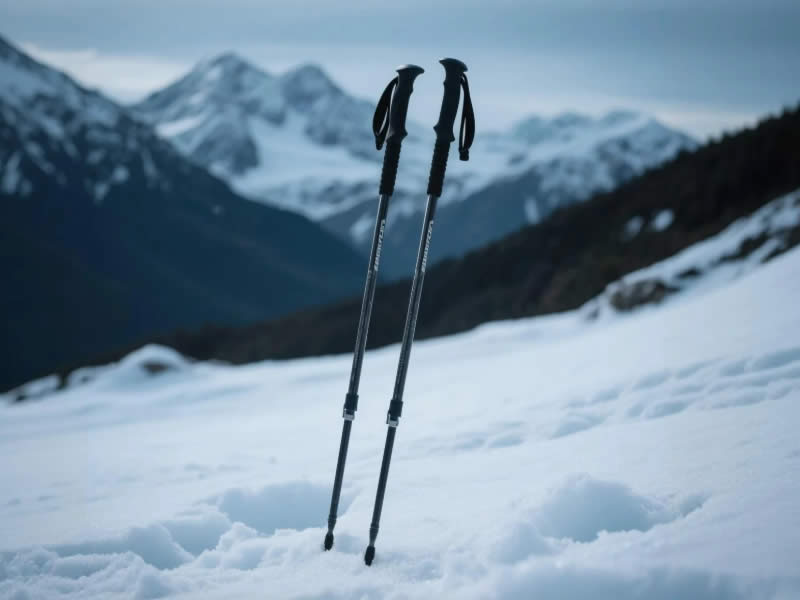
Recommended trekking pole purchase link: https://lightenup.aliexpress.com/store/1101521655
How cold affects carbon fibre
Carbon fibre composites consist of carbon fibres embedded in an epoxy resin matrix. The resin provides toughness and impact resistance. At room temperature, this matrix is flexible enough to withstand moderate impacts. As the temperature drops below 10°C, the resin begins to stiffen. Near 0°C, it becomes noticeably more brittle. A sideways force that would only cause a minor crack at 20°C can propagate into a full break at 0°C. The fibres themselves remain strong, but the resin loses its ability to absorb and distribute stress.
Real‑world risk scenarios
On a typical Brazilian high‑altitude trail in winter, you may encounter:
- Frost‑covered quartzite blocks – the tip can slide into a crack, and as you move forward, the shaft is levered sideways.
- Frozen scree – loose rocks that shift underfoot can twist the pole.
- Icy granite slabs – an angled plant can cause the tip to skid, suddenly loading the pole sideways.
In these situations, a carbon pole can snap without warning. Aluminium, by contrast, is ductile: it bends. A bent aluminium pole can often be straightened by hand or by rolling it on a rock, allowing you to continue the hike.
What the manufacturers say
Most reputable brands (Leki, Black Diamond, Komperdell) rate their carbon poles for use down to about -20°C. However, they also caution that impact resistance decreases in cold temperatures. In their warranty policies, they typically do not cover breakage caused by “cold‑related brittleness” if the pole is used in freezing conditions on rocky terrain.
Practical evidence from Brazilian hikers
In online forums and guide interviews, experienced mountaineers report that carbon poles have snapped on them during winter ascents of Pico da Bandeira and other high peaks. One guide from Itatiaia National Park said: “I’ve seen three carbon poles break in a single week during cold snaps. Now I only recommend aluminium for winter hiking.”
When are carbon poles acceptable in near‑freezing temperatures?
- On well‑maintained, snow‑covered trails without rocks – If the ground is soft snow and you plant vertically, carbon is fine. The snow cushions impacts.
- For very light hikers with gentle technique – If you are careful to plant vertically and avoid jamming, the risk is lower.
- In dry, cold conditions without ice – Frost and ice increase skidding, which can lead to sudden sideways loads.
The safer alternative: 7075 aluminium with lever locks
For near‑freezing temperatures and rocky Brazilian terrain, choose:
- 7075 aluminium – Strong, ductile, and resistant to cold‑induced brittleness.
- Lever locks (e.g., Leki SpeedLock, Black Diamond FlickLock) – Reliable in cold; twist locks can freeze.
- Cork grips – Stay non‑slip and warm even in chilly conditions.
- Replaceable carbide tips – Essential for the abrasive rocks.
- Optional ice grips – For traction on icy sections.
Top aluminium poles for Brazilian winter
- Leki Makalu – Durable, repairable, widely available (Adventure Sport, Dancor).
- Decathlon Forclaz MT500 – Excellent value, lever locks, cork/foam grip.
- Black Diamond Trail Pro – Very robust, FlickLock lever.
How to use aluminium poles in near‑freezing conditions
- Lengthen poles for descents – Adds stability on icy slopes.
- Add ice grips (spiked rubber covers) for frosty rock.
- Store poles extended after hikes to prevent internal moisture from freezing.
- Check locks – Cold can cause slight contraction; ensure they are snug.
Conclusion
Carbon trekking poles are not as safe as aluminium in near‑freezing temperatures on Brazil’s rocky, high‑altitude trails. The risk of sudden snapping due to lateral stress is significant. While carbon can be used cautiously on soft snow, for the majority of winter hiking in places like Pico da Bandeira, Serra da Mantiqueira, and Caparaó National Park, 7075 aluminium poles with lever locks are the safer, more reliable choice. Don’t let the weight savings of carbon compromise your safety when the temperature drops. Invest in aluminium for peace of mind and a worry‑free winter adventure.




