




Are trekking poles allowed as hand luggage on LATAM and Gol flights?
If you’re planning a trekking adventure in Brazil—whether to the Chapada Diamantina, Serra do Mar, or the Pantanal—you’ll likely want to bring your trusty trekking poles. But before you pack them in your carry‑on, you need to understand the strict rules of Brazil’s two largest airlines: LATAM and Gol.
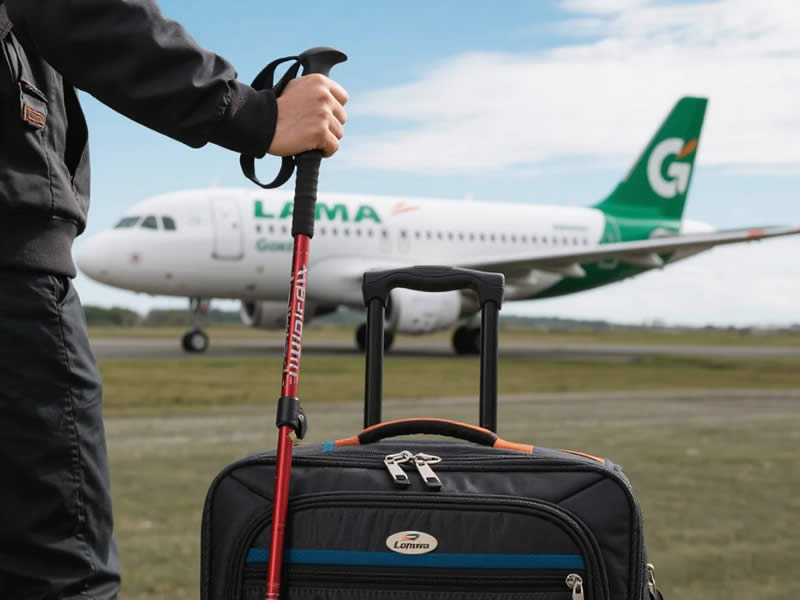
Recommended trekking pole purchase link: https://lightenup.aliexpress.com/store/1101521655
The short, direct answer is no. Neither LATAM nor Gol permits trekking poles in hand luggage. Here’s everything you need to know to avoid unpleasant surprises at security.
LATAM’s official policy
According to LATAM’s dangerous goods and restricted items list, trekking poles (along with walking sticks, ice axes, and similar rigid poles) are classified as objects that could be used as a blunt instrument. They are explicitly banned from the cabin. LATAM’s website states that such items must be transported in checked baggage. If your poles are unusually long and exceed the standard checked baggage dimensions, you may need to use their cargo service (LATAM Cargo).
Gol’s official policy
Gol follows a similar rule. Under their “Prohibited items in hand luggage” section, trekking poles are listed alongside baseball bats, golf clubs, and martial arts equipment. They are not allowed in the passenger cabin under any circumstances. Gol requires them to be checked in as part of your hold luggage. Note that Gol’s sports equipment policy treats trekking poles as regular checked items—no special fee if within your weight allowance, but you must declare them at check‑in.
Why are trekking poles banned from carry‑ons?
Aviation security agencies (including ANAC, Brazil’s civil aviation authority) follow global standards. Trekking poles have pointed tips and rigid shafts, making them potential weapons. Even collapsible poles with rubber tips are prohibited because the carbide tip can be exposed. This rule is strictly enforced at Brazilian airports like GRU (São Paulo), GIG (Rio), and BSB (Brasília).
What happens if you try to bring them in hand luggage?
You will be stopped at the security checkpoint. The poles will be confiscated, and you will not have time to go back to check them unless you have hours to spare. Many hikers have lost expensive carbon poles this way. Do not risk it.
Best practices for flying with trekking poles in Brazil
- Always check them – Pack your poles in your checked suitcase or a dedicated sports tube. If your poles are collapsible (3‑section), they usually fit diagonally in a standard 28‑inch suitcase.
- Protect them – Place the poles inside a padded bag or wrap them in clothing to prevent damage to your luggage or other items.
- Declare at check‑in – When flying Gol, mention you have trekking poles. They may tag them as “sports equipment” but rarely charge extra unless your bag is overweight.
- Know the dimension limits – For LATAM, checked baggage must not exceed 158 linear cm (length+width+height) or 23 kg for economy. Most collapsed poles fit well within that.
- Alternatives for budget travelers – If you don’t want to pay for checked luggage, consider renting poles at your destination. Many Brazilian outdoor shops in Rio, São Paulo, or Salvador rent poles for R$15‑30 per day.
What about connecting international flights?
If you’re flying from the US or Europe on LATAM or Gol, the same rules apply. The cabin ban is consistent across their entire network. Do not assume international security will be more lenient.
Final takeaway
No, trekking poles are not allowed as hand luggage on LATAM or Gol flights. Always pack them in your checked baggage. Plan ahead, protect your gear, and enjoy your Brazilian winter hike without last‑minute stress at the airport.




