




What are the most common trekking pole mistakes Brazilian beginners make?
You’ve bought your first trekking poles, watched a few YouTube videos, and hit the trail in the Chapada Diamantina or Serra do Mar. But something feels off—your shoulders ache, the poles slip, or you keep tripping. You’re not alone. Brazilian beginners make a handful of very common mistakes. Here’s how to identify and fix them.
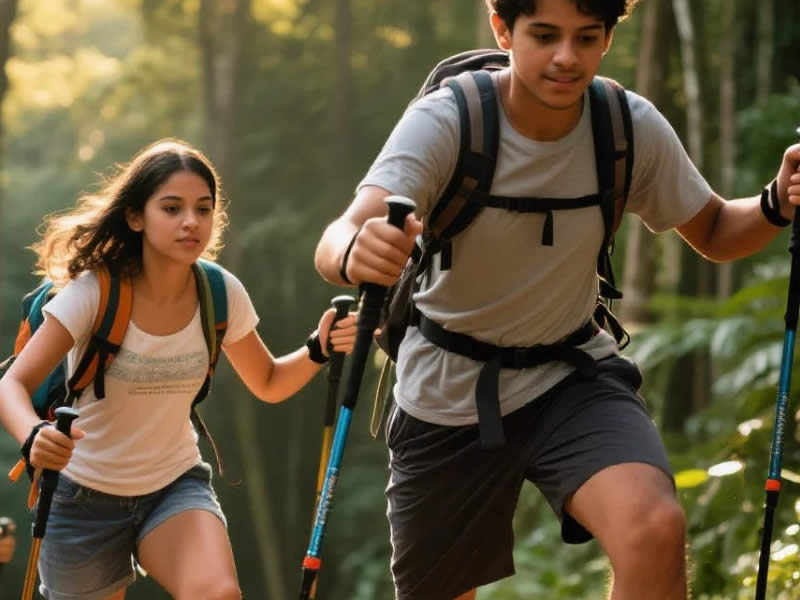
Recommended trekking pole purchase link: https://lightenup.aliexpress.com/store/1101521655
1. Incorrect pole height (the #1 mistake)
Most beginners set poles too long, then walk with hunched shoulders or raised arms. The fix: Stand upright with elbows at 90° when the tip is on the ground. For a 1.70 m person, that’s ~110 cm. Shorten poles 5–10 cm for uphill; lengthen the same for downhill.
2. Gripping too tight
Beginners tend to squeeze the handle like a lifeline. This tires forearms and reduces shock absorption. The fix: Use the strap correctly—hand goes up through the strap, then down to grip the top. Your weight hangs on the strap, not your clenched fist. Grip lightly, almost like holding a bird.
3. Planting poles in front of the body
Many Brazilians new to poles place the tip ahead of their lead foot, which acts as a brake and jolts the shoulder. The fix: Plant the pole level with your rear foot or slightly behind. The push should drive you forward, not stop you.
4. Using only one pole
A single pole (often borrowed from an older relative) imbalances your gait and can twist your spine. The fix: Always use two poles of the same length and model. They work as a pair to keep your hips level and distribute effort evenly.
5. Ignoring rubber tip covers on muddy trails
Carbide tips sink deep into the red clay of the Atlantic Forest, creating puncture holes and offering little grip. The fix: Fit rubber “mud baskets” or wide rubber tips designed for soft ground. They float on mud rather than stabbing it, and they also protect fragile ecosystems.
6. Twisting rather than flicking (lock failures)
Budget poles often have twist locks. Beginners don’t tighten them enough, so poles collapse mid‑stride. Others overtighten, seizing the mechanism. The fix: For Brazilian humidity and mud, buy flick locks (external levers). They’re easy to clean, visually check, and adjust with gloves on.
7. Carrying poles when not needed
Beginners sometimes use poles on flat, sandy trails (Lençóis Maranhenses) or broad, paved paths. Poles drag and become annoying. The fix: Strap poles to your pack when they don’t add value. Learn to collapse and attach them quickly.
8. Storing poles wet or collapsed
After a sweaty or rainy Brazilian hike, many beginners shove wet poles into a bag. Result: rusted screws, seized locks, and corroded tips. The fix: Disassemble (if twist locks), wipe every section with a dry cloth, and store extended in a dry place. Lubricate moving parts with silicone spray twice a year.
9. Removing the wrist strap
Some beginners dislike the strap, thinking it’s restrictive. Without the strap, you must grip hard to keep the pole from flying away. The fix: Learn to use the strap properly (hand up through the loop). It allows a relaxed grip and prevents pole loss during a stumble.
10. Using poles on steep rock scrambles
In places like Pedra da Gávea or Pico das Agulhas Negras, beginners plant poles on unstable boulders, causing the pole to slip or break. The fix: On Class 3 scrambles where you need hands, collapse poles and attach them to your pack. Use your hands for climbing instead.
Bonus: Forgetting to check locks before each descent
Brazilian trails change quickly. That flick lock that felt tight on flat ground may loosen after an hour of vibration. The fix: Stop every hour and test each lock. A sudden collapse on a muddy descent is a recipe for a face‑plant.
Final advice for Brazilian beginners
Don’t be discouraged. All these mistakes are normal and easy to fix. Start with affordable aluminum flick‑lock poles (Black Diamond, LEKI, or Cascade Mountain Tech). Spend 15 minutes practicing on flat grass before hitting the mountains. Watch a Nordic walking video to understand the push motion. Within two or three hikes, poles will feel like natural extensions of your arms—and your knees will thank you on those long Serra do Mar descents.




