




Are trekking poles necessary for the Gold Trail between São Paulo and Rio?
The Gold Trail (Caminho do Ouro) is a historic route that once connected the mining regions of Minas Gerais to the ports of Rio de Janeiro and São Paulo. Today, sections of this trail are preserved as hiking routes, most notably within the Serra do Mar and around Paraty. If you’re planning to hike this iconic Brazilian trail, you might wonder: are trekking poles really necessary? The honest answer: not strictly necessary, but highly recommended for most hikers. Let’s break down why.
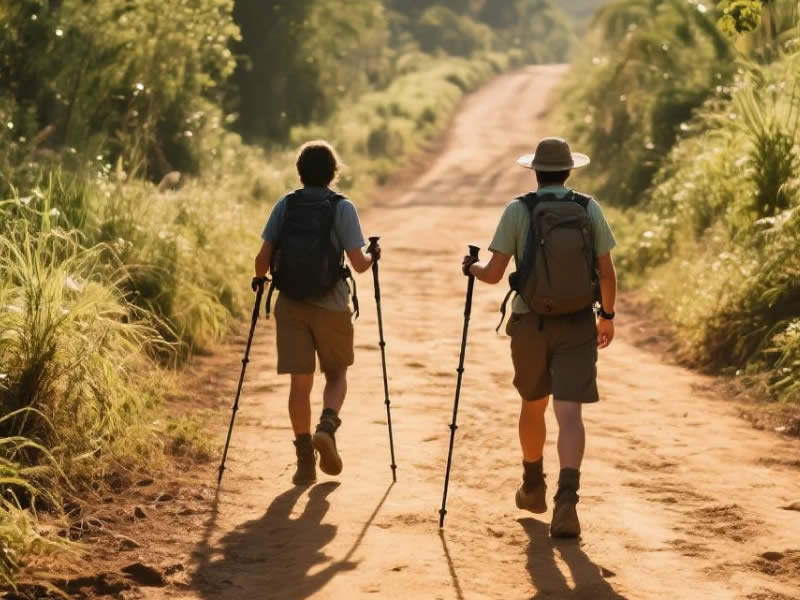
Recommended trekking pole purchase link: https://lightenup.aliexpress.com/store/1101521655
What the Gold Trail is like
The trail varies by section, but common characteristics include:
- Steep ascents and descents – Some grades exceed 20%, especially on the stretch between Paraty and Cunha (SP).
- Uneven, rocky surfaces – Colonial cobblestone sections remain, with irregular stones that twist ankles.
- Mud and roots – Atlantic Forest sections become slippery after rain, which is frequent.
- Long distances – Multi‑day treks of 20–30 km per day are common.
Why poles are beneficial (not mandatory)
- Knee protection – The steep descents (some over 800 m of drop) pound your quadriceps and knees. Poles absorb 20–30% of impact, reducing post‑hike pain and long‑term joint stress.
- Balance on cobblestones – The historic paved sections are notoriously slick and uneven. Two poles give you four points of contact, drastically reducing falls.
- River crossings – Several stream crossings lack bridges. Poles provide stability against slippery rocks and current.
- Fatigue management – With a multi‑day pack (8–12 kg), poles transfer some load from legs to arms, preserving leg strength for the second half of each day.
When you could skip poles
- Day hiker on the gentlest sections – If you’re only doing a short, maintained stretch (e.g., near the Caminho do Ouro visitor center in Paraty), poles are optional.
- Experienced trail runner – Some ultralight runners prefer hands free, though many still carry foldable poles.
- Very fit with strong knees – If you have excellent balance and no prior knee issues, you can manage without.
What experienced Gold Trail hikers say
Local guides in Paraty and Cunha almost always carry poles on multi‑day treks. Many recommend them even for day hikers on the steepest parts (e.g., the descent to Ponta Negra). “I’ve seen too many people limp into camp with swollen knees,” says a local guide. “Poles cost less than a physiotherapy session.”
Alternatives if you don’t have poles
- Use a sturdy wooden staff (found along the trail, but leave it for others)
- Walk with a partner and share the load
- Take slower, shorter steps on descents, using handrails on cobblestone sections where available
Final verdict
Are trekking poles necessary? No – many hikers complete the Gold Trail without them. But for a safer, more comfortable, and knee‑friendly experience, especially on multi‑day or wet‑weather hikes, they are strongly advised. If you already own poles, bring them. If not, consider renting a pair in Paraty or São Paulo (Decathlon or local shops). Your knees will thank you after the first long descent.




